Media relations and influencer marketing for restaurant openings in Tashkent
Personal brand work for restaurateur Alexander Orlov, media relations and influencer marketing for the openings of Tanuki and TOKU.
Full-cycle creative agency
PR, influencer marketing, events, production and Web & Digital. We take projects from idea to launch.
Clients and partners


What we do

Personal brand work for restaurateur Alexander Orlov, media relations and influencer marketing for the openings of Tanuki and TOKU.

Product catalog, ingredient library, salon services and integrations — in one digital system.
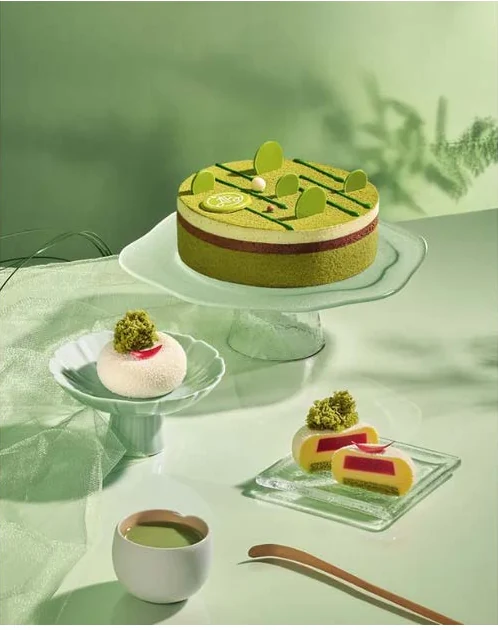

News hooks, integrations and special projects with the media — from new products to art collaborations. Brand advertising with influencers.
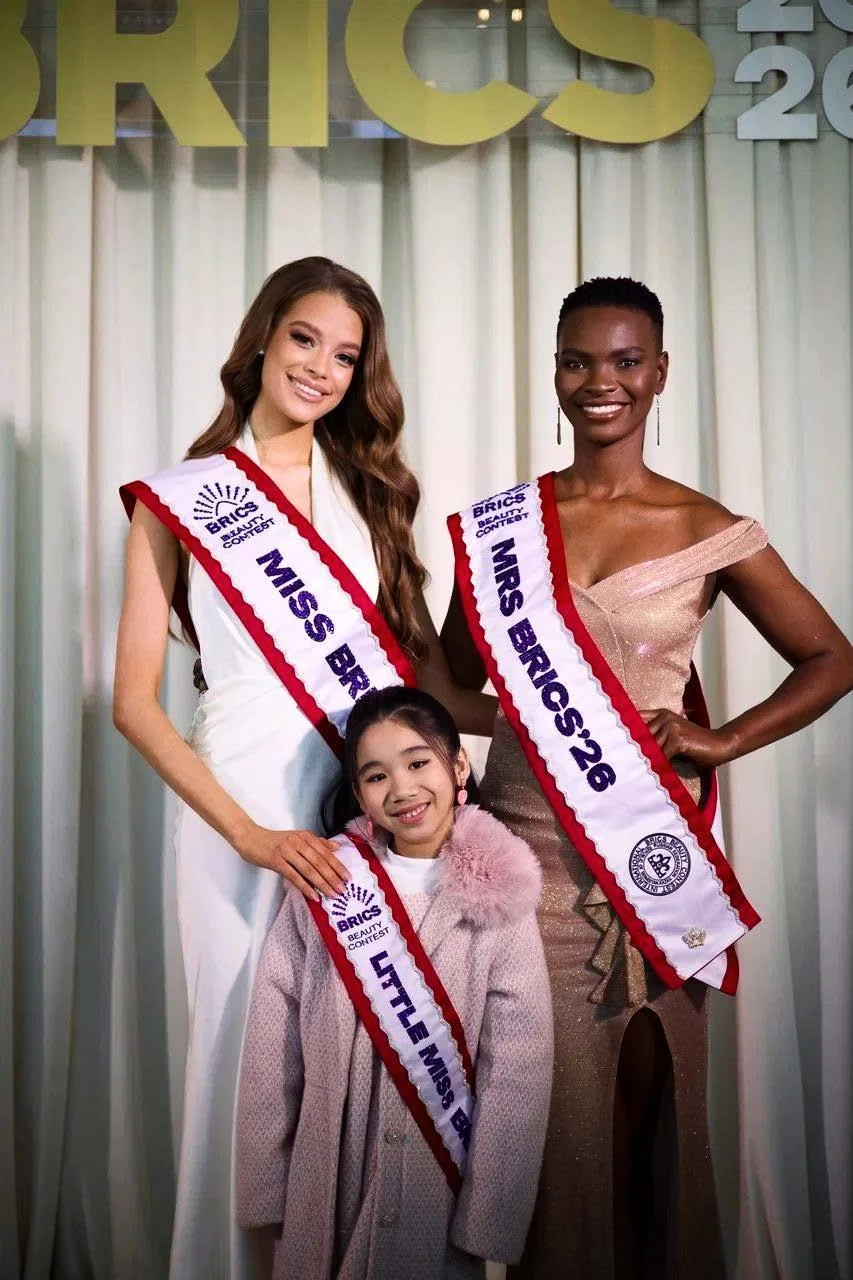
PR strategy for the contest, a media press tour, news hooks created and delivered during the event, press conferences and media coverage at every stage.
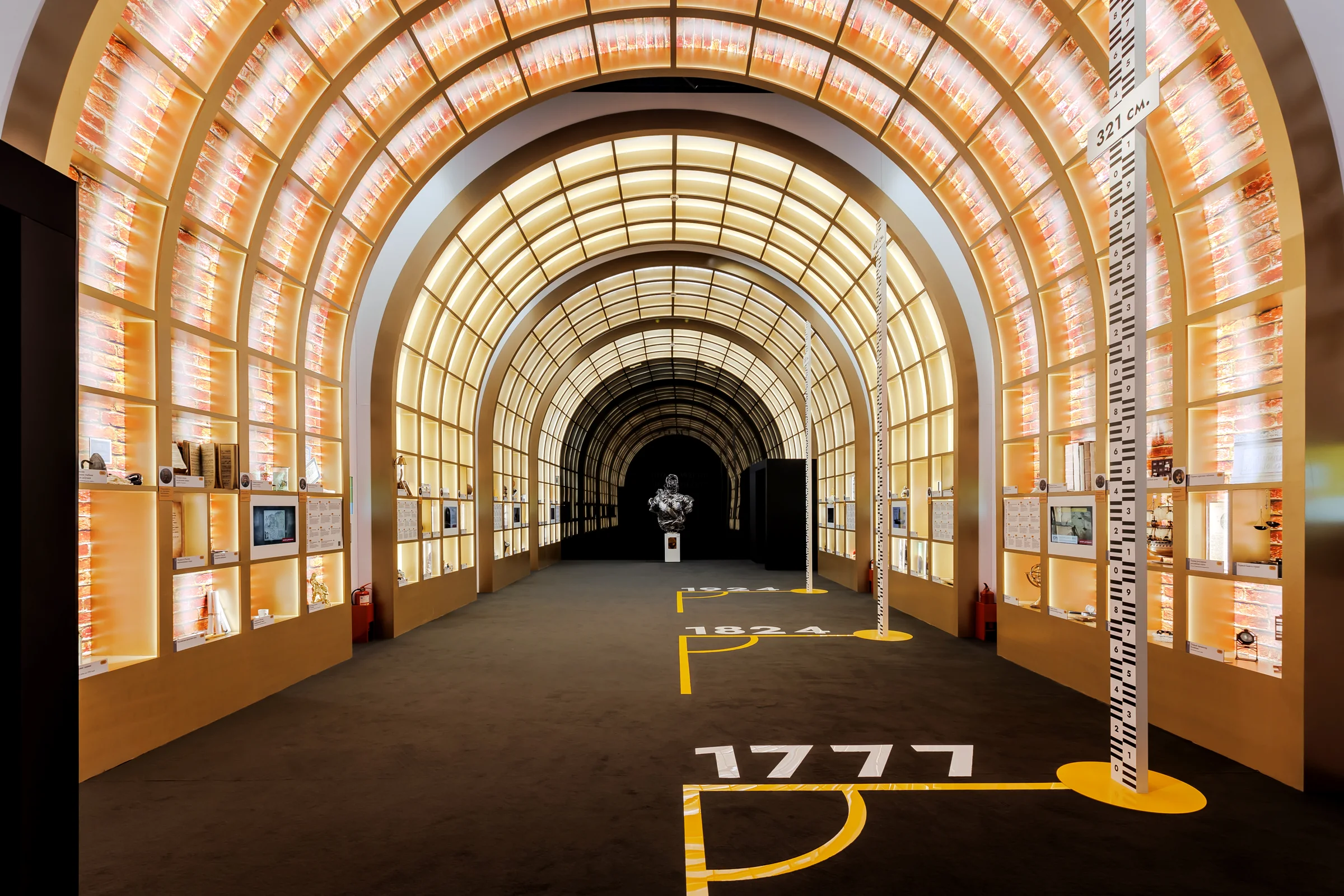
Concept, content and digital interactives for an exhibition about a major city.
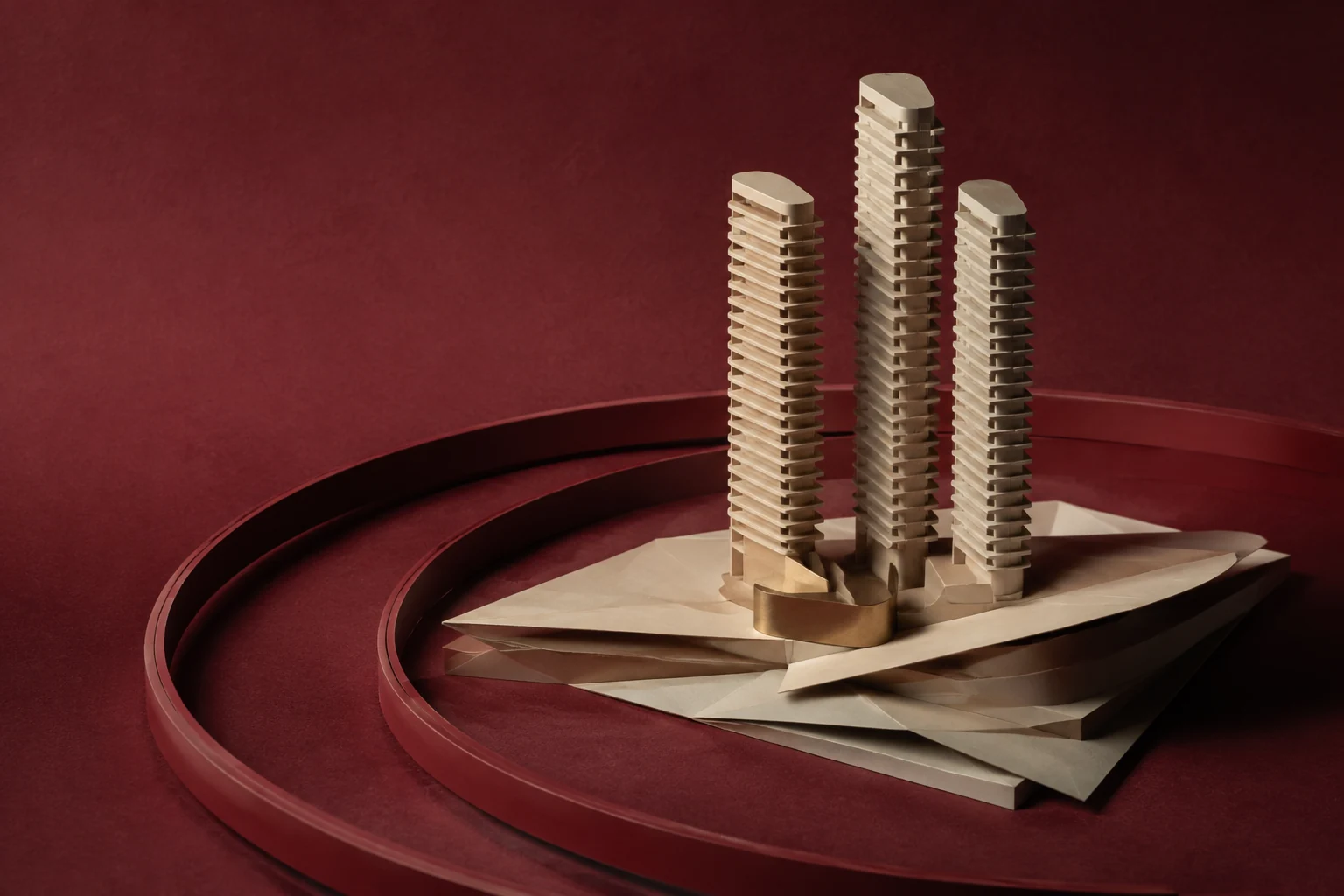
Celebrity integrations, YouTube, Telegram seeding and news hooks in one promotion program for the developer.
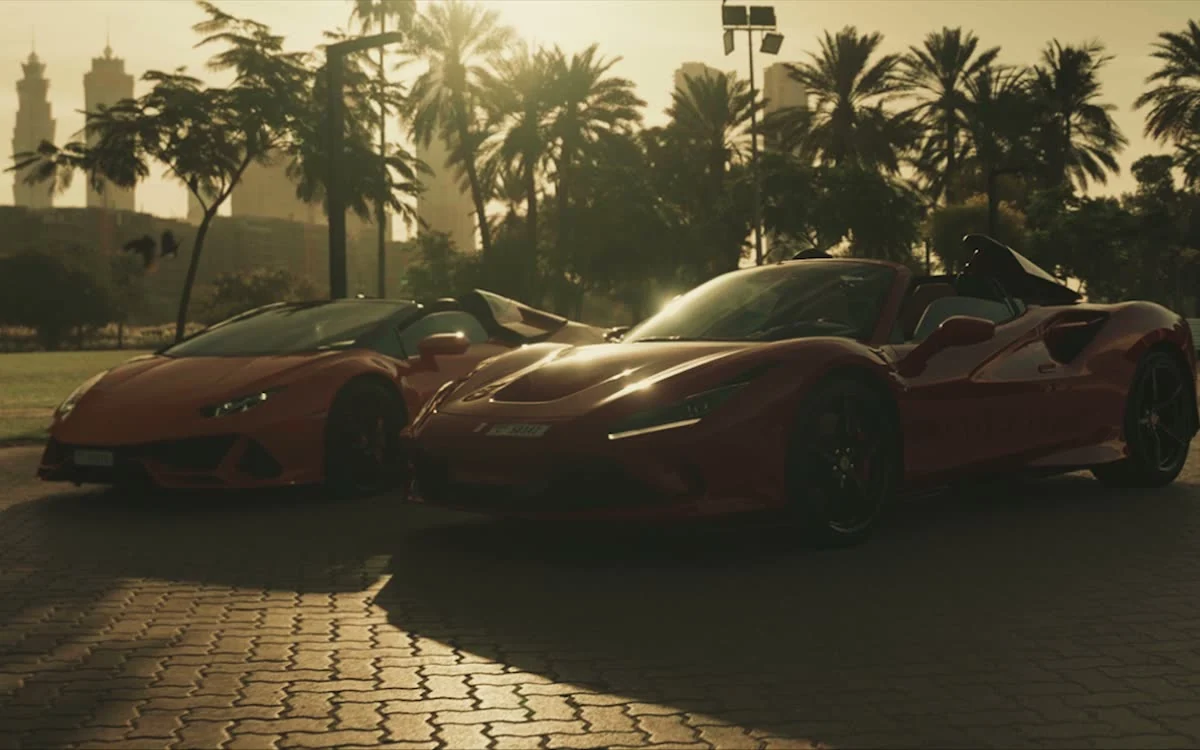
City and desert, dynamic tracking-car shots, a cinematic grade.
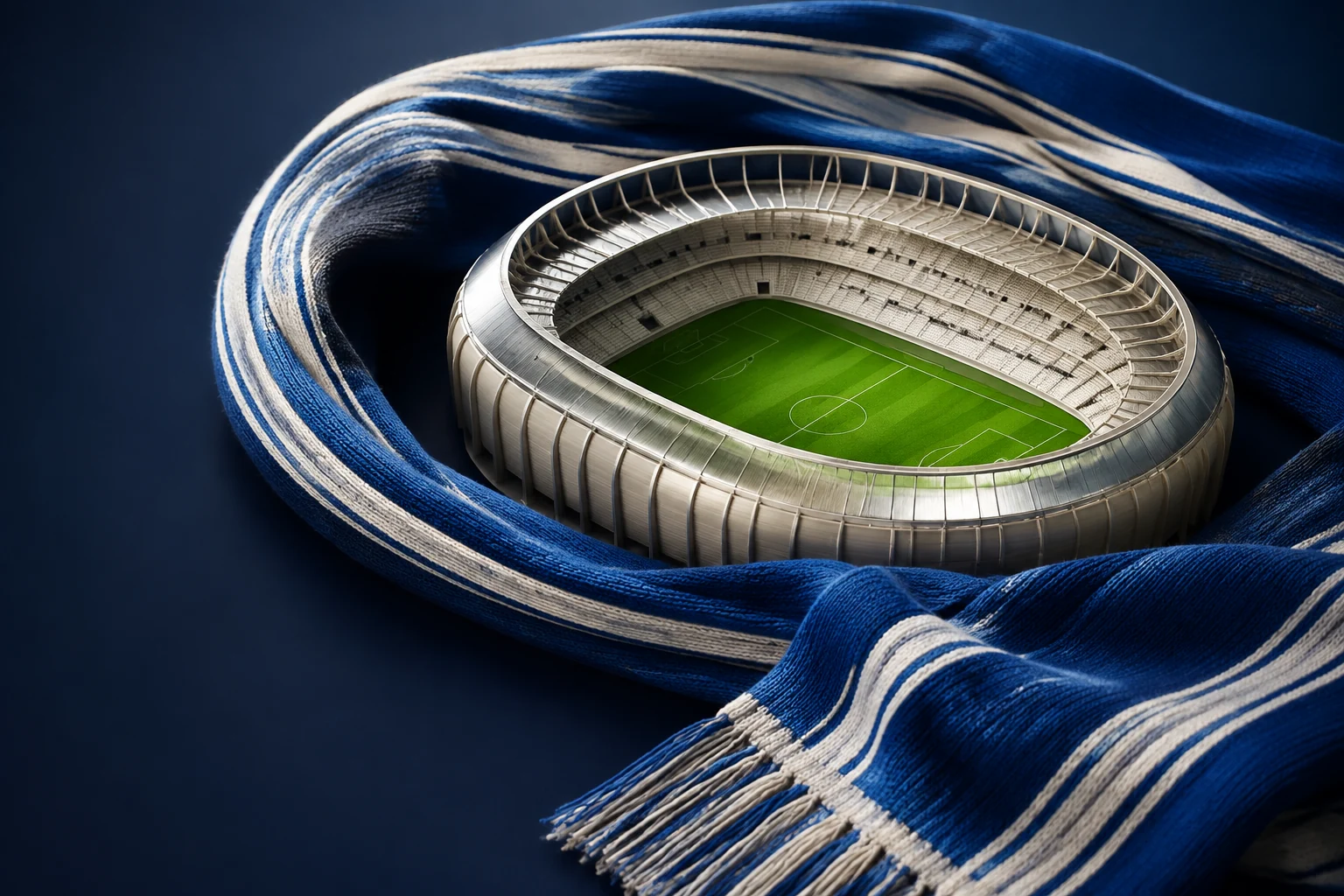
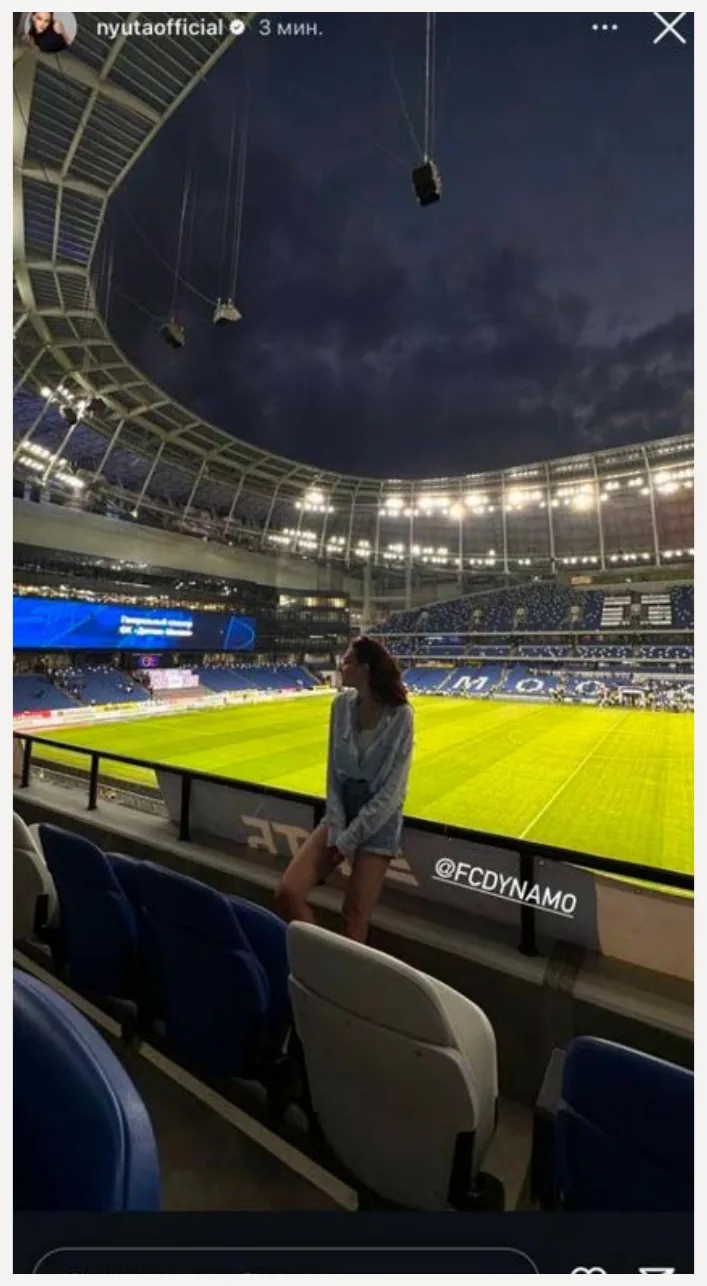
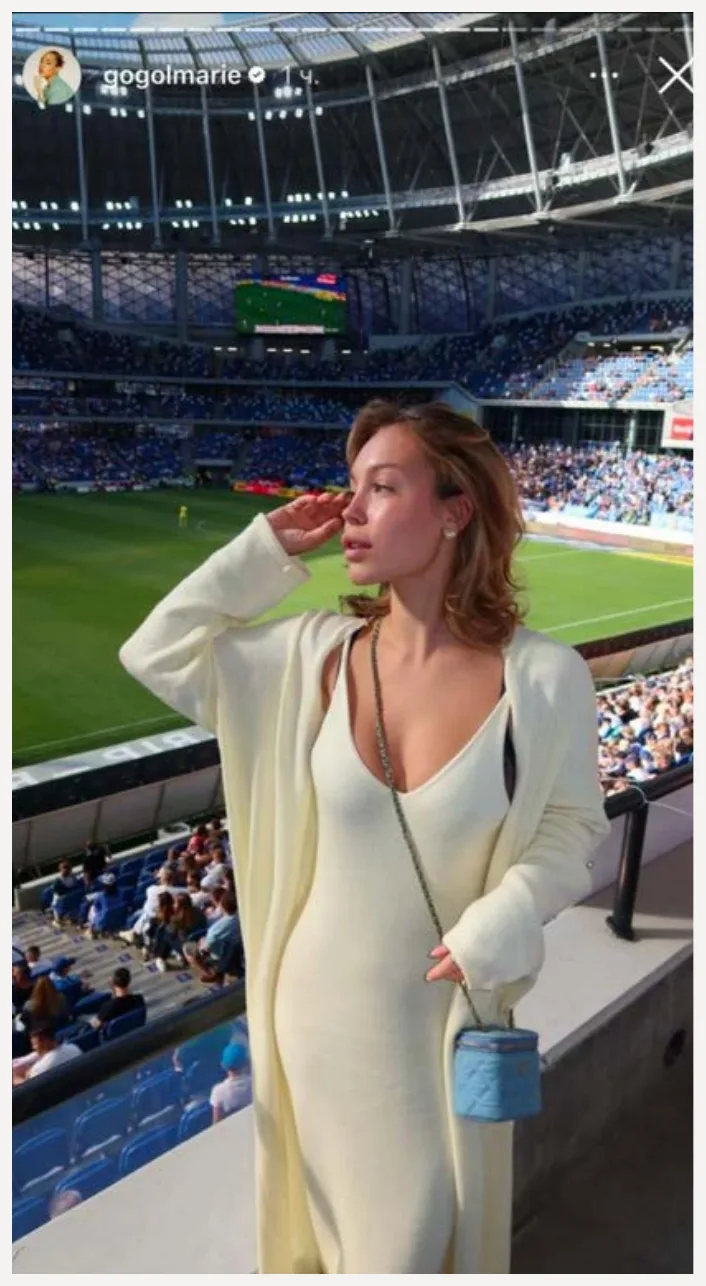
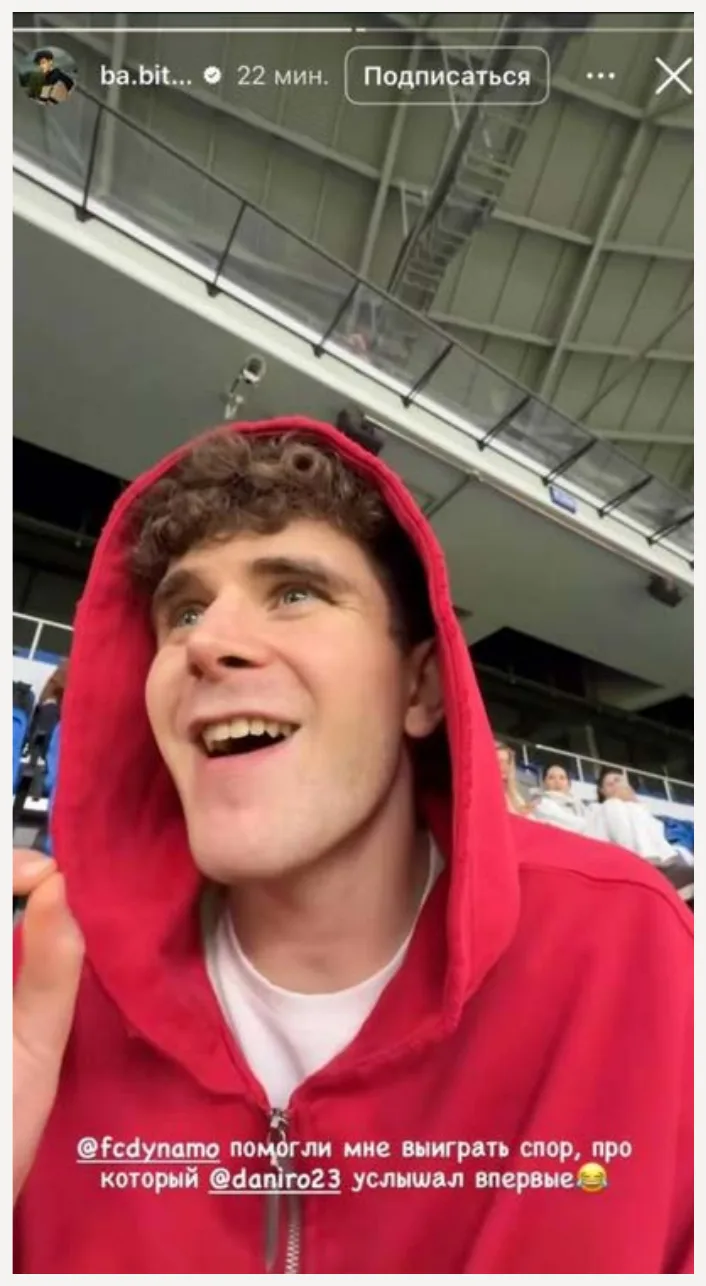
Two years of influencer work at FC Dynamo’s key matches. News hooks and native integrations of club activities into bloggers’ social media.
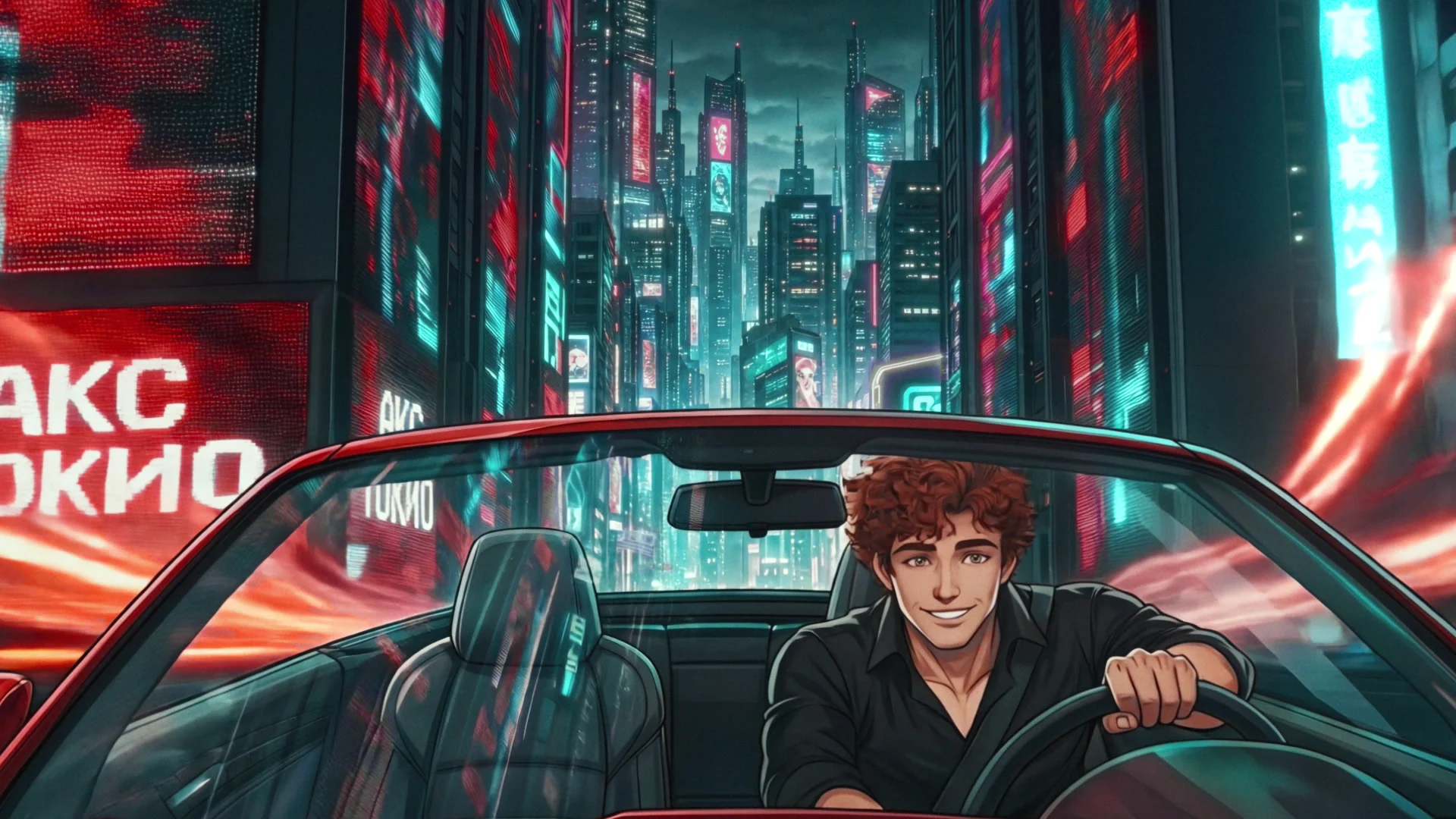
Live-action scenes, hand-drawn animation and a CG city combined into one short commercial.
Personal brand work for restaurateur Alexander Orlov, media coverage and influencer marketing for the Tanuki opening.
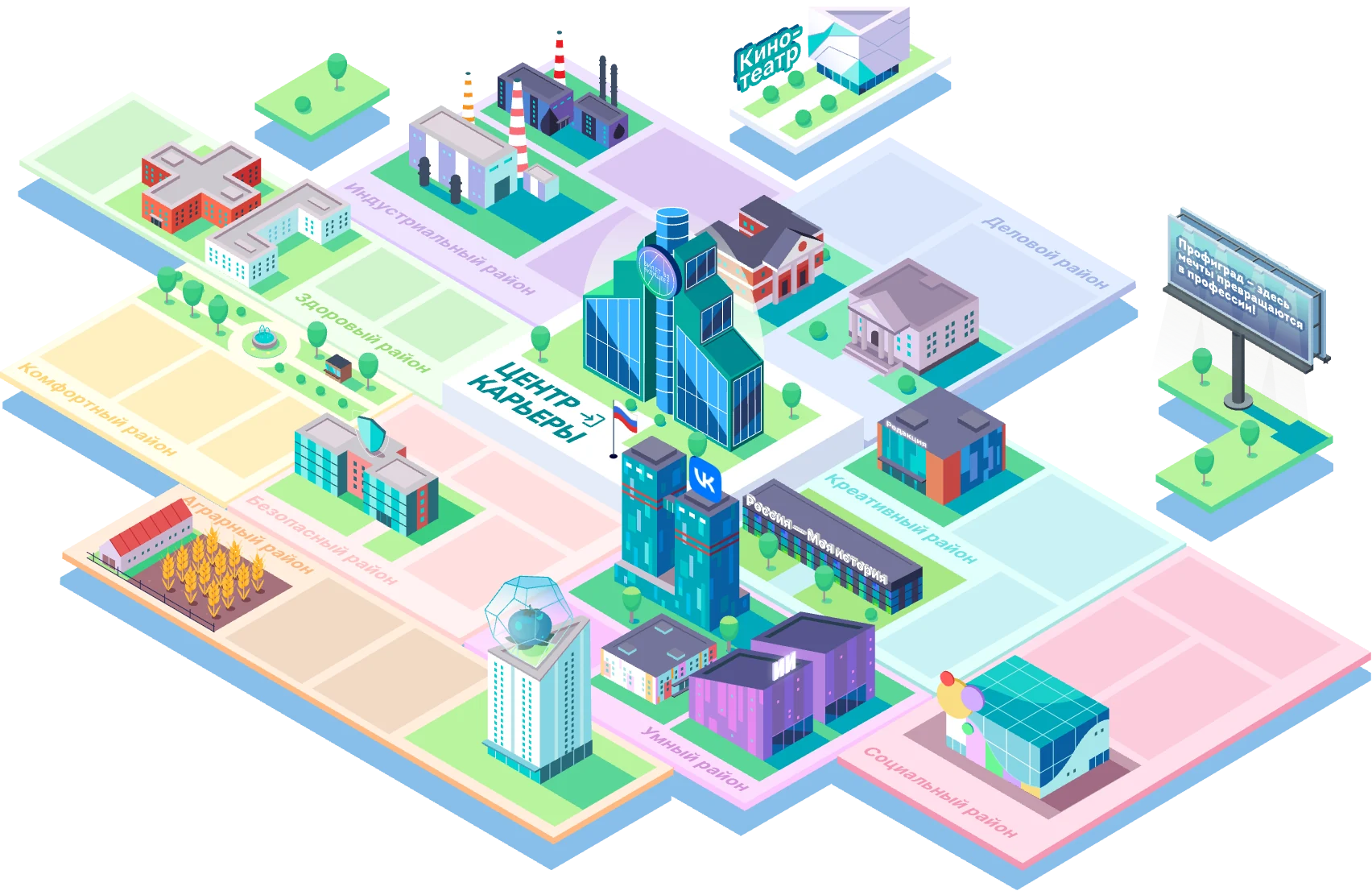
Nine districts, quests, simulations and new events every week — one digital product.
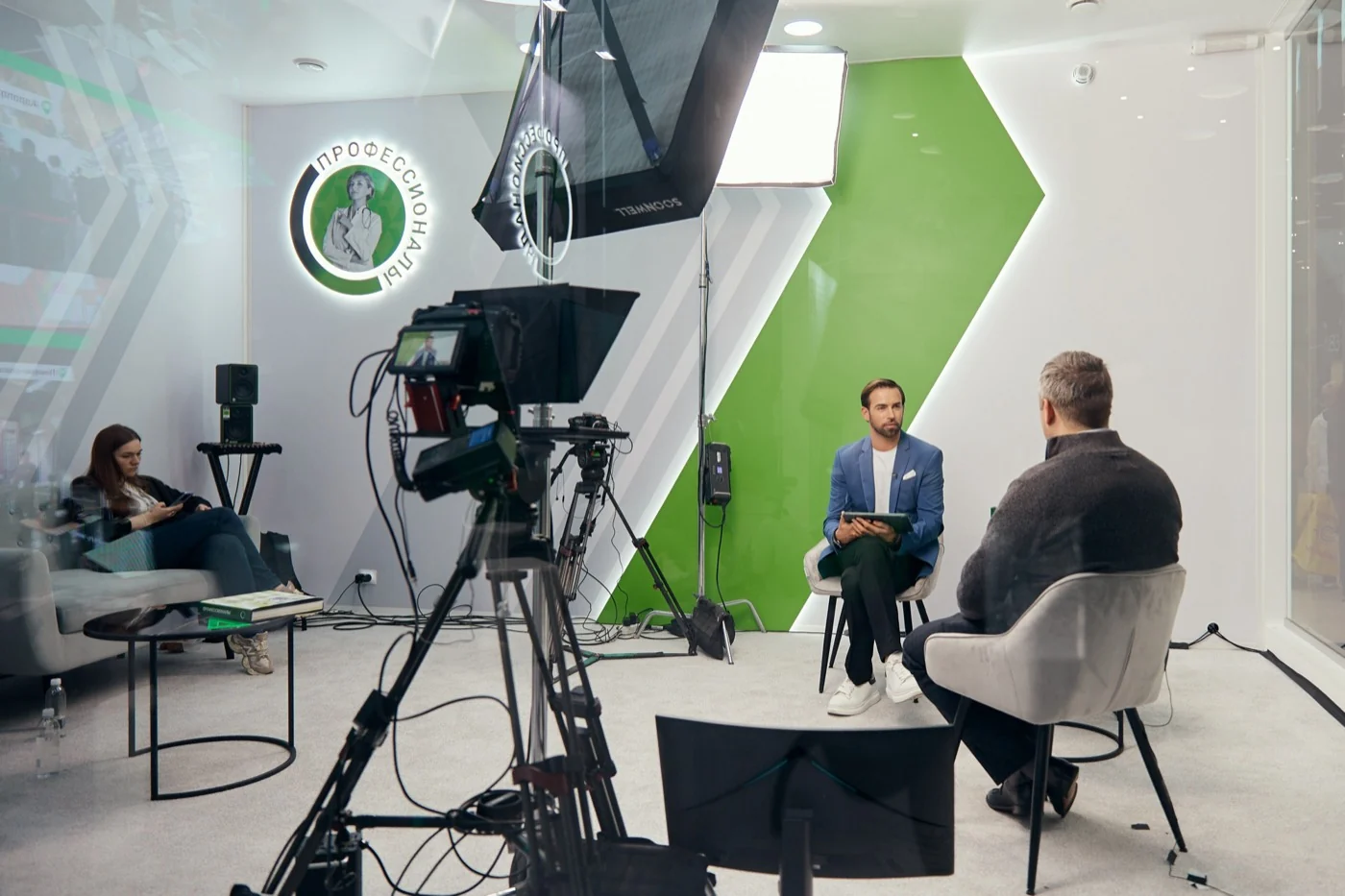
A studio, live feeds from venues, an editorial team and audience engagement — eight hours on air every day.
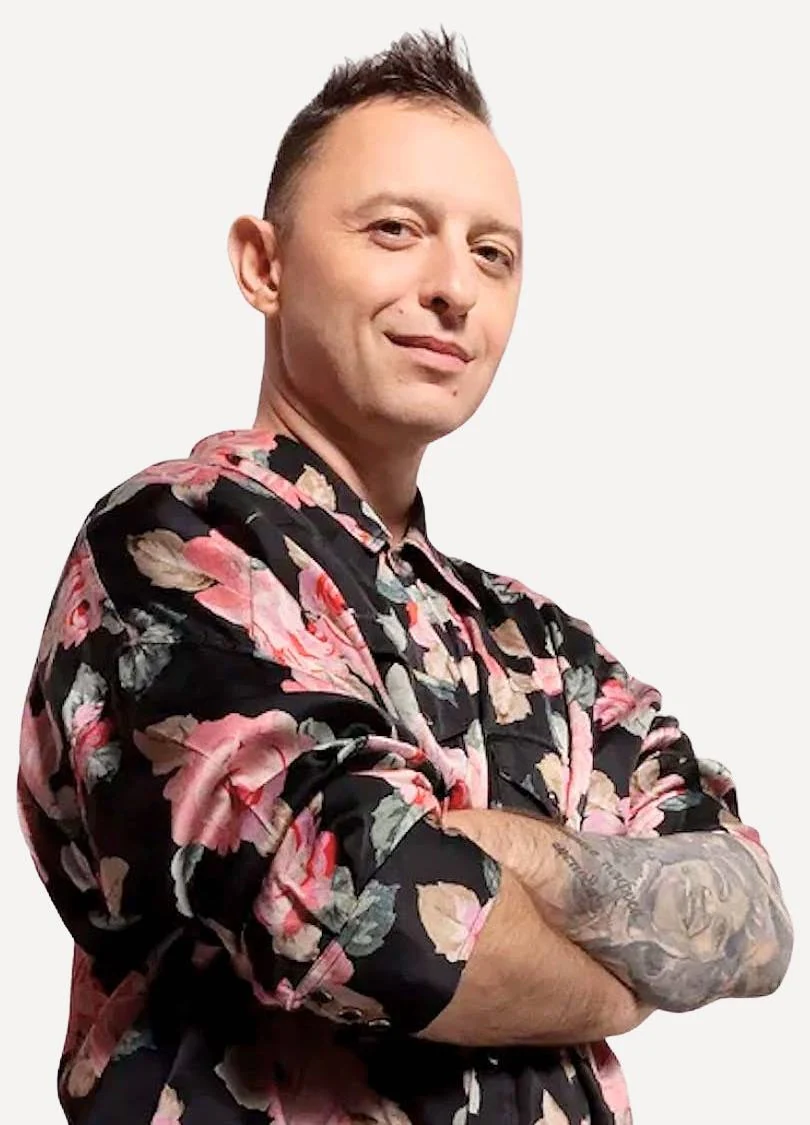
PR support for the photo exhibition: wall text, media pool, press Q&A, society coverage and post-event reports.
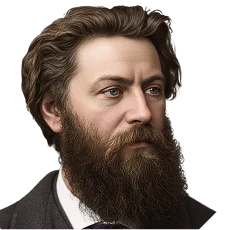

Visitors build a question on a touchscreen and get an answer from a historical figure — each with their own voice.
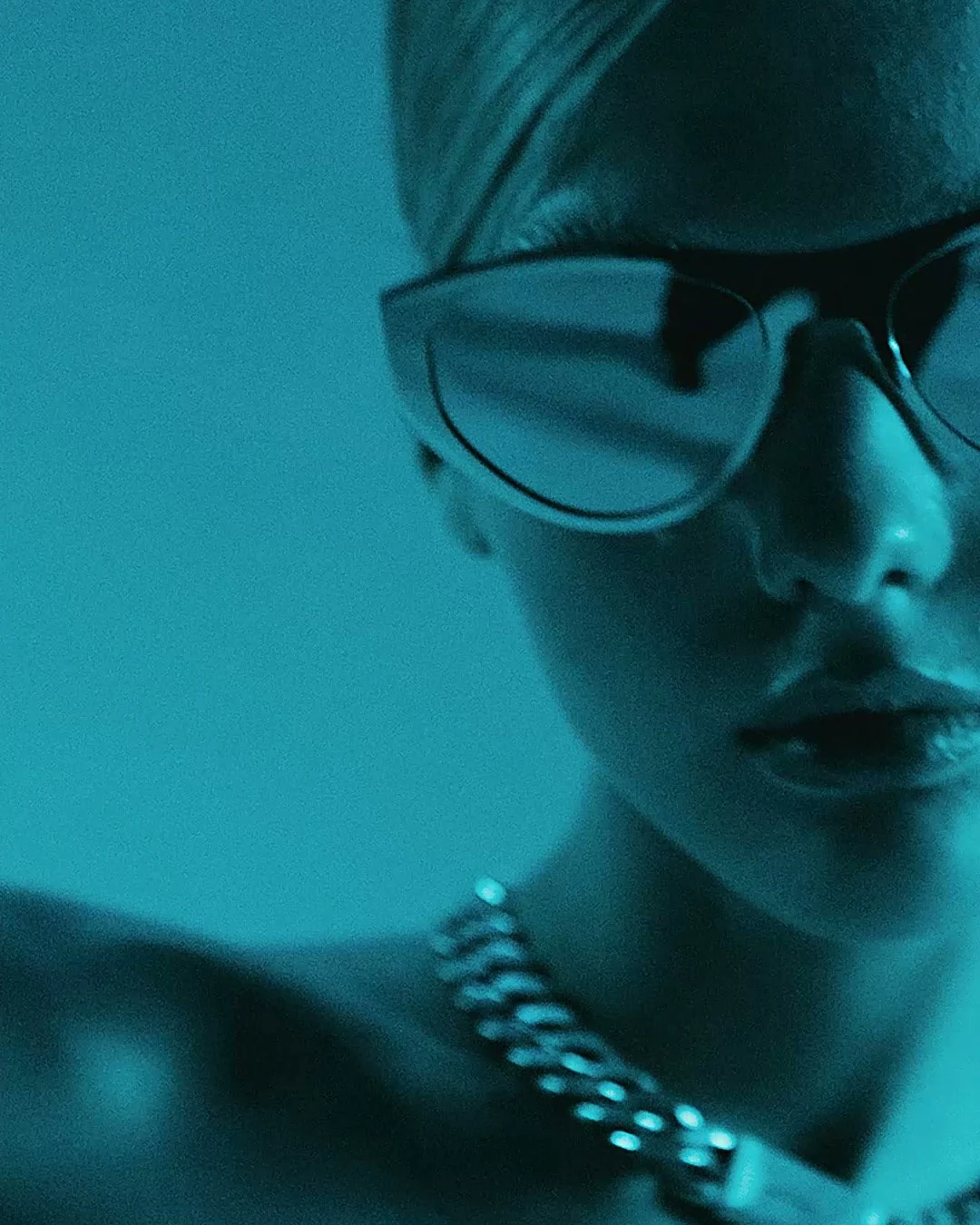
Backlight, metal macro shots and fluid editing — composed for a vertical screen from the start.

From concept and interface to development, content and day-to-day operation of a session-builder platform.


A series of one-hour broadcasts: scripts, a multi-camera studio, experiments and live feeds from venues.
Virtual work tasks: build a robot, test a hypothesis, make a decision and see what it leads to.

An adult learning program: user dashboard, assignments, work review and progress tracking.
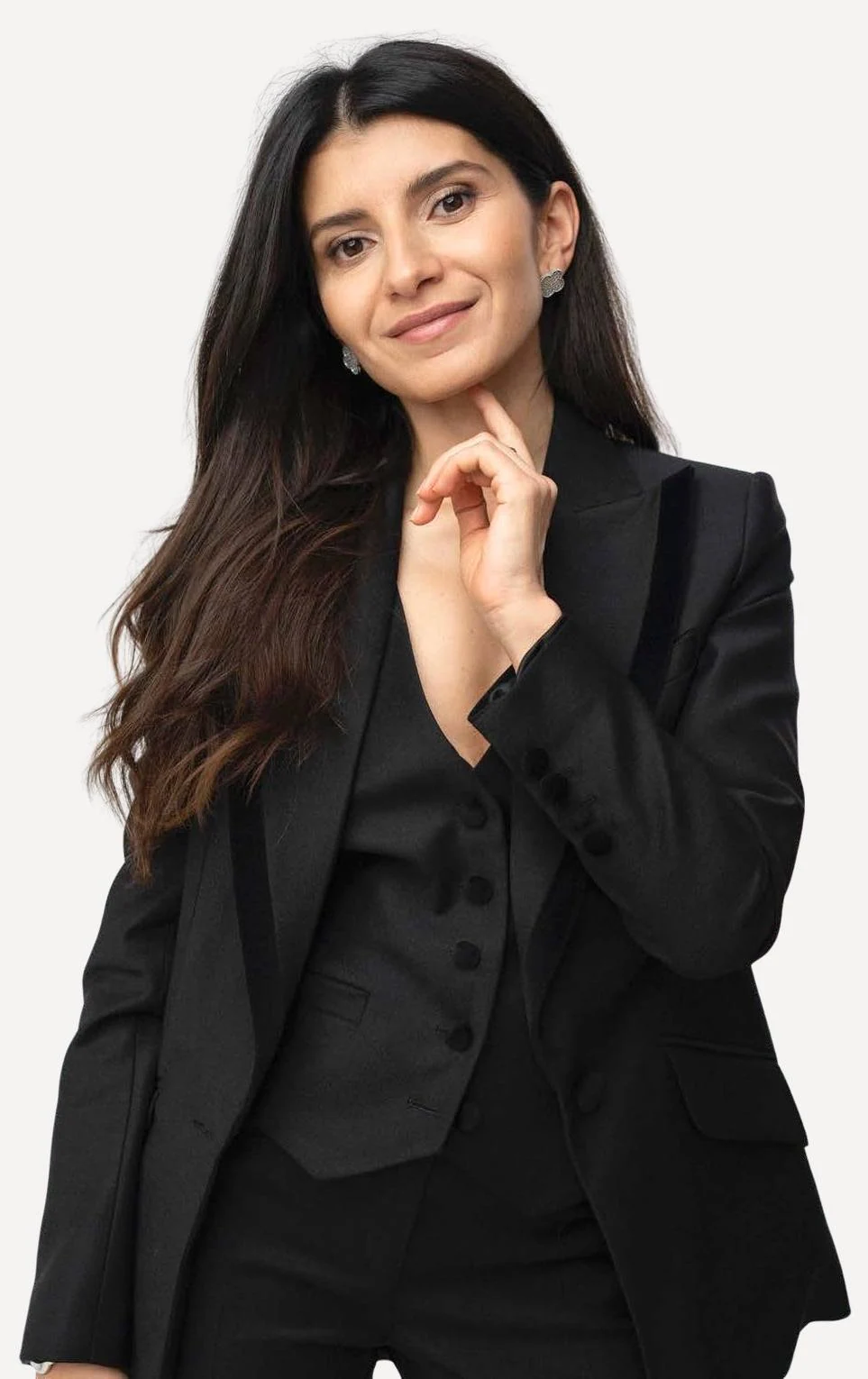
Event concept, venue, program, a guest performer, on-site coordination and media coverage.
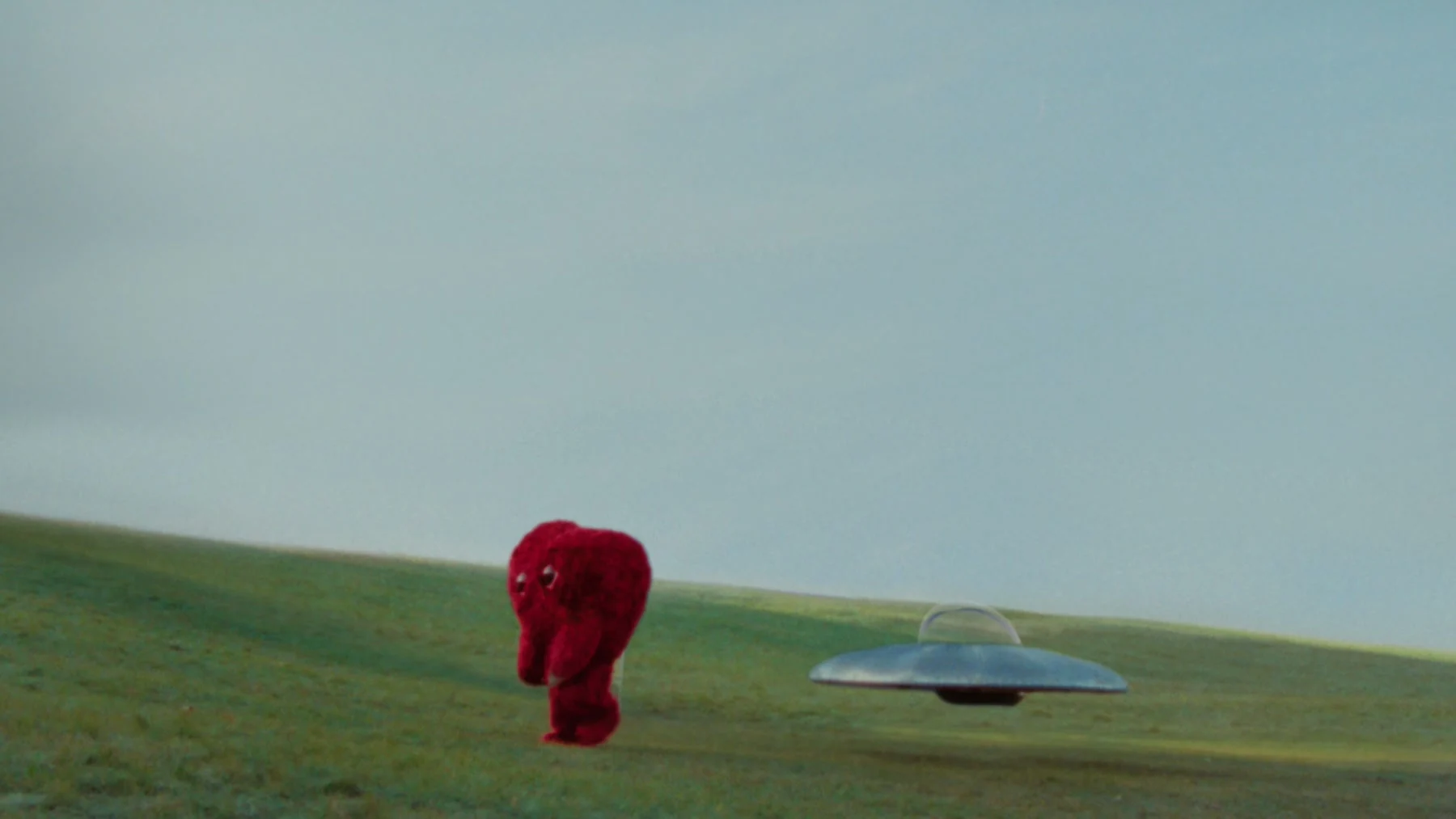
A music video about meeting an unusual hero: a red character, a big city and a story set to the track’s rhythm.

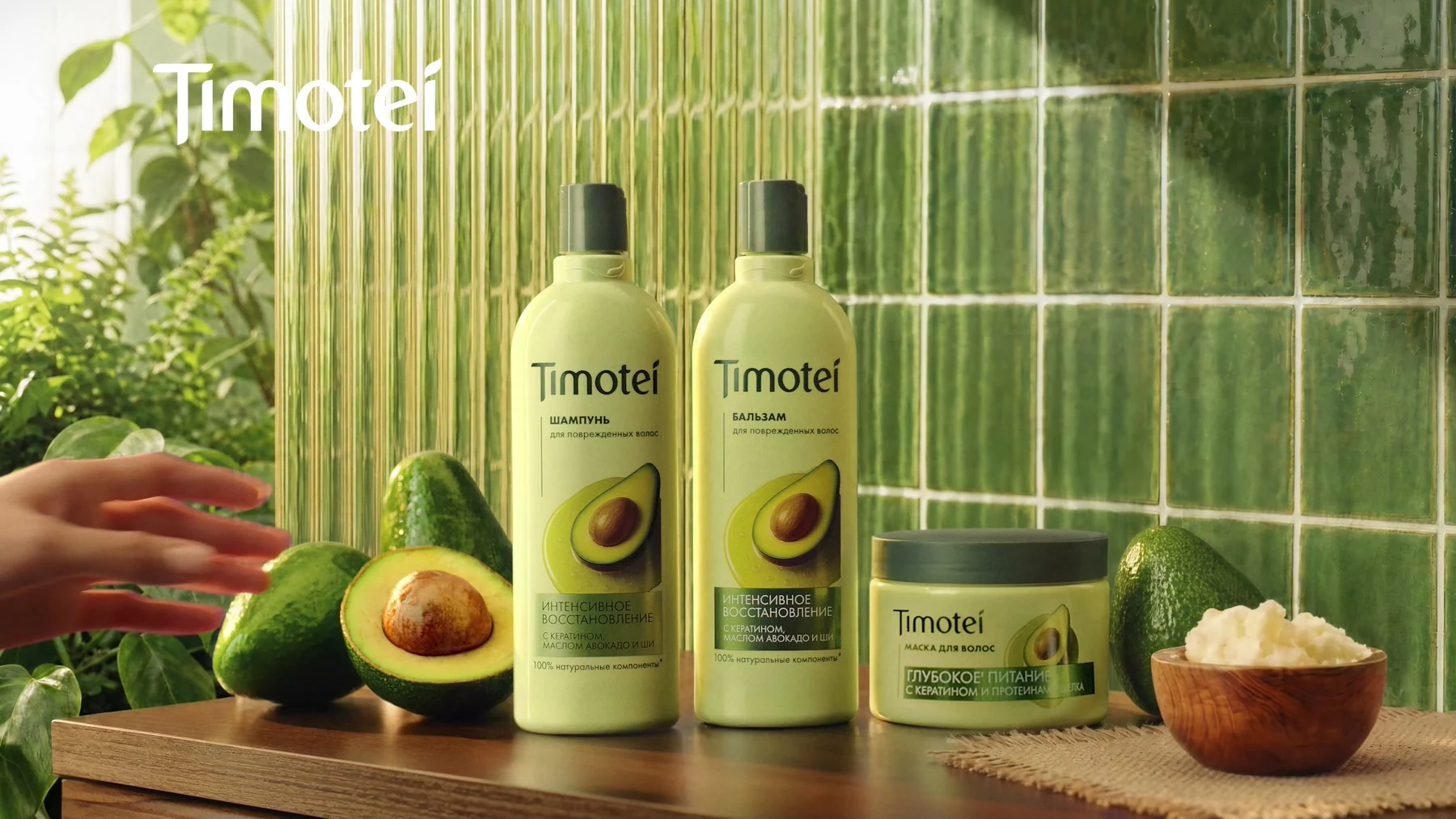
A hair care TV commercial: product shots, portraits and close-ups of natural ingredients.
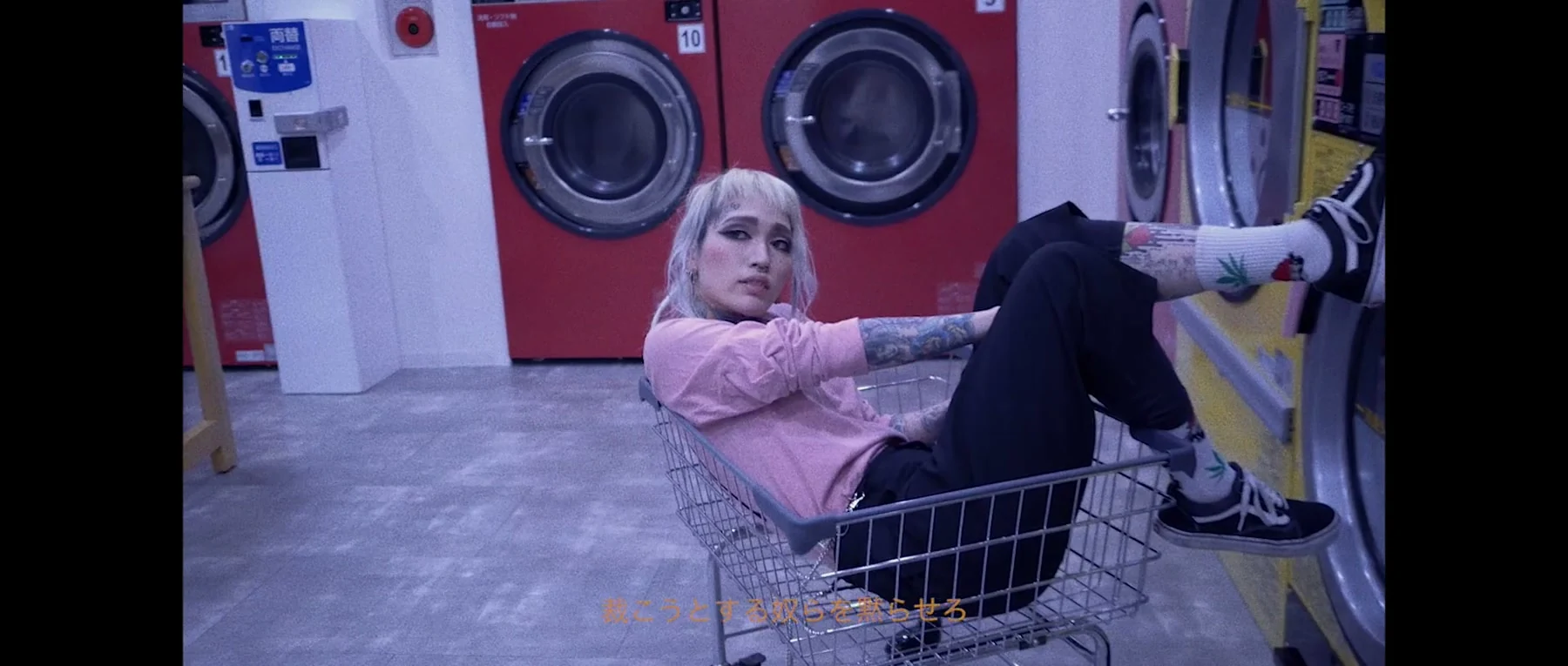
A fashion film with neon light, city locations and editing that ties portraits and motion together.
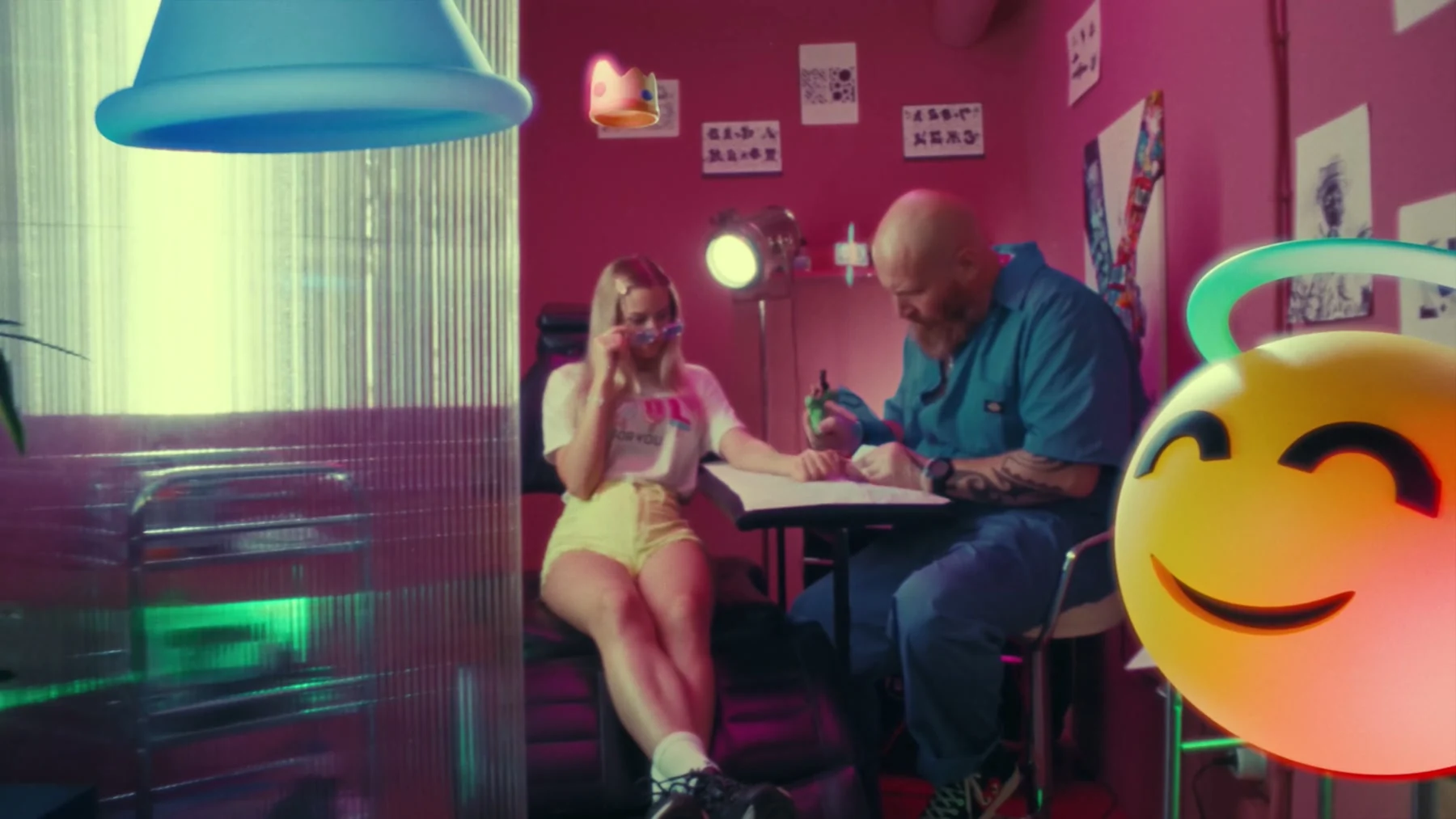
A bright room, characters and objects in motion — a commercial with playful transitions between scenes.
How we work
From idea and plan to a finished project. We bring in the right teams, build the solution and own the launch.
We bring in the right teams
We work as the project’s standing team: we keep the context, run the plan and adjust decisions based on results.
We take on a single task with a clear scope, deadline and outcome.
About
We love working with people who have something to say.
Especially when it’s hard to fit into an ordinary brief. We help get to the core of it, find the form and create an experience through which the idea is seen, understood and remembered.
It can be a single PR campaign, a video, a digital product or an entire ecosystem. What matters is an idea behind the project that’s worth bringing to life.
The task defines the solution.
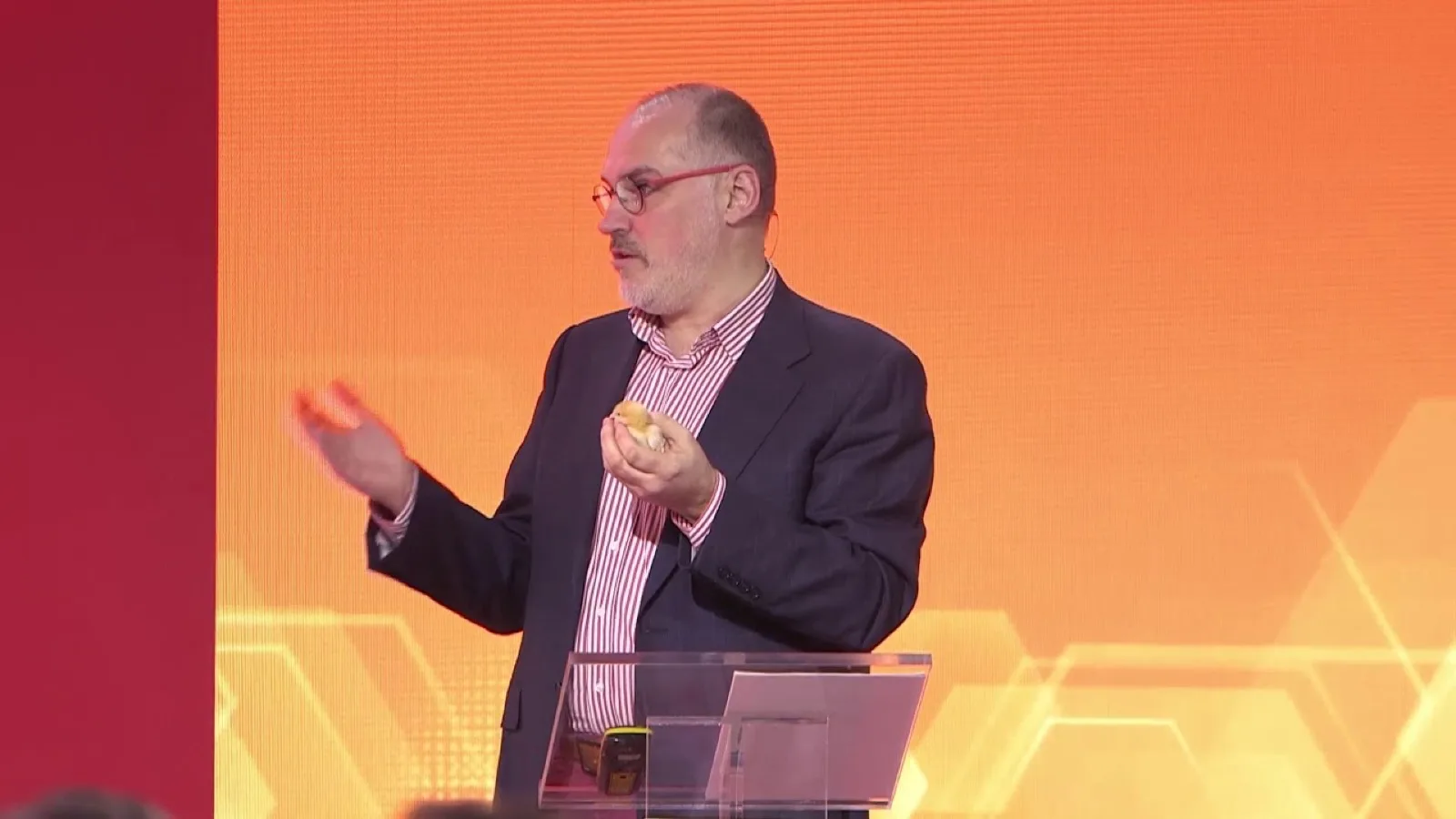
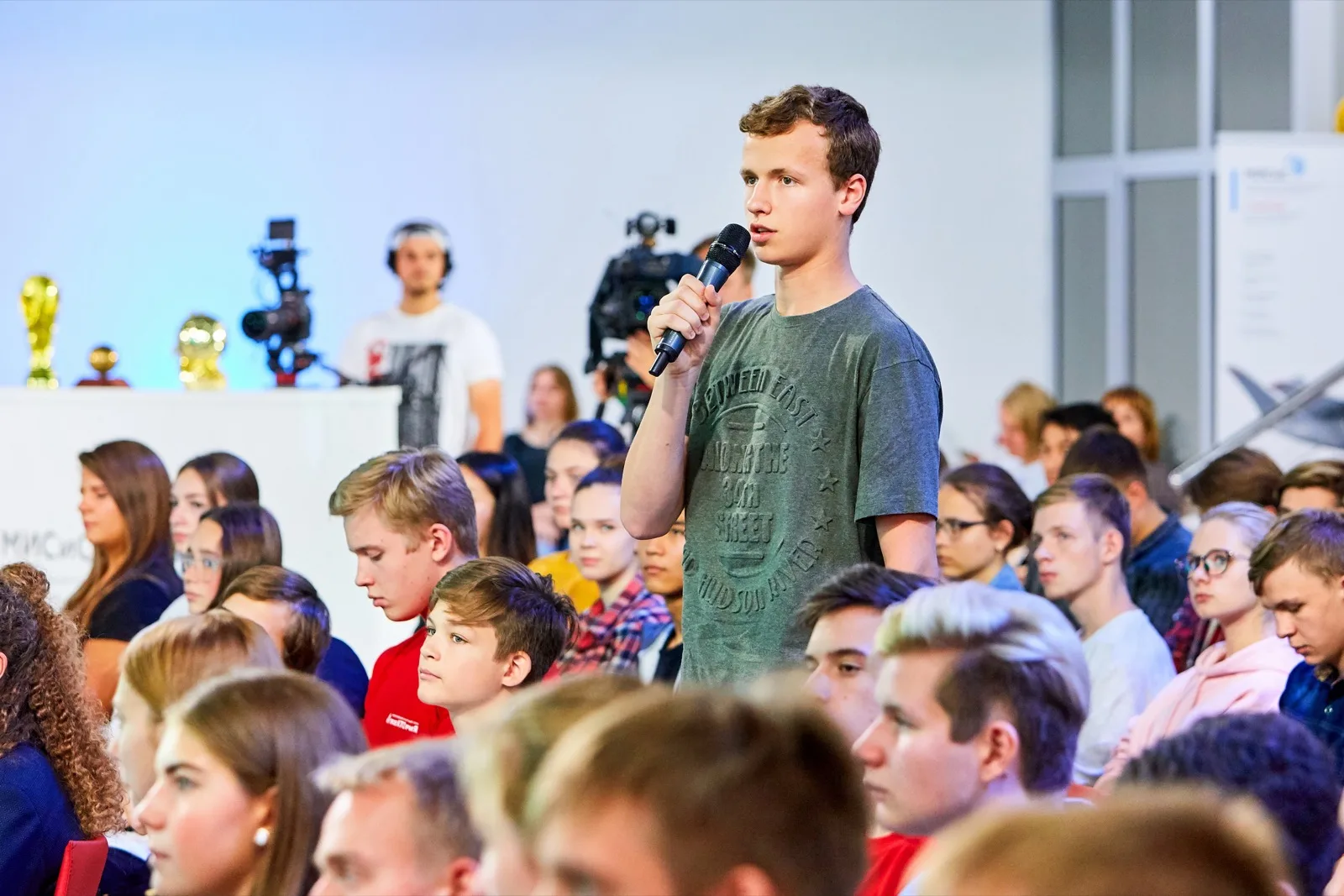
We share our experience — in the media and on stage
Team
Production · music video · Antokha MC
A 3:46 music video in 4K: the story of a hero in a red full-body costume — from the courtyard and the apartment to a field outside the city.
PR · influencer marketing
A brand’s steady media presence is built from many different news hooks: seasonal collections, new products, research, and collaborations. For Azbuka Vkusa, we combined PR and influencer marketing into a single program.
Our role: developing news hooks and special projects, media relations, influencer selection, executing integrations, and coverage analysis.

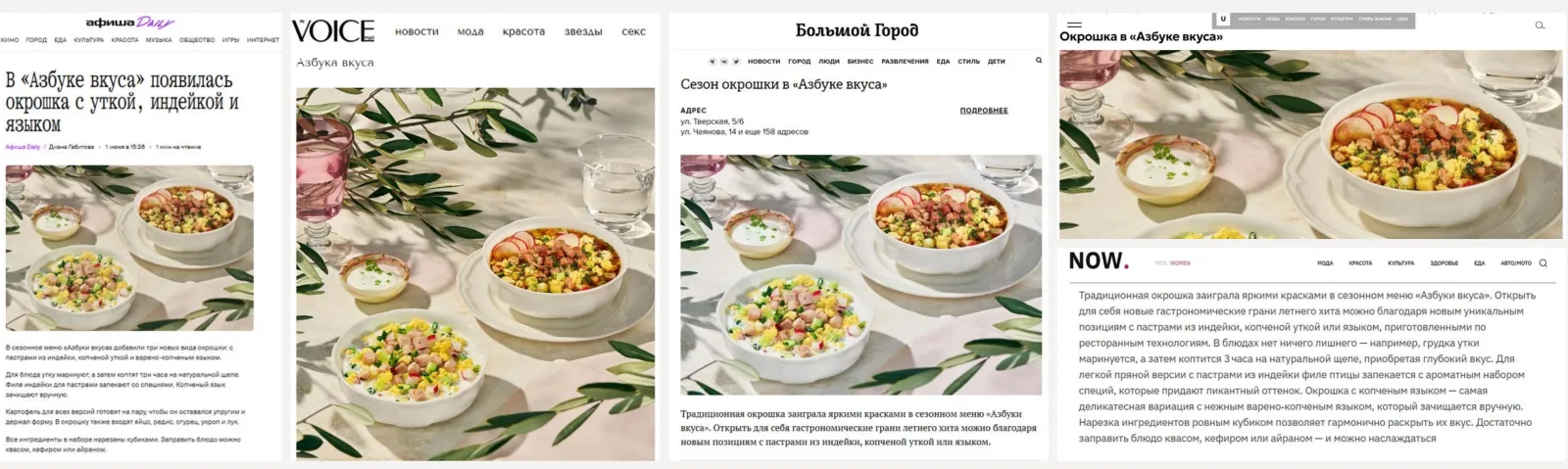
Over the course of our work, we delivered more than ten news hooks. Each was tailored to the product, the outlet’s audience, and the format: a news item, a roundup, a digest, or an interactive special project. Each new product in the range got an angle that an outlet could bring to its readers.
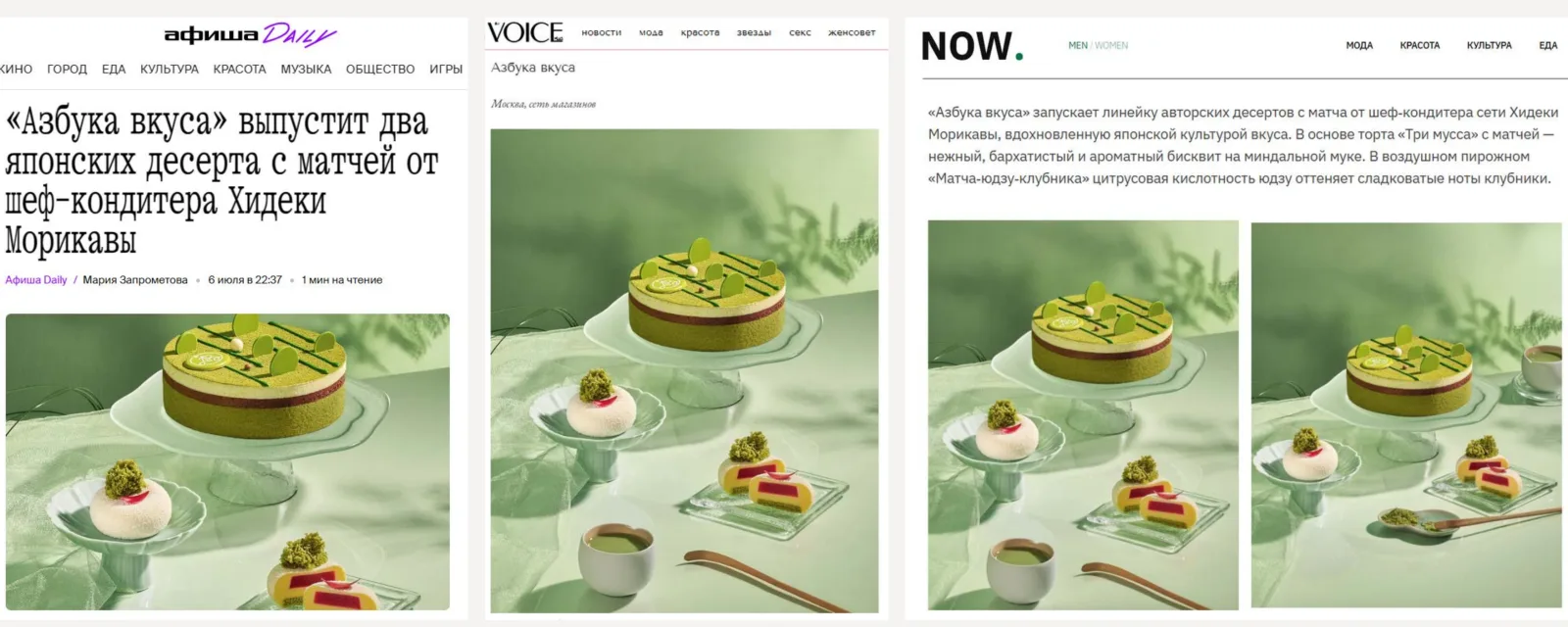
Coverage featured okroshka with duck, turkey, and tongue; Japanese matcha desserts by pastry chef Hideki Morikawa; and other launches. The team prepared materials, pitched stories to outlets, managed placements, and collected coverage for each news hook.


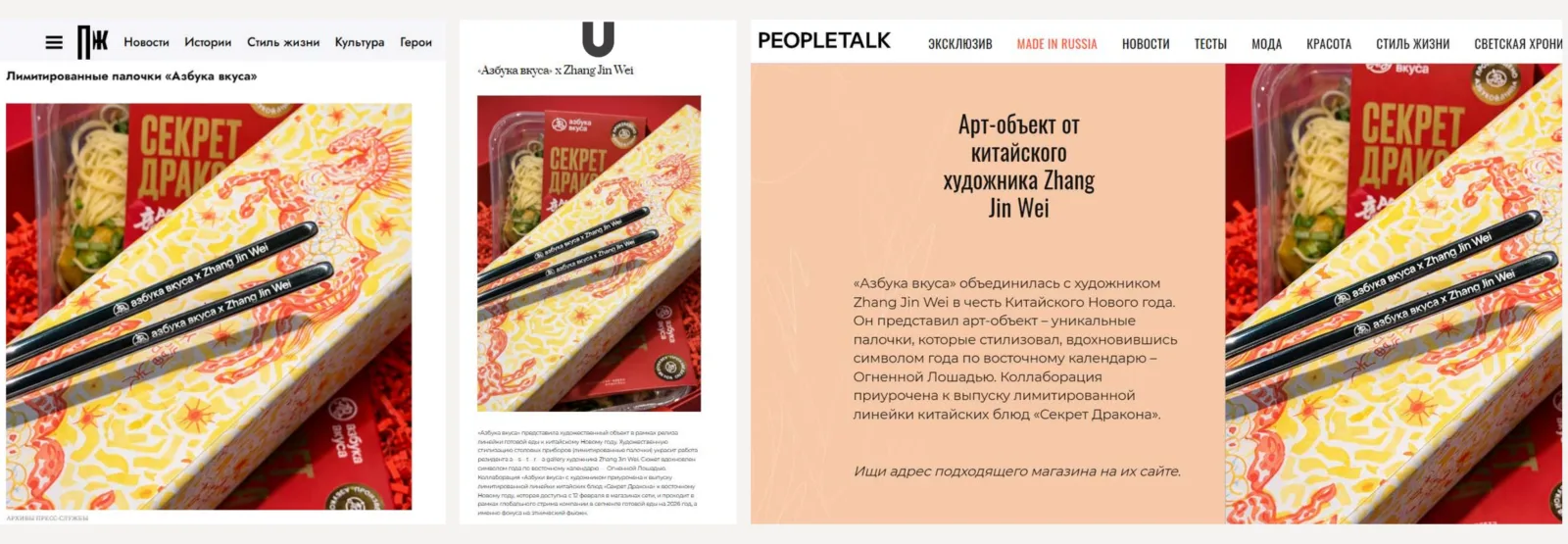
For Chinese New Year, the agency developed and delivered a special project: a collaboration with Chinese artist Zhang Jin Wei for the launch of “Dragon’s Secret,” a limited-edition line of ready meals. The goal was to draw attention to the holiday line’s launch and strengthen brand perception through a cultural news hook.
In another project, Azbuka Vkusa’s collaboration with the Tretyakov Gallery continued in The Blueprint. The special project ran digitally and in the print Art Issue dedicated to contemporary art in Russia. The issue had a print run of 10,000 copies.

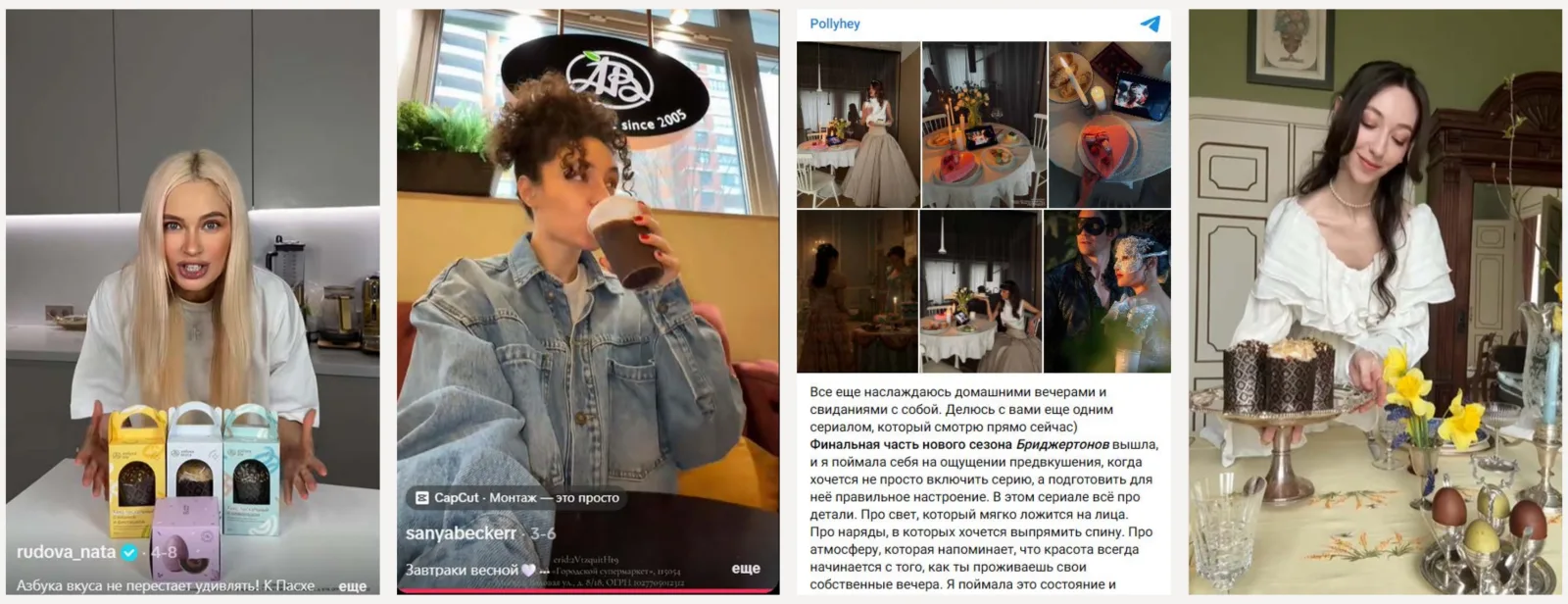
The influencer side ran in parallel: 130+ influencer integrations across seasonal campaigns, product launches, and the brand’s special collections. The team ran 10 campaigns (Maslenitsa, Valentine’s Day, Easter, New Year, May holiday barbecues, product launches, the healthy LIFE line, and Chinese New Year), adapting the creative, blogger selection, and integration scripts to each specific news hook, product category, and audience.
For each occasion, we selected relevant bloggers and developed integration scripts. The team approved content, tracked posting deadlines, and collected results. The seasonal theme set the overall frame, while the specific approach depended on the product and the creator’s audience.

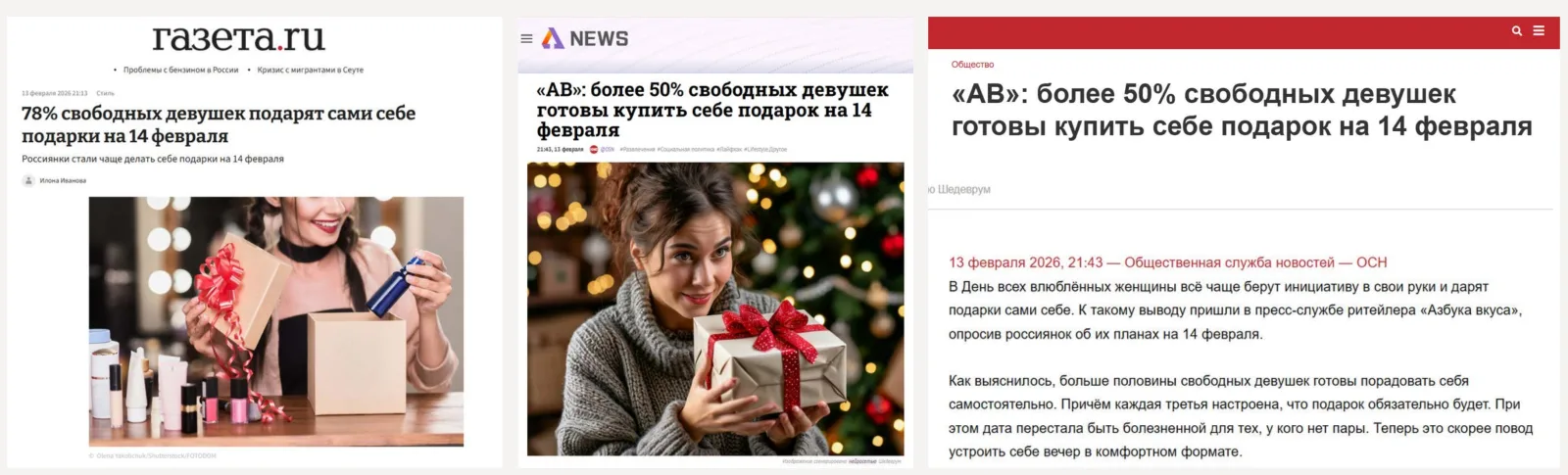
For Valentine’s Day, we worked with the audiences of five Telegram bloggers. We built a bot for the project: subscribers took a themed survey about their gift preferences and received a promo code for purchases.
The survey results were used in two ways. We turned them into materials for the media, and the bloggers published gift roundups based on their subscribers’ preferences. A single mechanic connected audience participation, creator content, and a fresh news hook for editors.

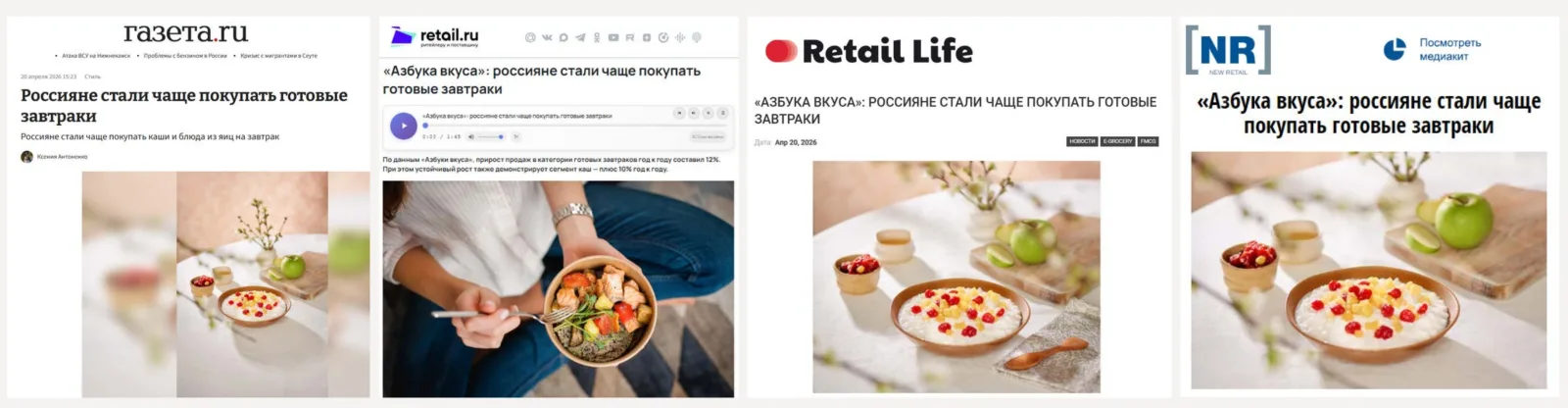
Research-based news hooks complemented product launches. For example, pieces on ready-made breakfasts ran in Gazeta.Ru, Retail.ru, Retail Life, and New Retail. The topic made it possible to speak to both a broad audience and the professional readership of retail media.
In the final selection, projects are grouped by mechanic: product news, cultural collaboration, seasonal integration, research. This mix gave the brand several ways to stay on the media agenda and appeal to different audience interests.

The PR side of the program generated more than 60 publications with a total reach of over 6.5 million. On the influencer side, we delivered more than 130 integrations across ten campaigns.
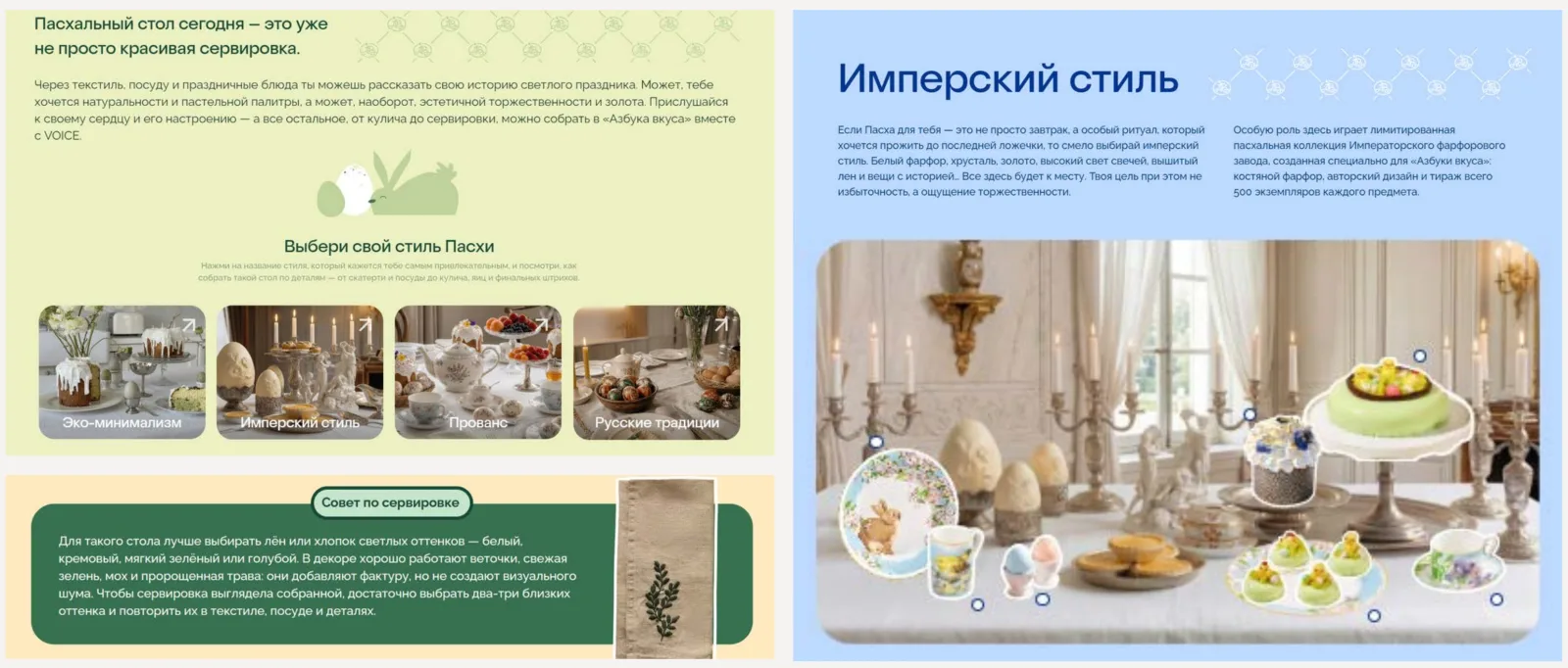
Formats included an interactive holiday table-setting builder with VOICE, art collaborations, product roundups, and research. Sample publications and links are collected below.
PR · event · March 2–8, 2026, Kazan
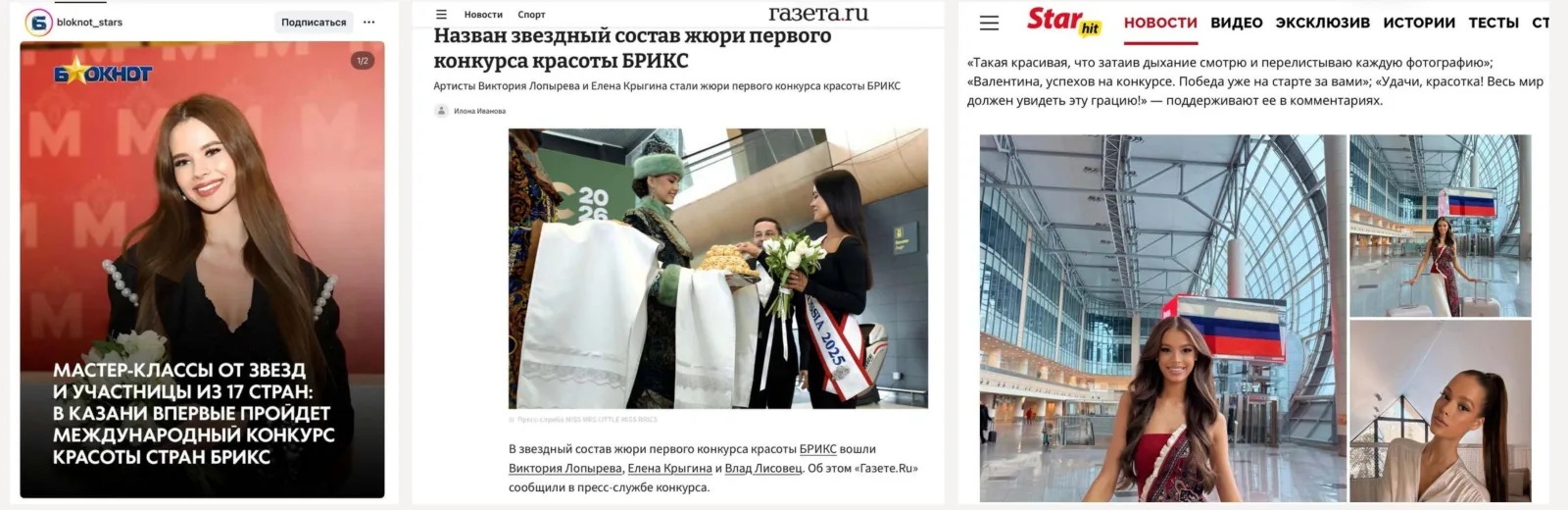
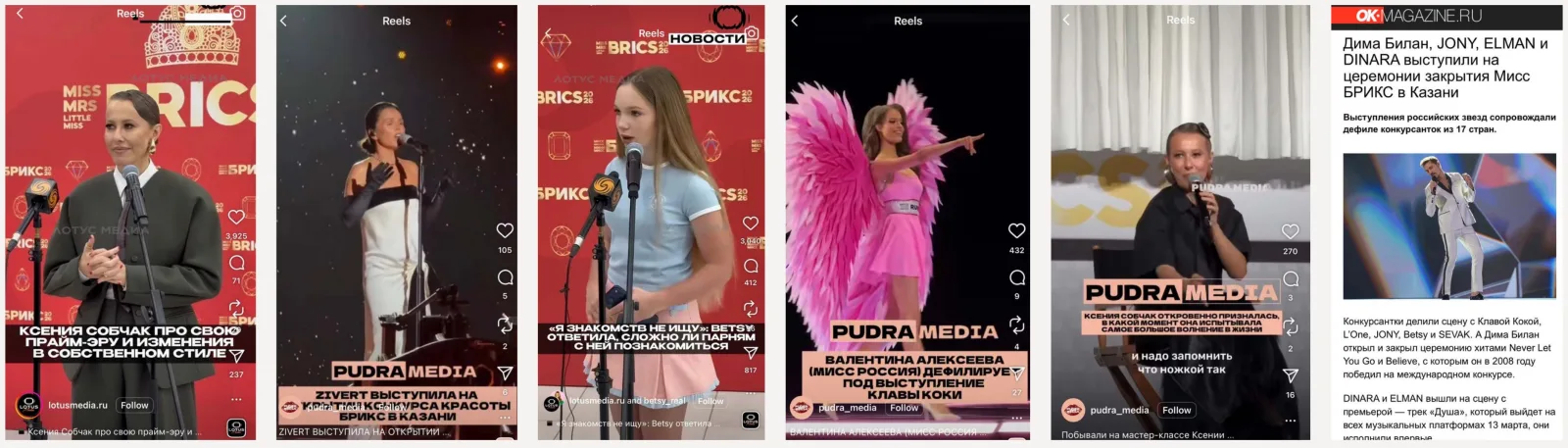
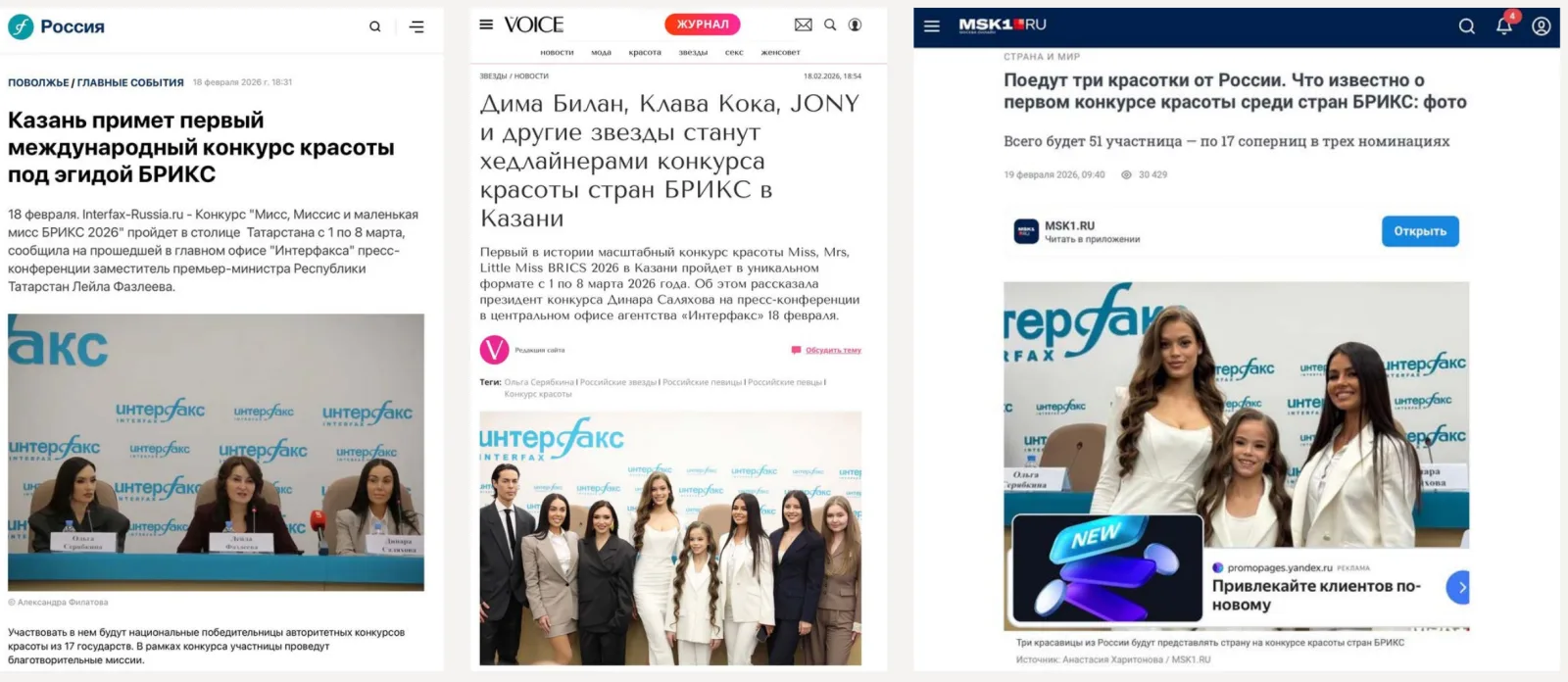
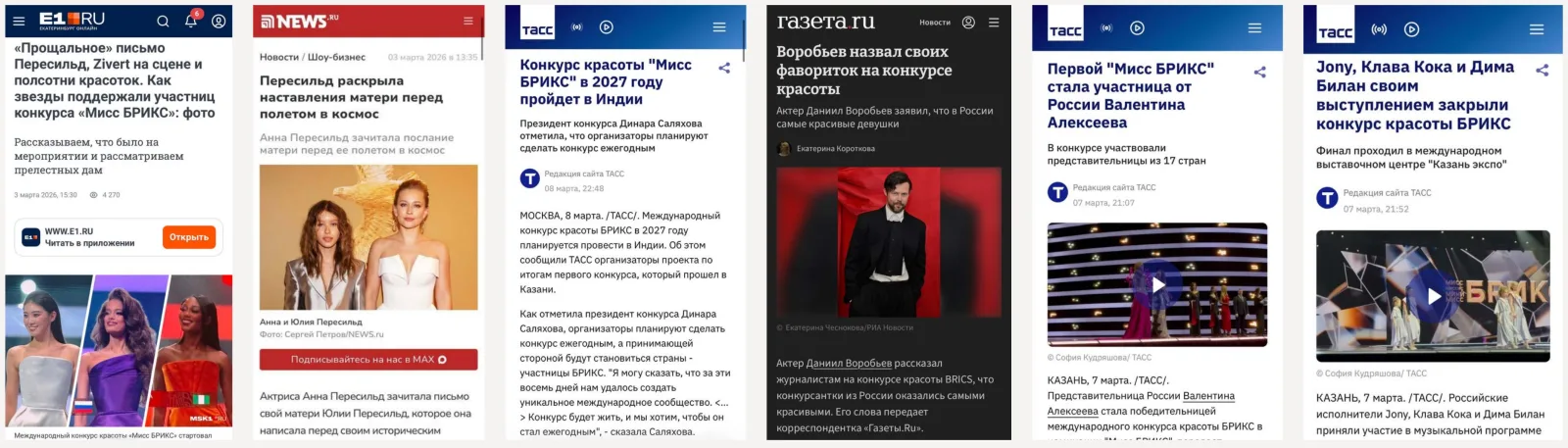
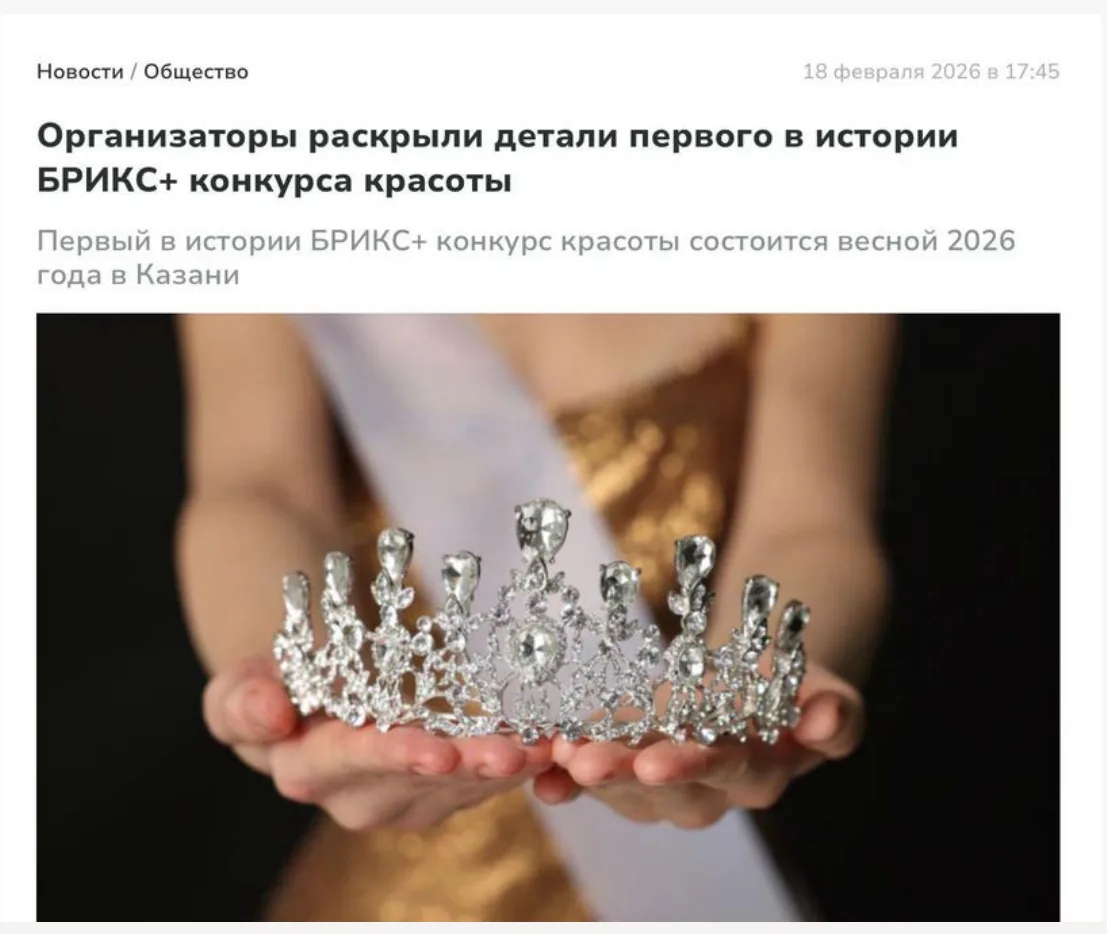
The first MISS MRS LITTLE MISS BRICS pageant had to be introduced to the public and supported at every stage. We built a PR program that ran from the announcement and press tour to daily on-site work and coverage of the final.
Our role: PR strategy for the pageant, press tour, press conferences, on-site media support, news hooks, and monitoring.

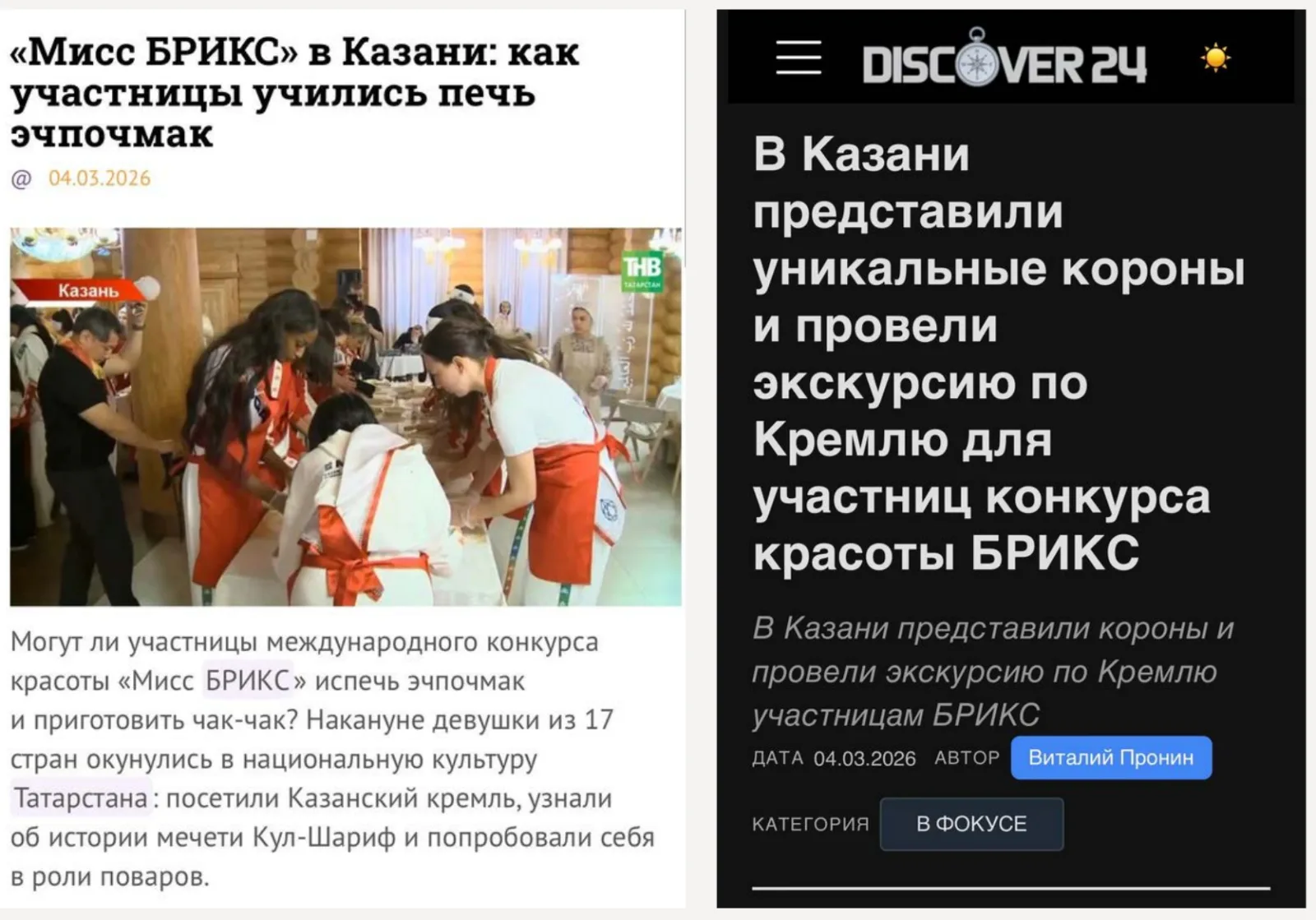
The pageant took place in Kazan from March 2 to 8, 2026, and brought together contestants from 17 countries in three categories: Miss, Mrs., and Little Miss. The PR team’s task was to present the new project as an international platform for cultural exchange and to sustain interest in it through the final.
The strategy was split into the announcement, the event itself, and the final. The program covered national and glossy media, Telegram channels, Instagram pages, TV, and radio. Each stage had its own news hooks, from the first introduction to the pageant to the opening, the contestants’ days at the event, and the announcement of the winners.

The team assembled a pool of national media, confirmed their participation, and prepared the press program for the tour. Of the 25 outlets invited, 22 worked on site. Journalists were supported throughout the event: we helped arrange interviews, press Q&As, and access to materials.
The press center was run jointly with Tatmedia. We coordinated work with regional and international media and reviewed photo and video materials daily. The press tour resulted in 121 publications.

We organized three press conferences: we wrote the moderator’s script and briefs for six speakers, welcomed guests, and coordinated work on site. The team prepared more than 15 announcements and press releases, each adapted for specific outlets.
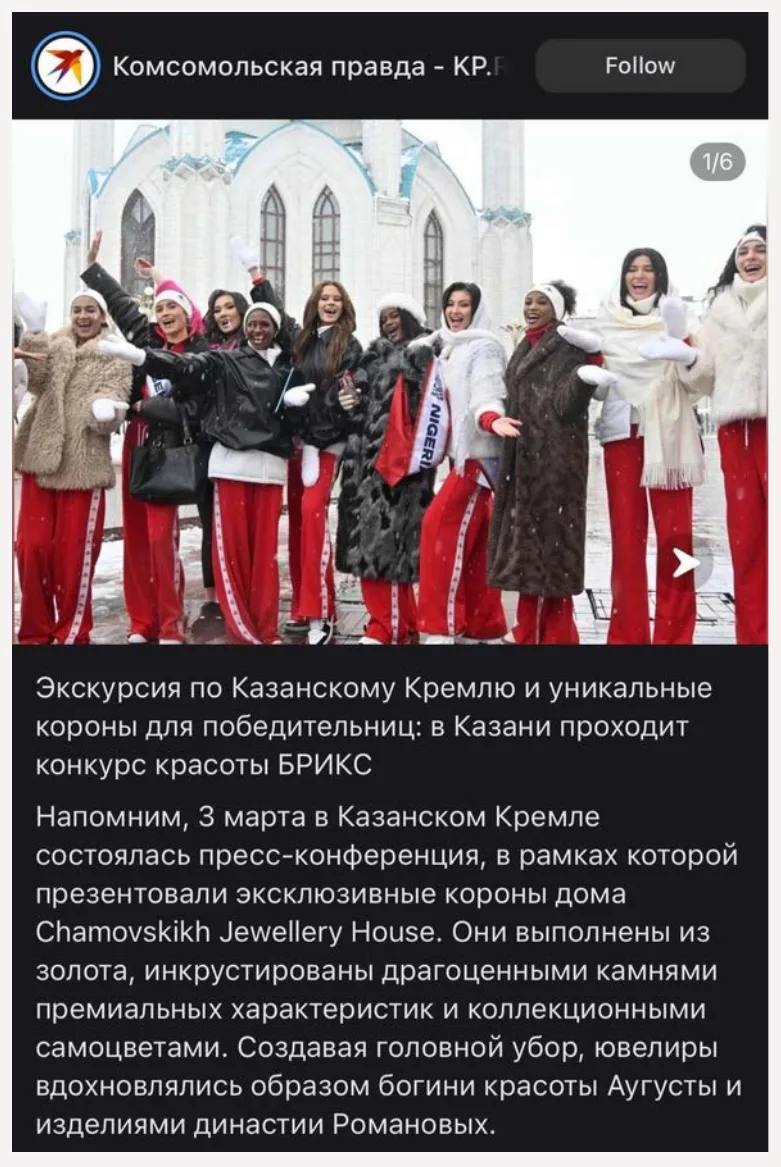
The agenda covered both the pageant program and individual stories about the contestants. A master class on making echpochmak, a visit to the Kazan Kremlin, and the presentation of the crowns gave outlets standalone stories for news items and reports.


Every day, we tracked coverage and its sentiment, prepared responses to emerging questions, supported Telegram channels, and compiled reports. Glossy and lifestyle media received their own angles: the contestants, the judging panel, and program events.
In total, the team worked with 164 news hooks. The largest waves of coverage came with the closing of the pageant (470 pieces and a reach of 11.5 million) and the opening (366 pieces and a reach of 6.2 million). The announcement of the winner also became a news wave of its own.


Media support covered all three stages of the pageant: the announcement, the event itself, and the final. The results: 1,591 publications, 15 TV segments, and coverage on 87 foreign platforms, including Weibo and Xiaohongshu.
The final report brought together media monitoring, reach, publication counts, and sentiment analysis. The press tour, the press center, and daily news hooks kept outlets supplied with material throughout the week.
Events · live broadcasts · 2024
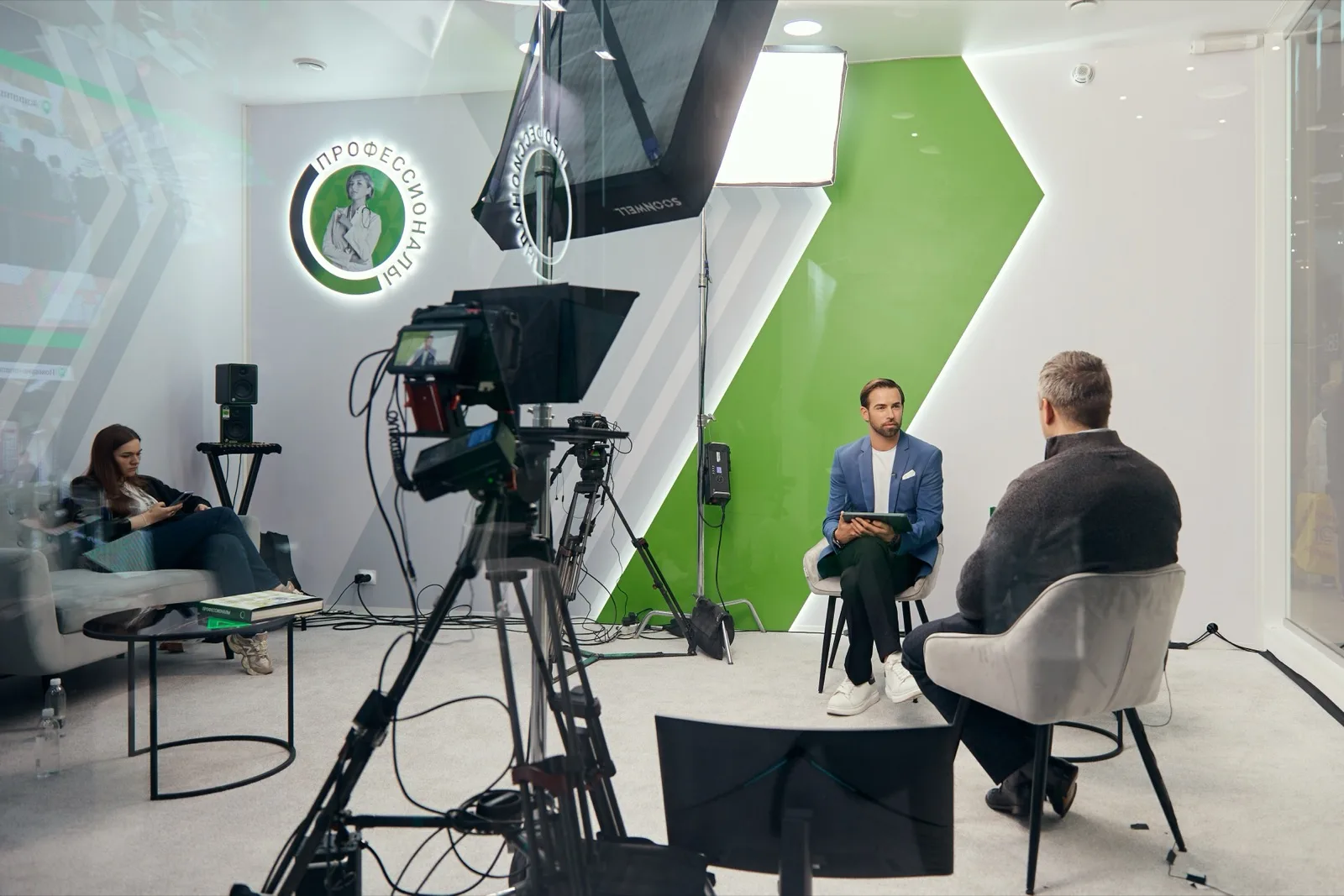
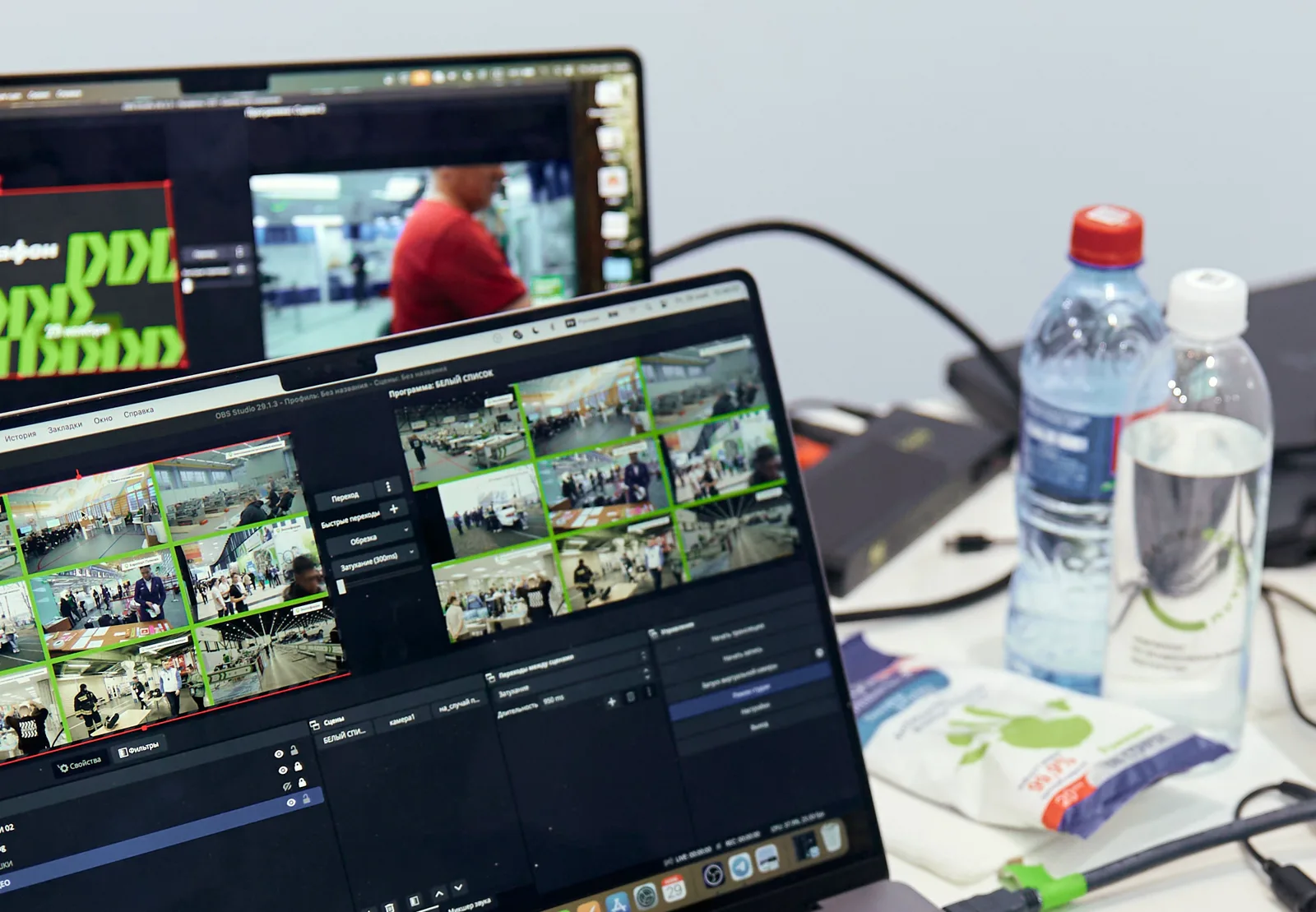
We built a TV studio right at the venue, set up live feeds from the competition zones, and ran a media center. For four days, we broadcast from 10 a.m. to 6 p.m., with guests, reports, graphics, and audience participation.
Our role: broadcast script and editorial, TV studio, multi-camera production, live feeds, on-air graphics, and media center operations.

Several competition venues run at the same time. Viewers need to understand what is happening and why it matters, even if they tune in midday. To make that possible, we built a rundown in advance: segments, guests, switchovers, timings, and material to fill breaks.
At the venue, we set up a TV studio with cameras, lighting, microphones, and branded set design. For live feeds, we prepared dedicated technical positions in the competition zones. Connectivity had backup channels, so the program could continue if one of the connections ran into problems.
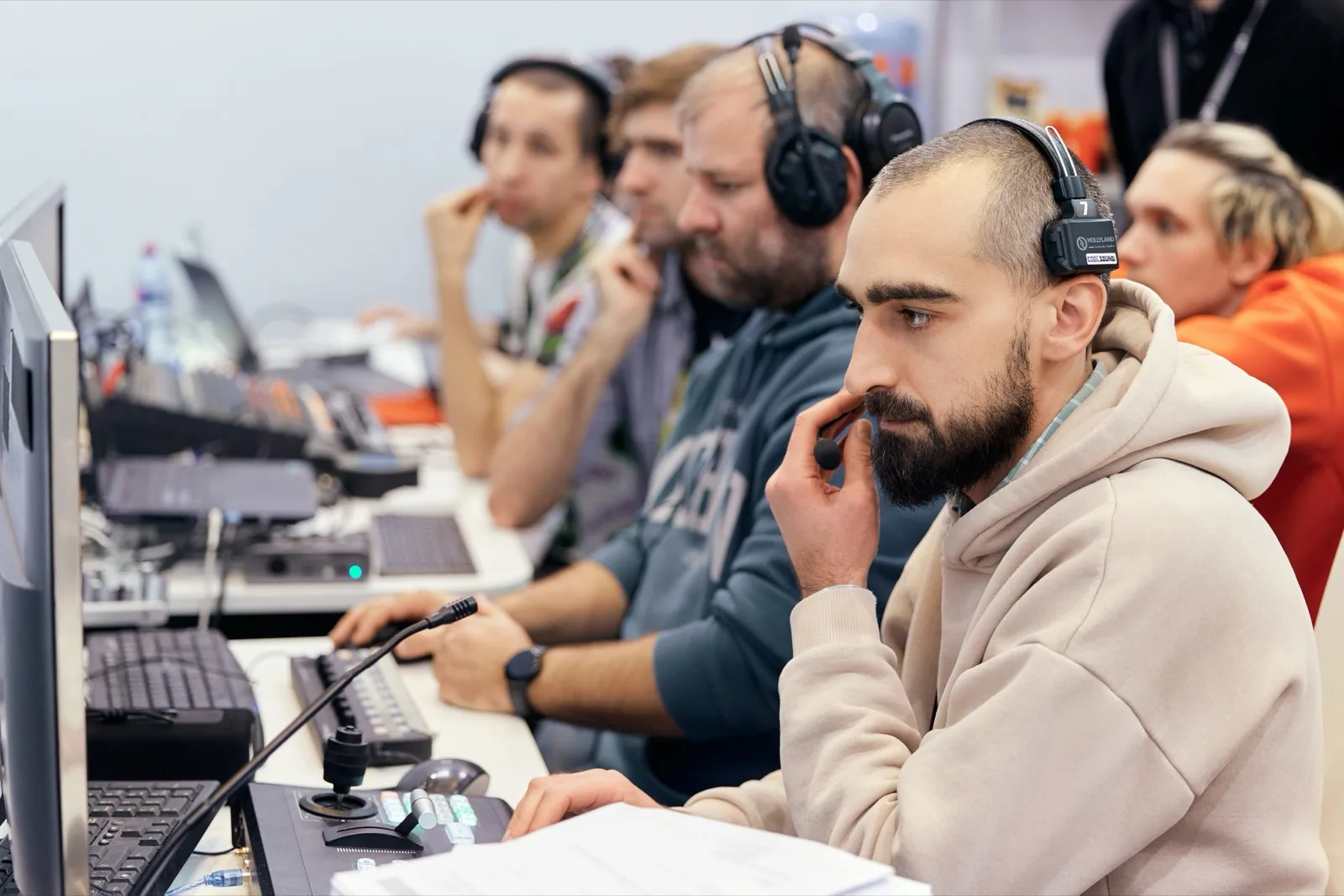
An editor worked with the host through an earpiece, in tandem with the scriptwriter. Guests were prepared for their conversations individually: on a live broadcast, knowing the topic is not enough. You also have to fit it into the allotted time, connect it to what is happening at the venue, and hand over to the next speaker on cue.
Off camera, the team kept track of the segment order and the readiness of the live feeds. The editorial team, the director, and the technical crew working together made it possible to run a long program as a single story about the event.


We developed a graphics package: lower thirds with each guest’s name and profession, 3D bumpers with the names of the skill categories, timers, on-screen polls, and graphics for the awards ceremony. Each type of material had its own place in the program.
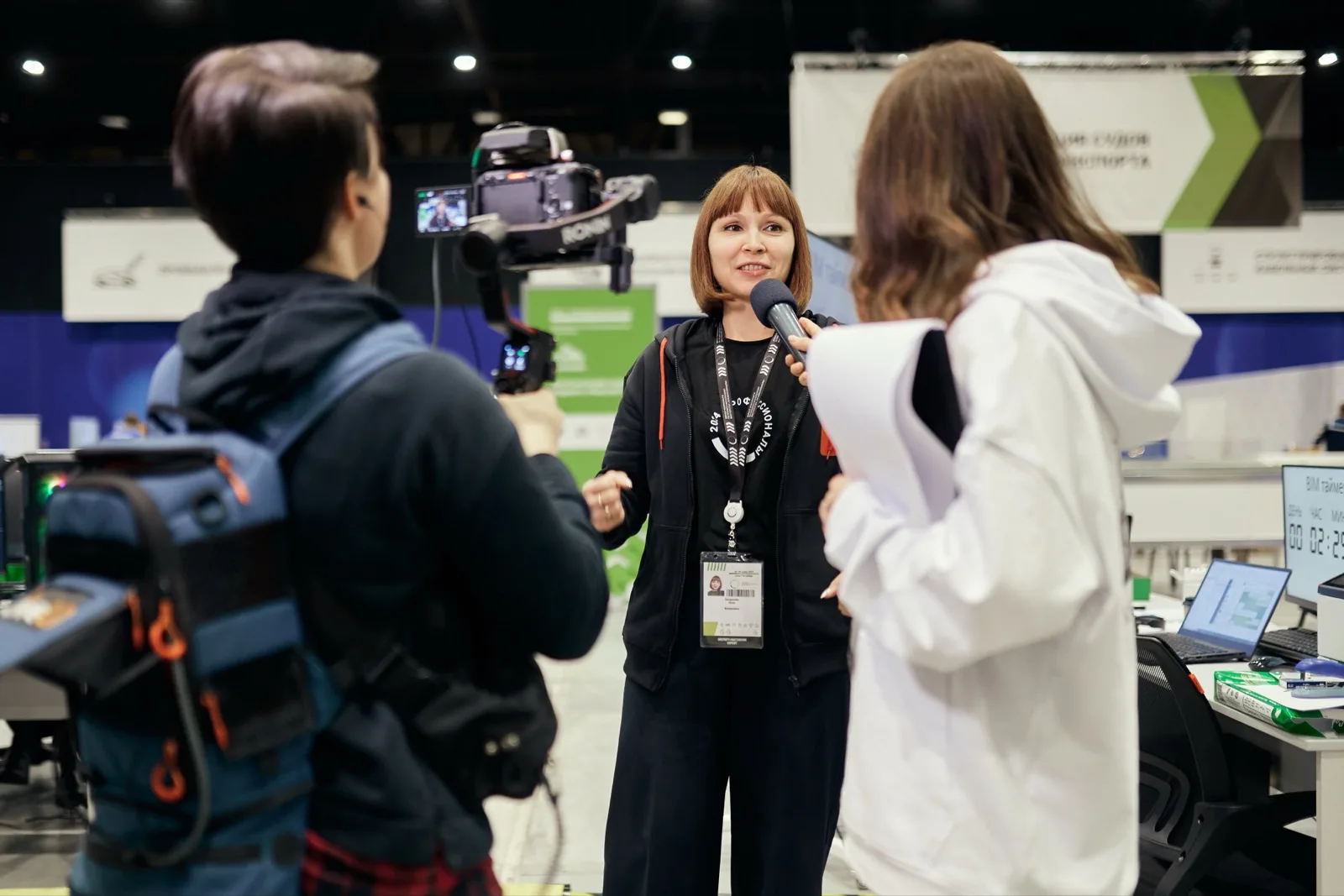
Multi-camera coverage linked the studio conversations with the action in the competition zones. Meanwhile, a Reels creator shot content for social media, and the team edited clips so the event would live on in short-form video.

The media center moderated the chat, collected viewer questions, and put out a digest of the day every evening. Questions from online viewers made it into the program and became part of the conversations with guests.
The chatbot for messages of support was a story of its own. Viewers wrote to the competitors; the messages were printed out and pinned to a board in the media center, and a correspondent read the warmest ones aloud on air. This made the broadcast a two-way street: the venue heard from the people watching, and the people watching saw that their words got through.
The four-day final got a continuous daytime program: a studio, reports from the venues, live feeds, graphics, and interaction with viewers. The event featured more than 900 finalists and 55 skill categories.
Production covered both the live broadcast and the content around it: daily digests, social media clips, and the work of the media center.
Web & Digital · gamification · 2023–2026
We created a virtual city with districts, tasks and its own economy. Participants explore professions through play, earn an in-game currency and vote on changes to the urban environment.
Our role: environment and interface design, game mechanics, scripts, copy, illustrations and ongoing editorial support.
The client needed a product the audience would come back to on its own. The foundation was a virtual city: nine themed districts represent different industries, and each district has its own buildings, characters and tasks.
The map gives participants a clear environment to explore. They can choose an area that interests them, meet its characters and move on to activities. The team designed the city’s structure, navigation and interfaces, wrote the scripts and drew the district illustrations.
For completed tasks, participants earn an in-game currency called “profiki.” The product also has votes: residents choose changes to the city, and the outcomes of these decisions are reflected in how it develops.
The game mechanics link each participant’s individual path with the shared environment. Participants complete tasks, discover new topics and see the city keep changing along with its residents.
Holiday events, seasonal decorations, partner tasks and new games came out regularly. The team supported the product every week, preparing content, illustrations and pages for new activities.
This pace required editors, designers and developers to work together. It was important to keep the city recognizable while giving people a reason to open the map again: a new event, task or seasonal change.
Over one academic year, Profigrad drew 2.94 million visitors and 15.4 million page views. The city brought together nine industry districts, game tasks, an in-game currency and residents’ participation in shaping the environment.
The team was responsible for the entire product, from the structure of the world and its visual language to the regular release of new content.
Production · TV commercial · AXE
A 15-second spot for the Tokyo Vibe line: live-action scenes, hand-drawn animation and a CG city woven into a single story.
Influencer marketing · sports · 2024–2025
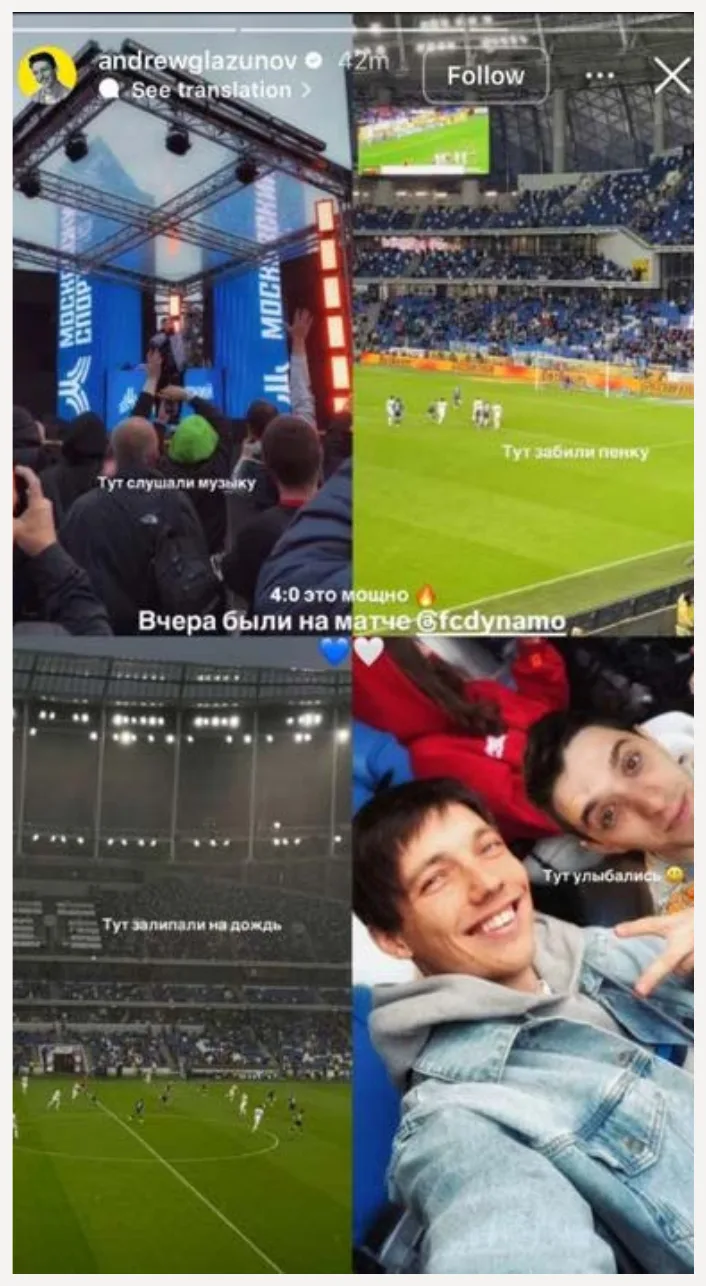
For two years, we covered FC Dynamo Moscow’s home matches and events on influencers’ social media. We selected participants to fit the club’s calendar and coordinated filming and posting.
Our role: influencer strategy, blogger selection and coordination, artist integrations, on-site filming, posting, and analytics.

The partnership covered home matches and major sporting events featuring artists. For each event, we selected bloggers to fit its audience and the club’s goals, and agreed on participation and the format of posts.
The influencer strategy tied individual posts into a regular program. The team’s work continued between events: communicating with creators, preparing integrations, reviewing content, and analyzing the results of previous activations.

On site, bloggers found themselves inside the club event: they saw the stands, the pre-match concert, and the match itself. The content selection includes Stories from the stadium, reactions during the game, and posts tagging the club.
The team coordinated photo and video production on site and looked after the creators. This gave each club event several perspectives: the sport itself, the atmosphere in the stands, and the personal experience of the invited influencer.

Bloggers and artists took part in the program, including MIA BOYKA, Egor Kreed, and Lesha Svik. Artist integrations were tied to their appearances at club events and to the overall communication plan.
After events, we tracked posts as they went live, ran seeding on Telegram and in the media, and compiled content reports. Analytics for each event showed the results of individual activations and of the program as a whole.

Over two years, the campaigns generated a total reach of more than 30 million. More than 120 influencers were involved at matches and club events.
The club calendar became the basis for consistent work with creators: from selecting participants and filming on site to posting and event reporting.
Web & Digital · learning · 2023–2026
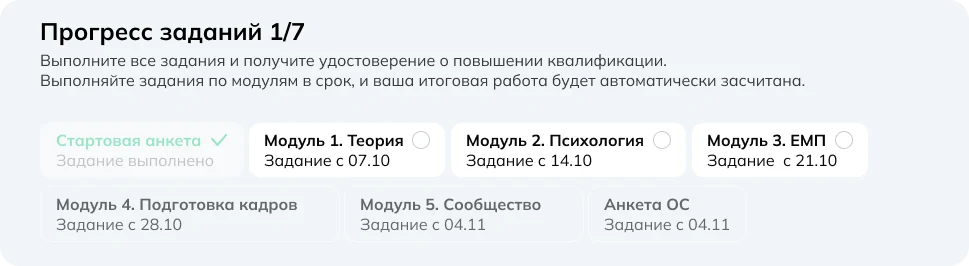
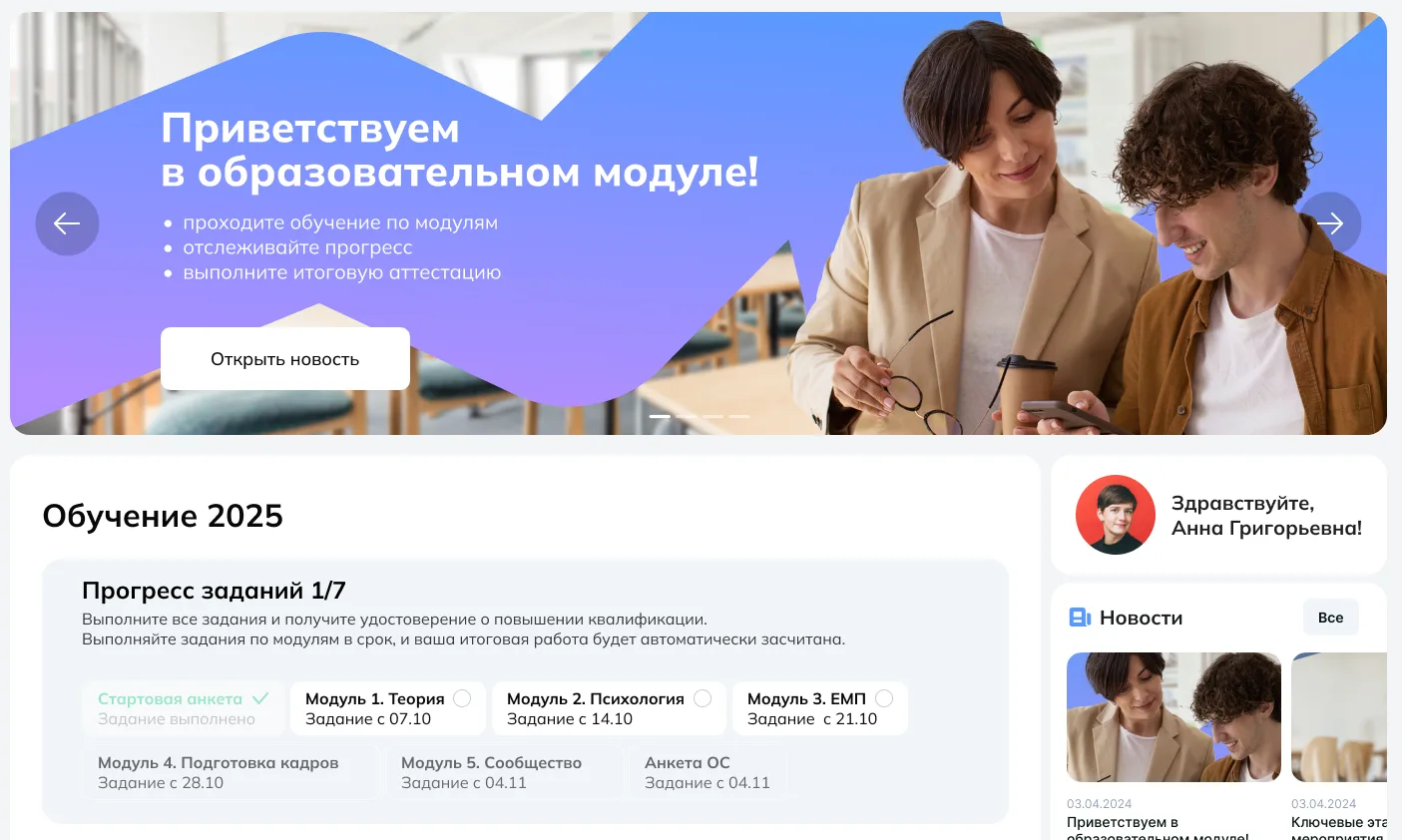
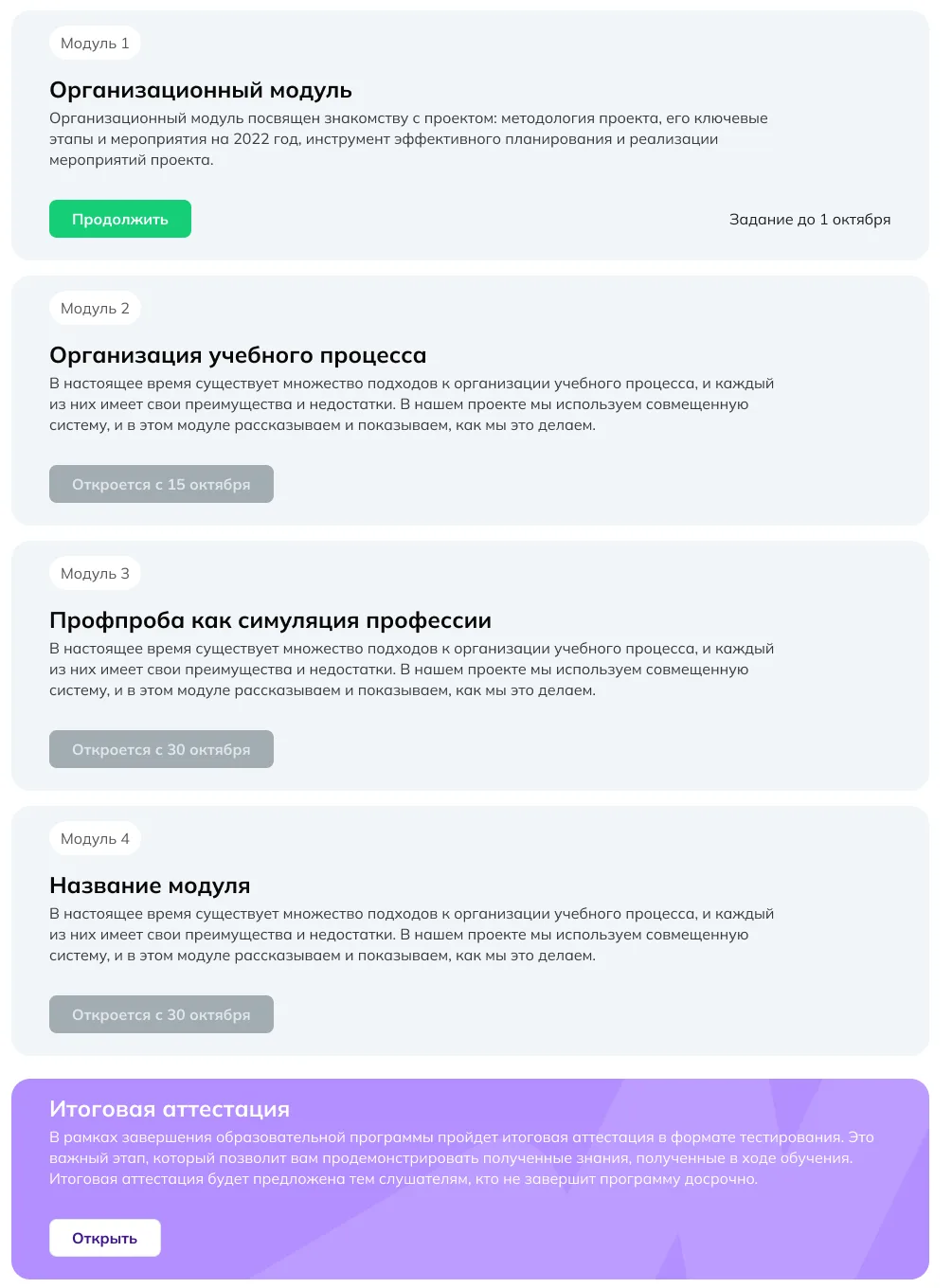
We designed a fully online professional development program, from the intake questionnaire and calendar-based modules to assignments, the final assessment and the certificate. Participants see deadlines, progress and what they need to do next.
Our role: user journey, interfaces, learning structure, assignment mechanics and admin tools for the program.

The professional development program is designed for adult participants who combine learning with work. The entire journey happens online: an intake questionnaire, learning materials, assignments, a final assessment and receiving the certificate.
Modules unlock on a schedule. The interface shows what is already available and when the next block will open. Inside are topics with videos, walkthroughs and examples, with a short knowledge check after each topic. Sequence and deadlines become part of the product itself.

The main screen is the user dashboard. It brings together module tiles with dates, assignment progress, program news and a greeting by name. Participants see the steps they have completed and a list of what remains.
Completion requirements are explained in the interface. If all assignments are submitted on time, the final assignment can be credited automatically. Statuses, deadlines and review results are in one place, next to the program materials.

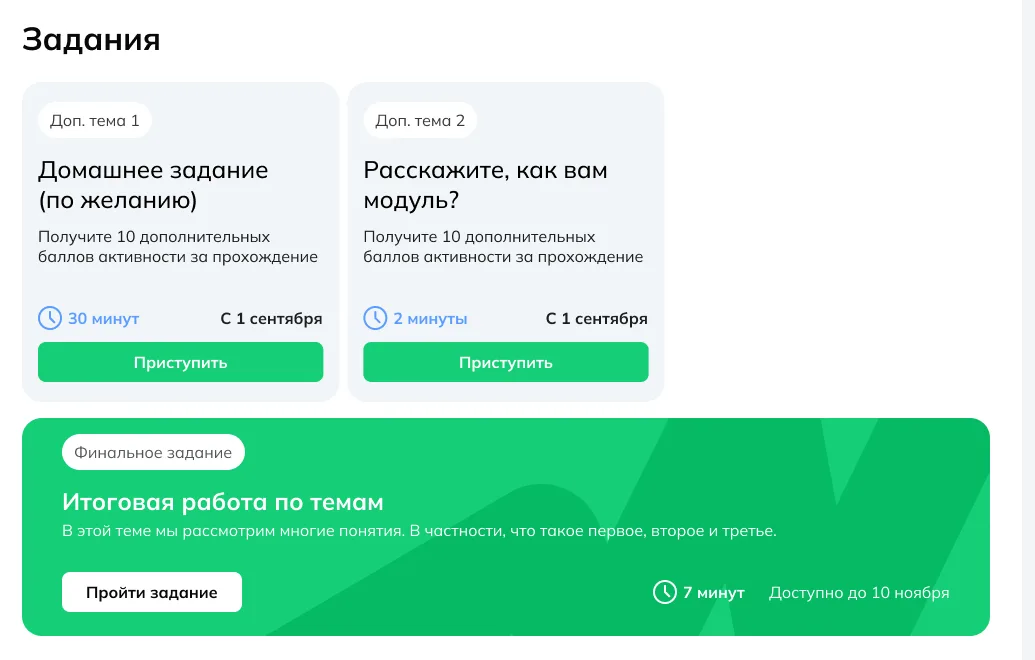
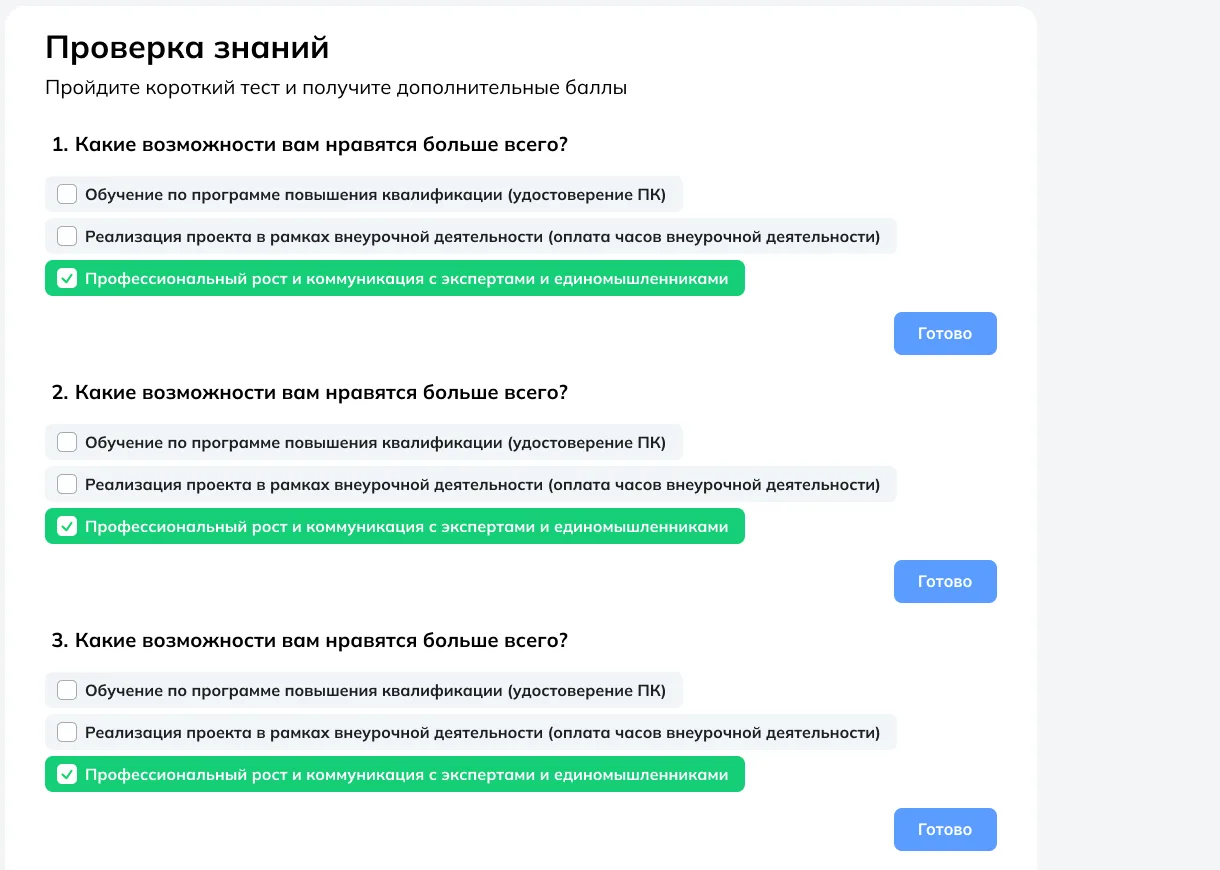
We prepared several assignment mechanics for the course: multiple choice, matching, sequencing, text answers and file upload. After a topic, participants can quickly check their understanding, and in a more extensive piece of work, apply what they have learned.
The program includes additional homework assignments that earn points and a final assignment covering the topics. The assignment builder makes it possible to set up different types of checks within a shared system of interfaces and statuses.

Participants in the project track get consultations, teamwork and a project defense. This track complements the core program and is meant for those moving from studying materials to developing their own project.
Administrators and moderators see which stage each participant is at, which assignments are complete and who is eligible for a certificate. We designed this side of the product together with the participant dashboard so the learning path is clear to both sides.
The program gained a single online environment: learning materials, assignments, feedback, statuses and assessment. Over three years, the learning section received 1.61 million views and 328,000 visitors.
The interface brings together participants’ actions and the program team’s work, from a module opening to reviewing assignments and recording learning outcomes.
PR · culture · 2025
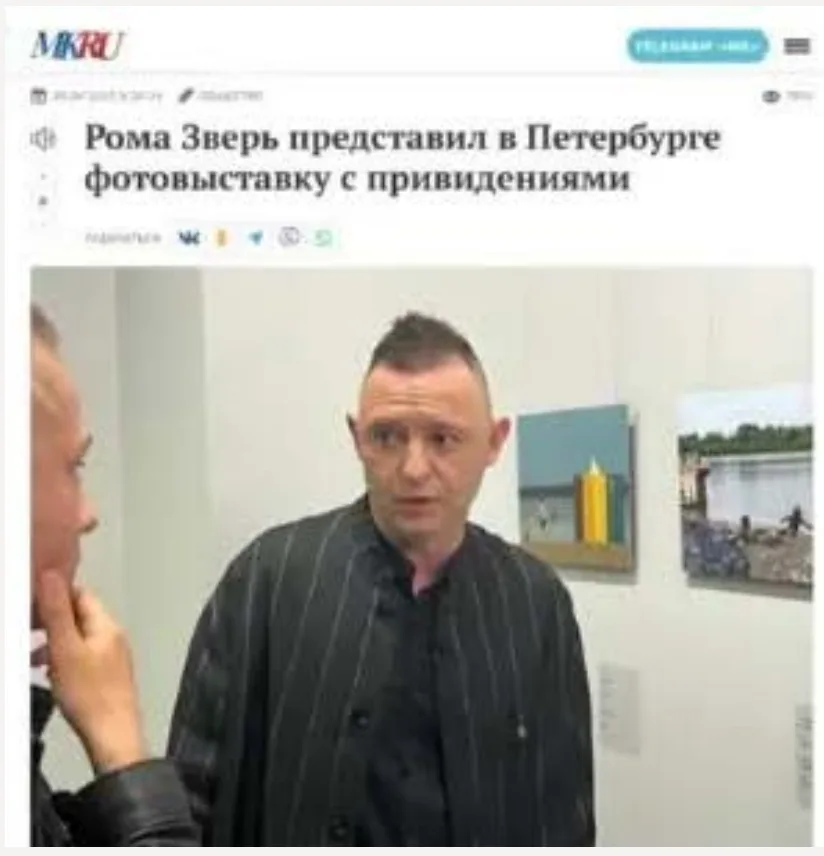
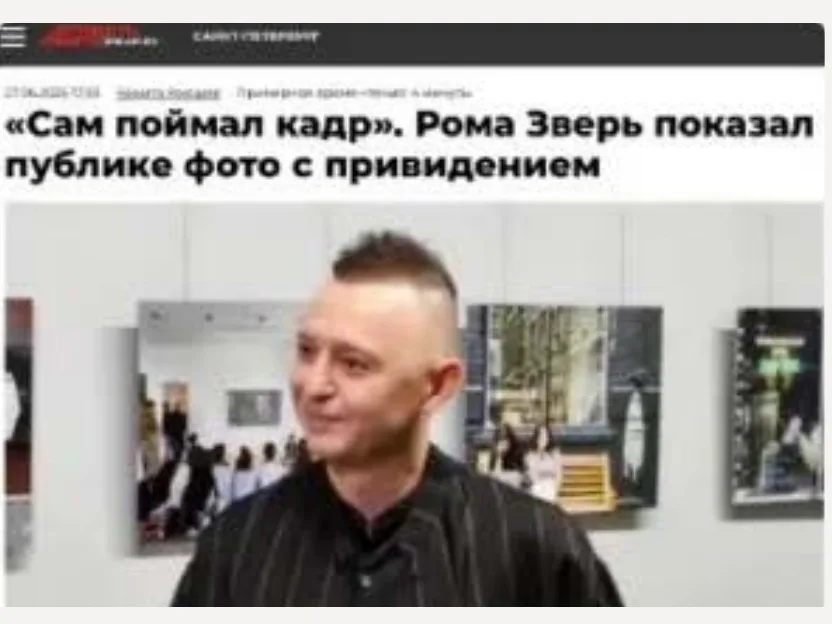
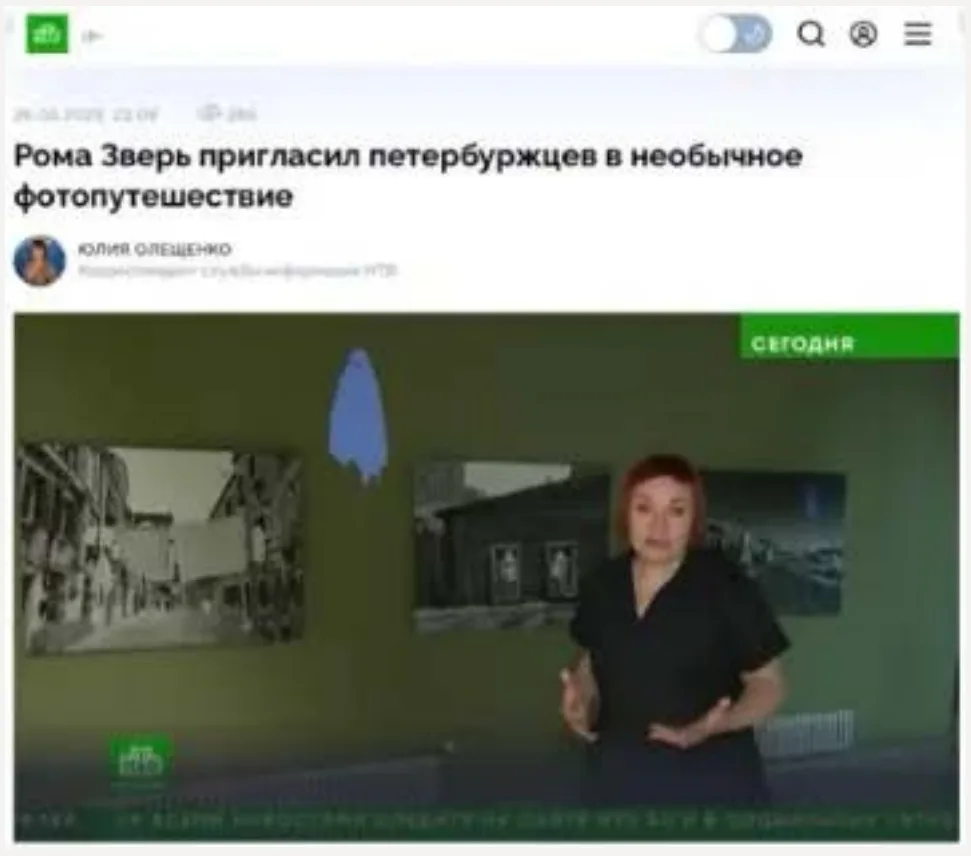
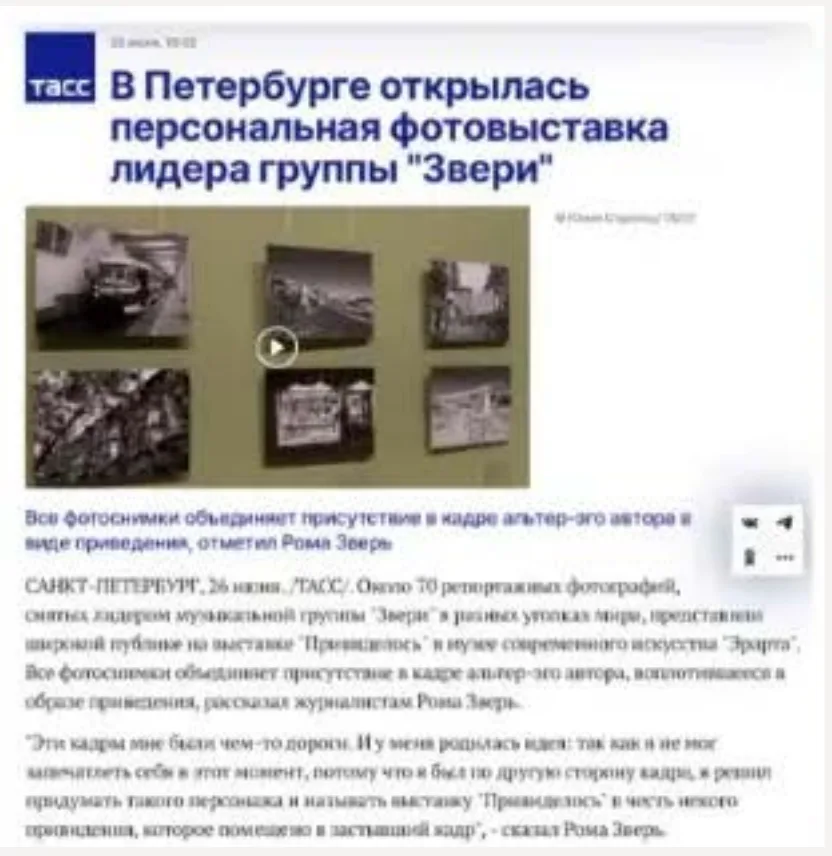
The museum was opening a solo photo exhibition by Roma Zver. We prepared the outreach to newsrooms, organized a press Q&A, and supported coverage of the opening.
Our role: preparing materials with the museum team, inviting the press, briefing journalists, and supporting the opening and its coverage.

The solo exhibition presented photographs by Roma Zver, frontman of the band Zveri. We prepared it together with the museum team: we agreed on the exhibition wall text, the release materials and the information for the press, and defined the pool of outlets.
The key was to bring the artistic side of the project together with the needs of the media. Journalists needed accurate information about the exhibition, while the museum team needed a consistent presentation of its content and clear ground rules for communication at the opening.

We put together a list of local media, sent out the invitations, and prepared a brief for journalists. We agreed on talking points and off-limits topics, and supported the press Q&A and the work of the newsrooms at the event.
The exhibition itself supplied the material for reporting: about 70 photographs the musician took in different parts of the world, and a recurring character, a ghost that serves as the artist’s alter ego. Newsrooms had several angles for a story: a cultural event, photography, and new technology.


After the opening, the team worked on news hooks and post-event coverage. Stories ran in TASS, NTV, MK, AiF St. Petersburg, RUNEWS, and Rambler.
The selection includes news items, a TV segment, and in-depth pieces about the artist and his photographs. Together they show different editorial approaches to a single cultural story.


The opening was covered by city and national media. The reach of posts in Telegram channels exceeded 2.5 million.
The team handled the entire press process, from agreeing on materials with the museum to the release of news items and reports. Examples of the coverage are collected below.

Events · interactive · 2024
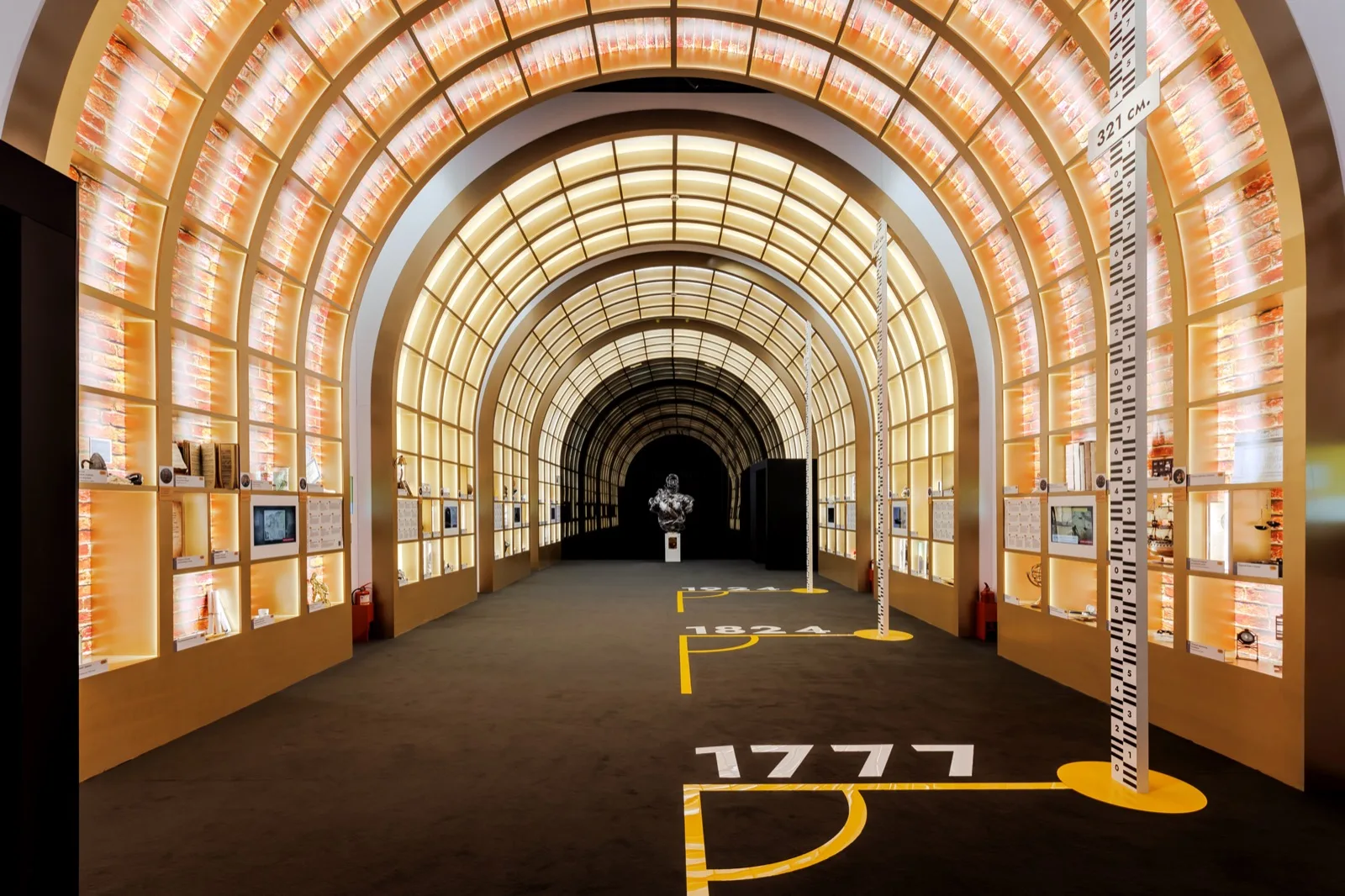
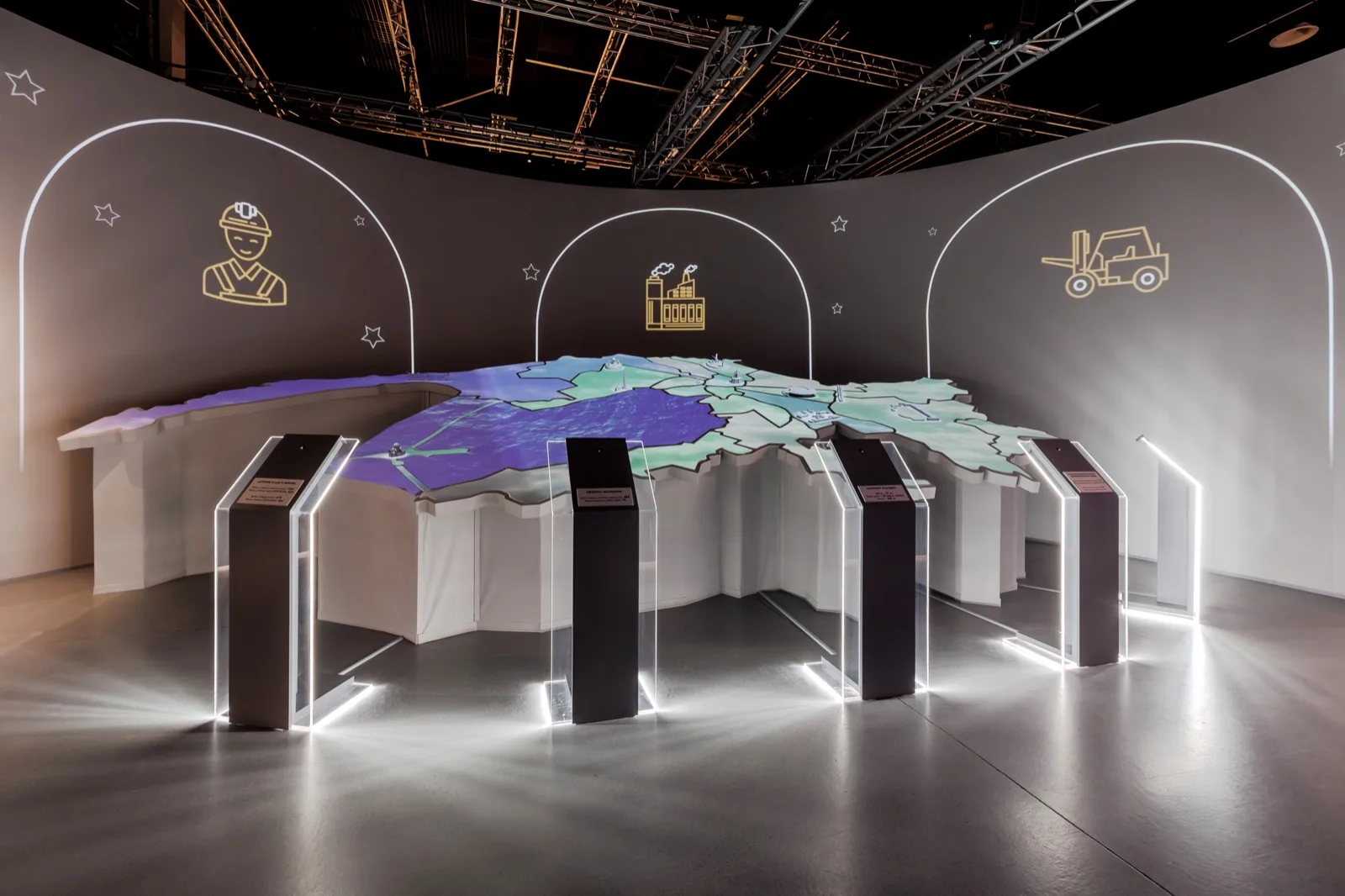
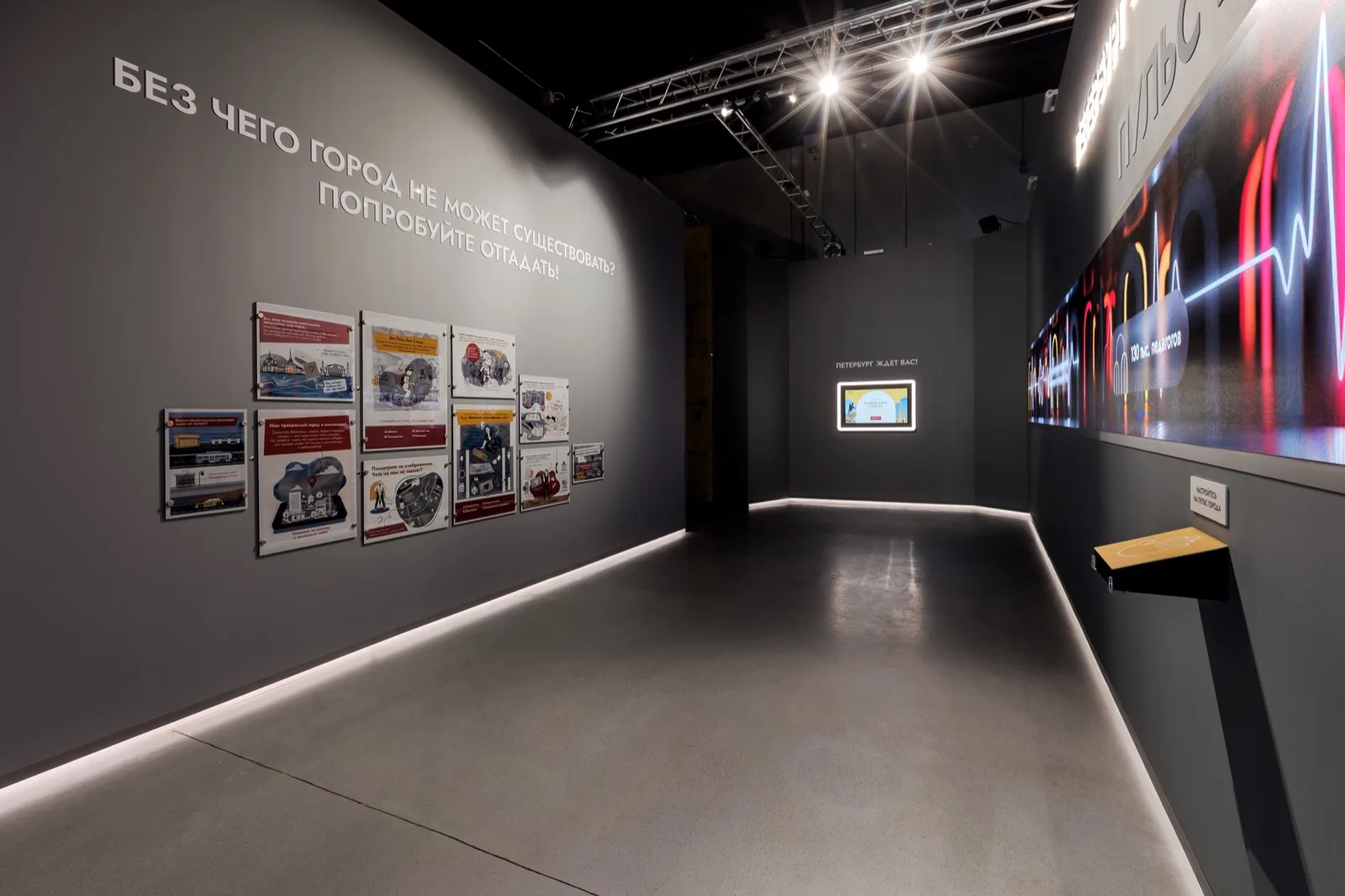
In ten weeks, we created the content for a multimedia exhibition, from the storyline of the visitor route to interactives, video, and sound. Visitors control a map, change a panorama, and get to know the city through their own actions.
Our role: route concept, scripts, media content, and digital interactives. The space and structures were built by another contractor.

We started with an empty pavilion, a fixed opening date, and a brief to tell the story of the city from several angles at once. We had to decide what visitors would see in each room, how they would move on to the next theme, and what role screens, sound, and interactive objects would play along the way.
The route was built around the city’s history, achievements, and everyday life. For it, we prepared 104 historical facts, 86 achievements, material on 18 districts, and 30 quotes from residents. This material went into the room scripts, the visitor texts, and the content of the digital applications.

Different themes called for different actions. On a relief map, visitors switch between information layers. In other interactives, they adjust parameters with controls or explore history through the year they were born. This gives the shared story a personal point of entry.
Each mechanic follows a clear sequence: choose, touch, change, and see the response. The applications were designed for specific hardware and a specific place on the route: how to operate each one had to be obvious at the exhibit itself, and the result had to make sense without lengthy instructions.


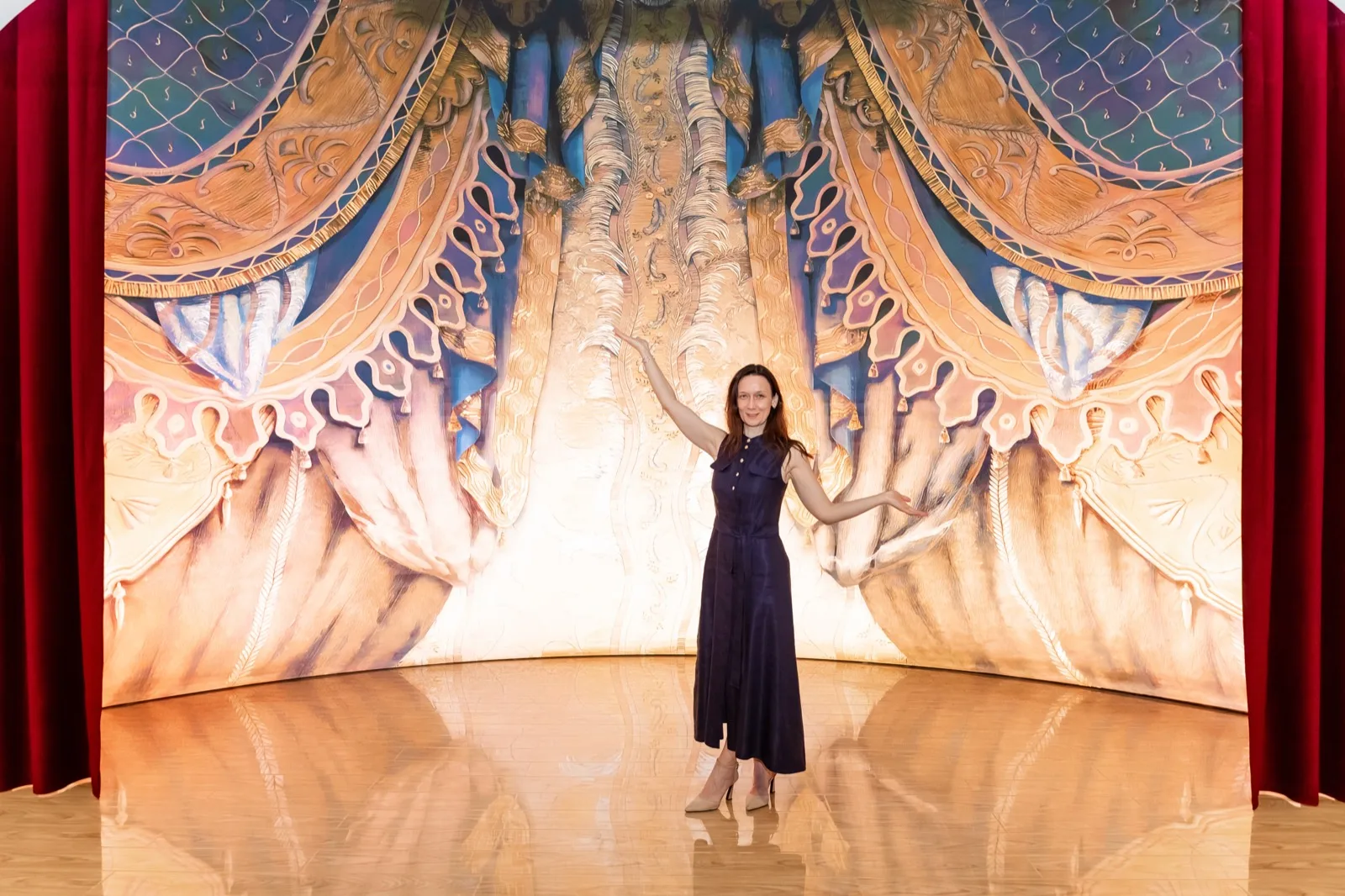
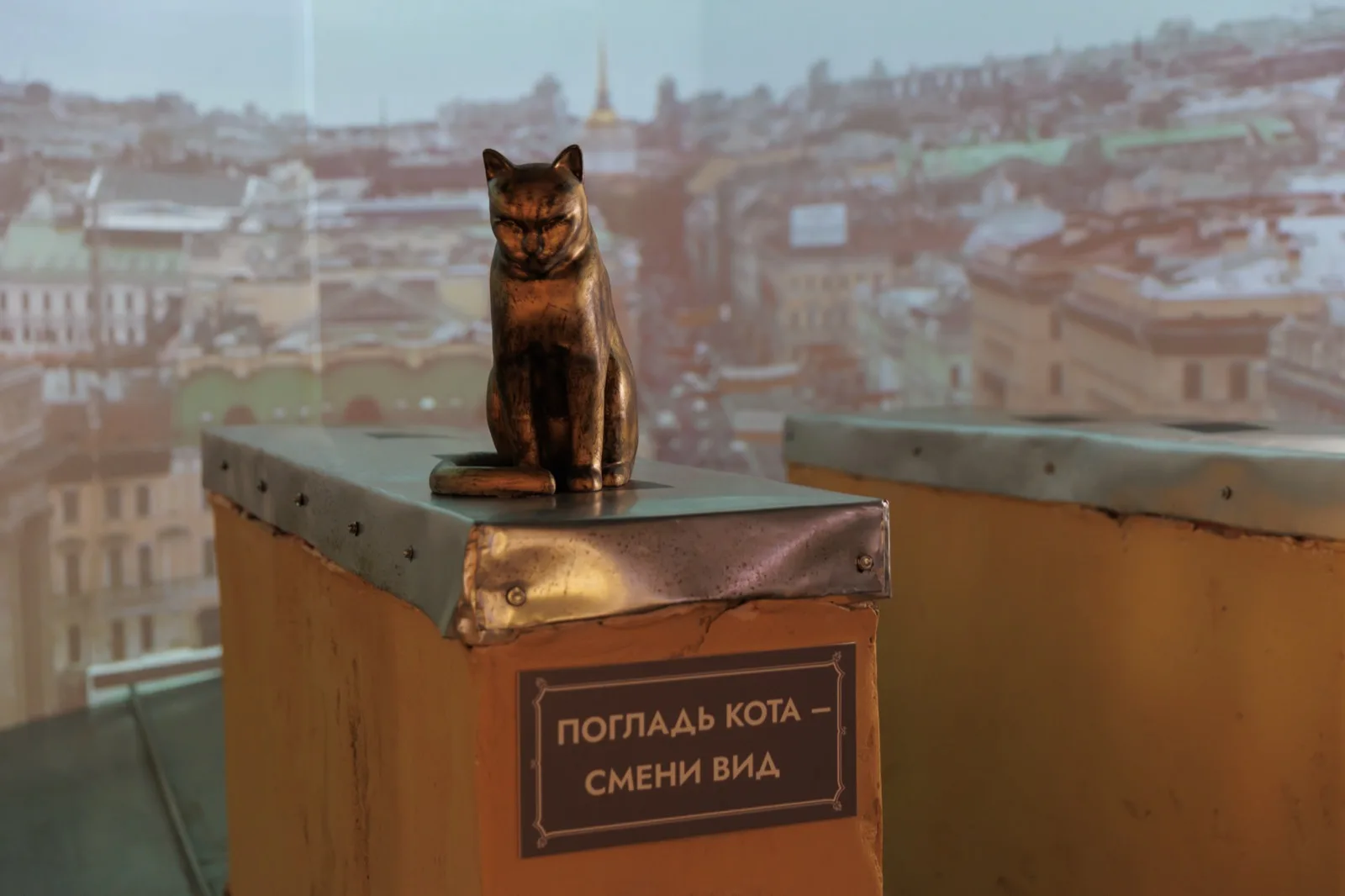
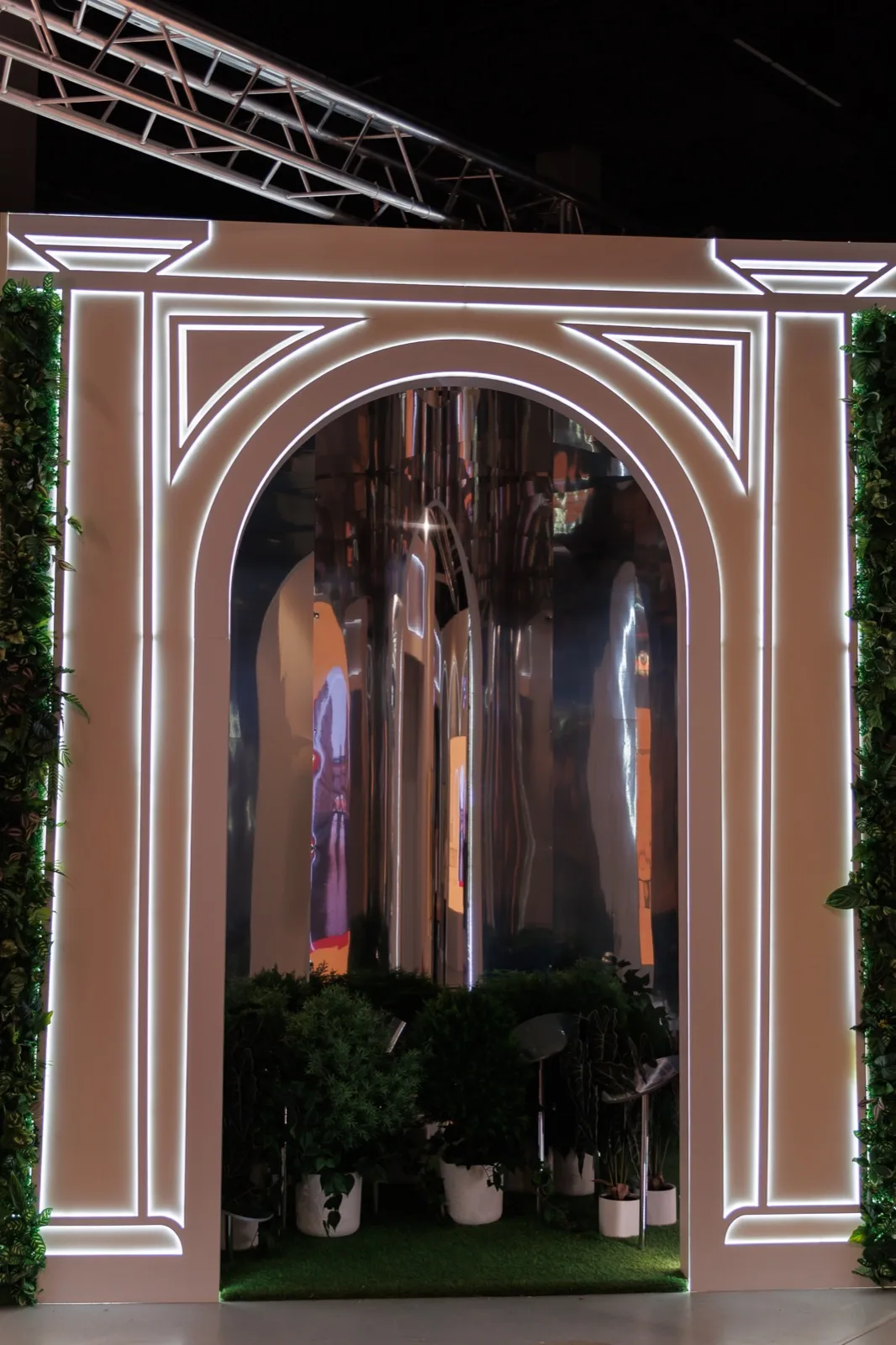
Some stories unfold on large projections, others around a small object. Touching a cat changes the city panorama. A theater curtain becomes a surface for projection mapping. In a musical interactive, visitors play a harp made of light.
For the exhibition, we produced videos with actors, panoramic scenes, animation, music, and sound compositions. The work moved from script to a specific medium: we had to account for image size, viewing distance, and how media content would sit alongside physical objects.


In the final stage, the applications and media were tested on the exhibition hardware. We checked whether text was legible from the intended distance, how images looked on a large screen, and what happened when several people used an interactive at once.
In parallel, we built two websites for the exhibition. In one scenario, visitors receive a unique code they can use to find their own content after the visit. Engagement with the digital content continues beyond the pavilion itself.


The exhibition opened on the scheduled date. By launch, the team had delivered 30 applications, 75 videos, and 18 audio compositions, combined into a route through twelve rooms.
More than 500,000 people visited the exhibition in its first summer. The content was designed for that scale, from a brief encounter with a single exhibit to a full walk-through of the entire exhibition.
Web & Digital · brand website · 2025–2026
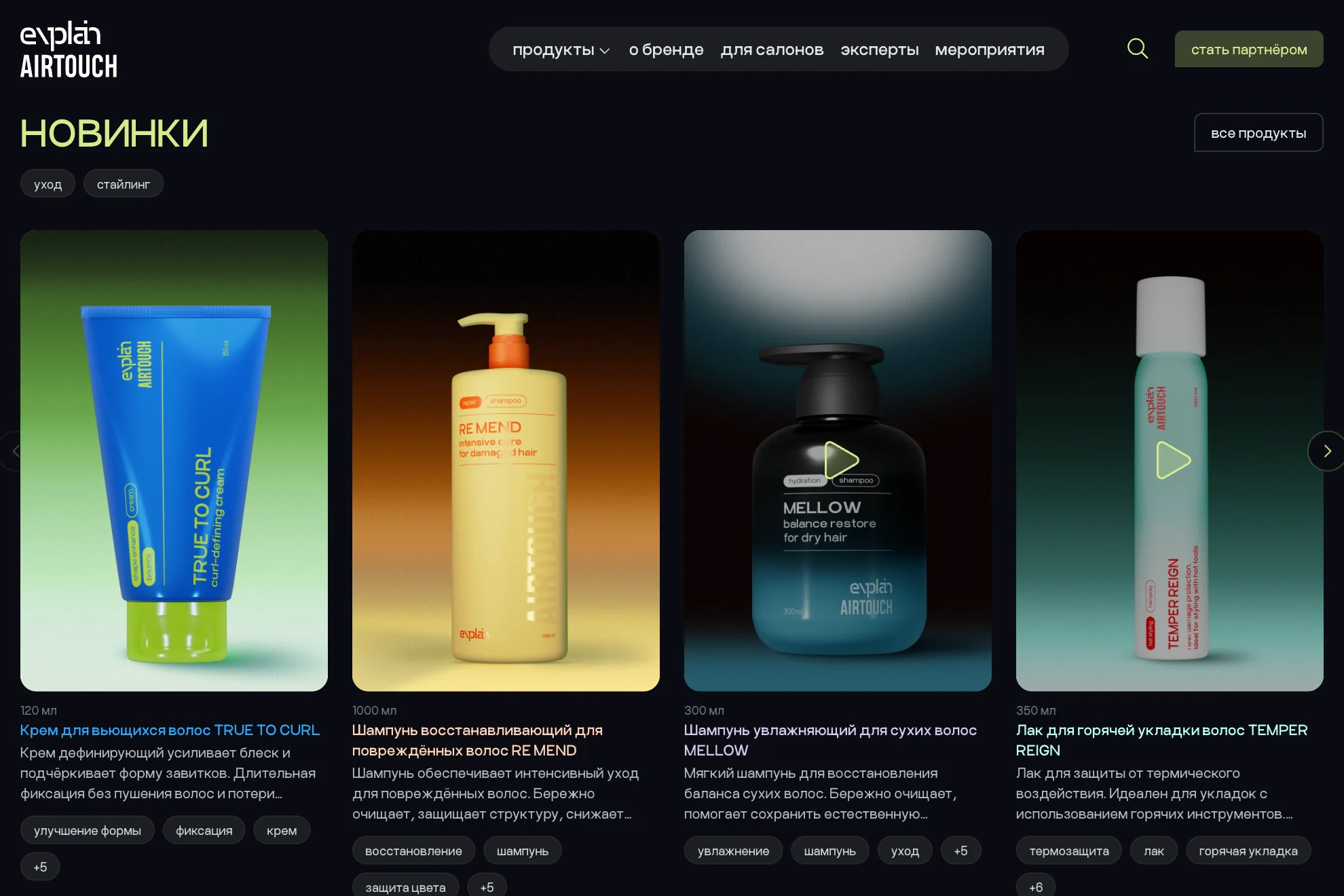
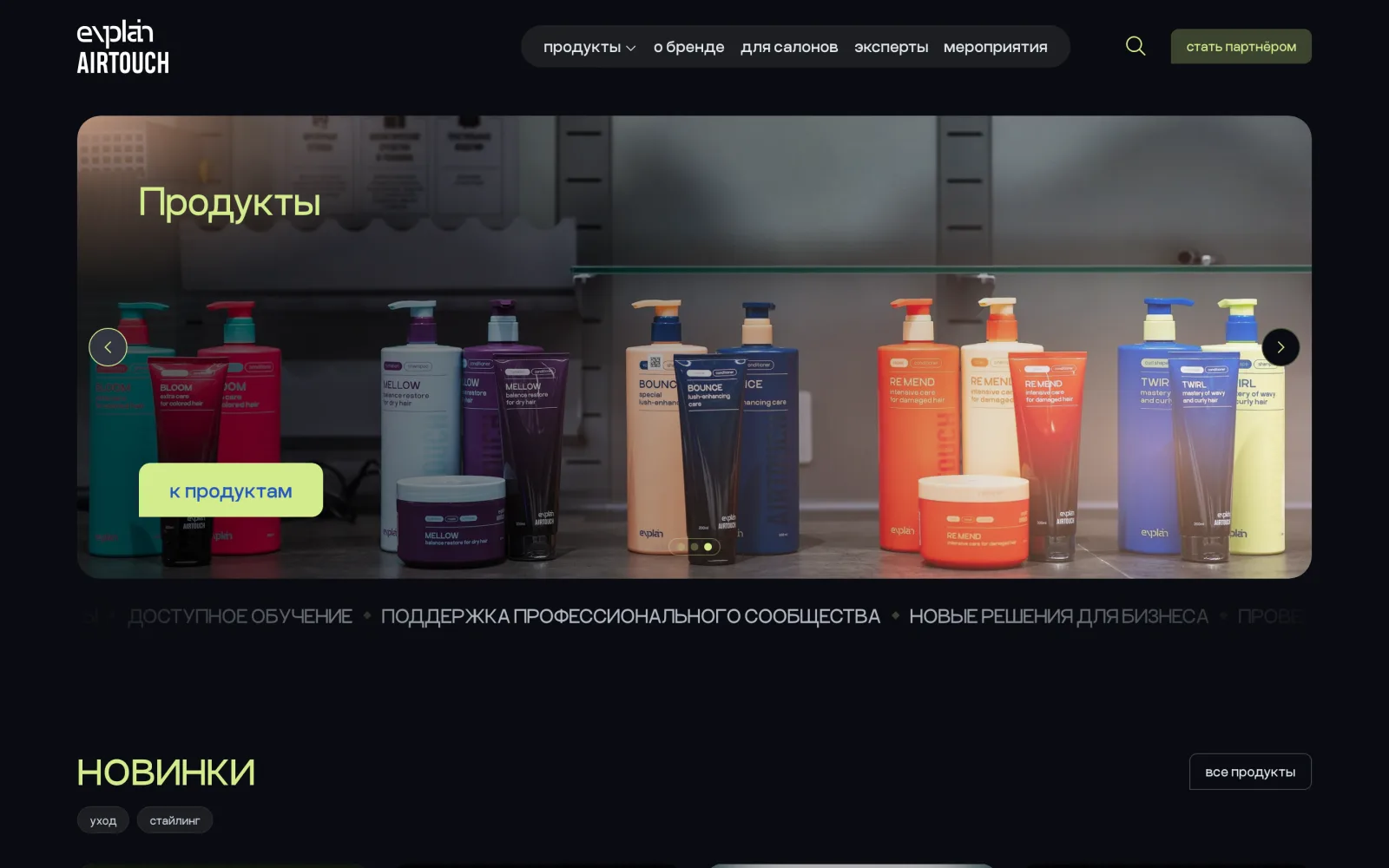
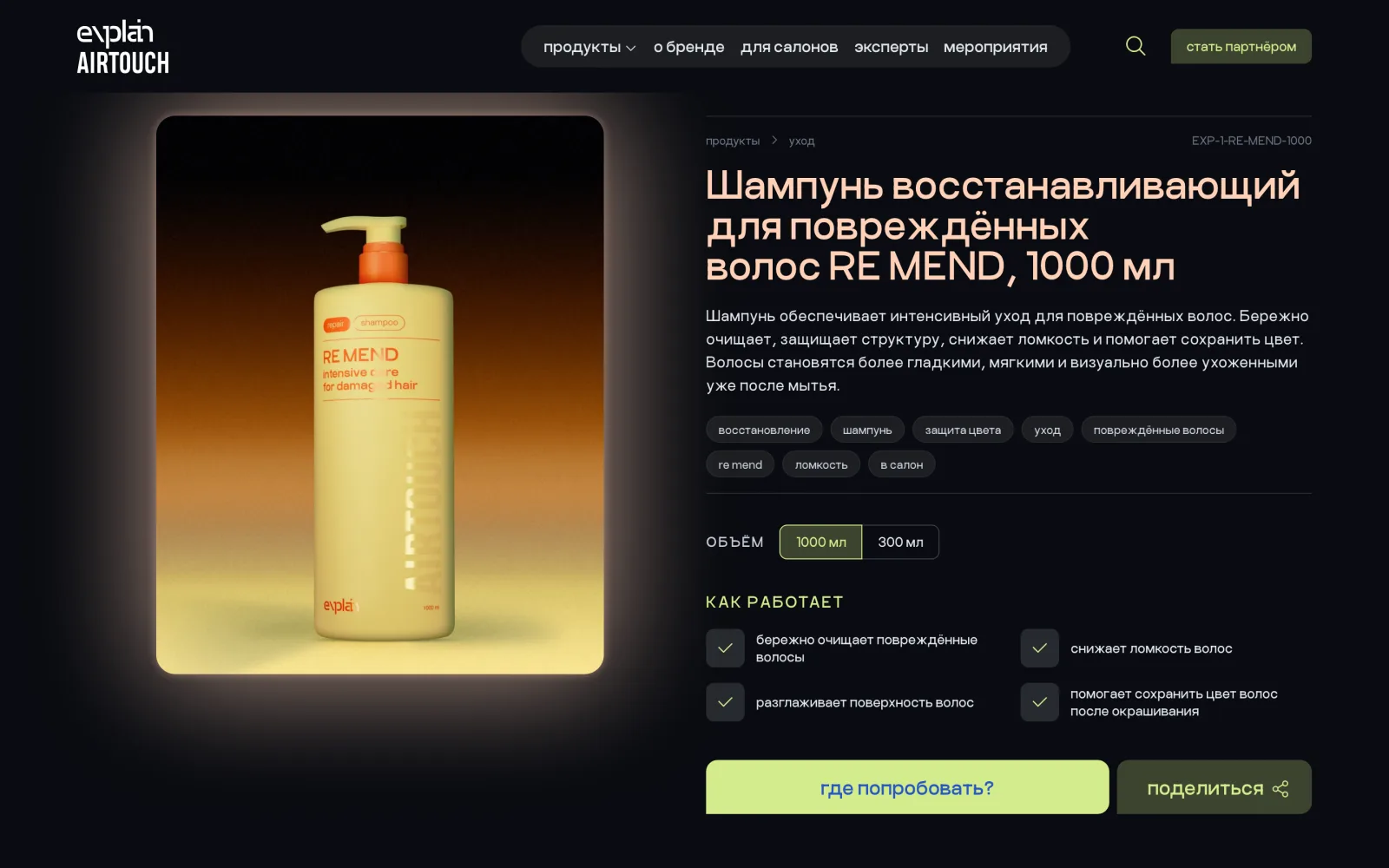
A beauty professional needs to find the right product for the job. A salon owner needs to understand the brand and its partnership terms. For Explain Airtouch, we brought the catalog, ingredient explanations and salon services together in one website.
Our role: website structure and UX, visual design and content, UI components prepared for development, coordination of photo and video shoots, launch support.

A new professional cosmetics brand speaks to several audiences at once. A beauty professional needs to understand how a product works and choose it for a specific job. A salon owner looks at the range, team training and the opportunity to partner with the brand. The website has to serve both.
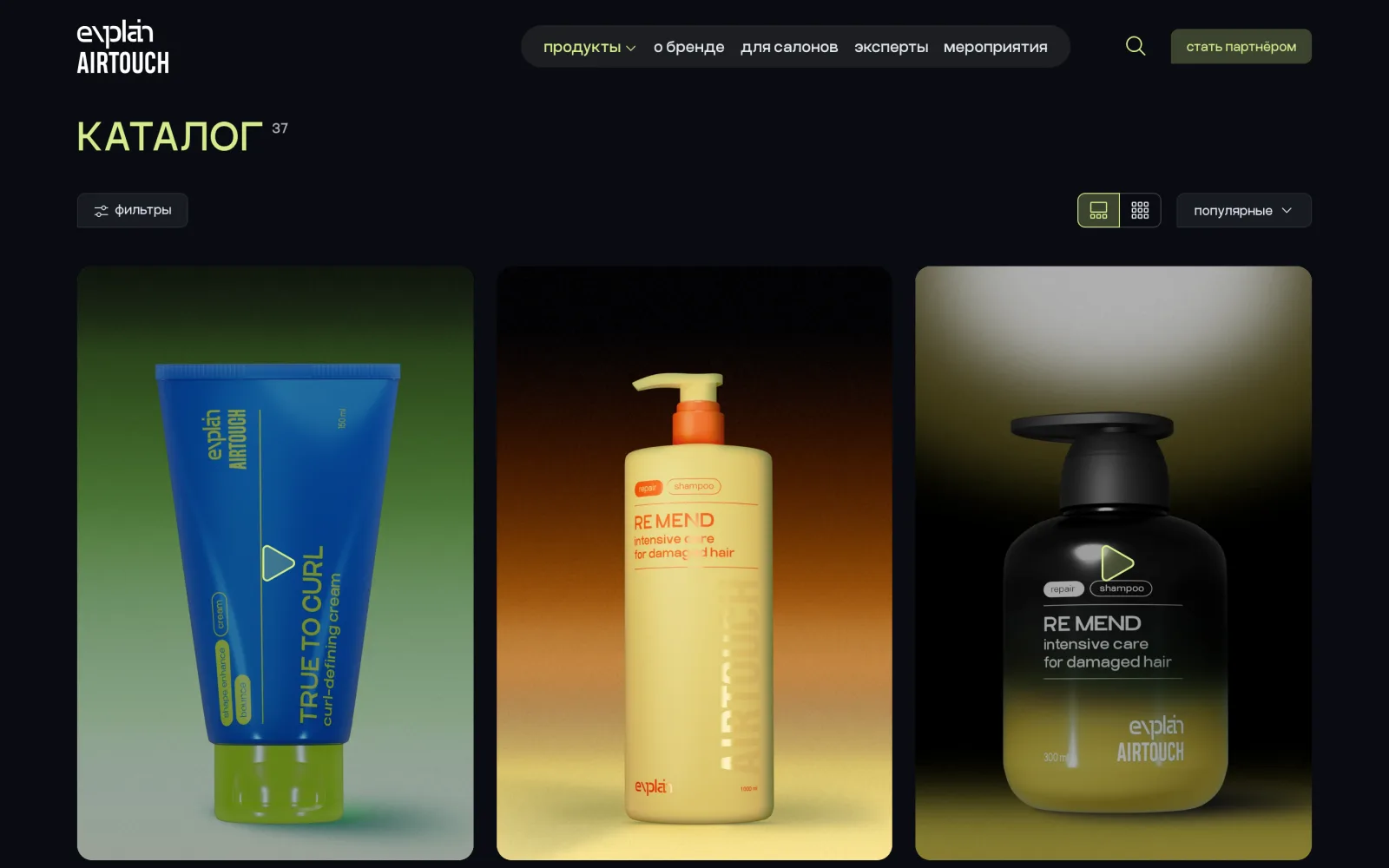
The catalog has filters by task and by active ingredient. From a suitable product, visitors move to the product page, where they see the composition and an explanation of how the formula works. The catalog, product descriptions and ingredient information work as connected parts of a single introduction to the line.


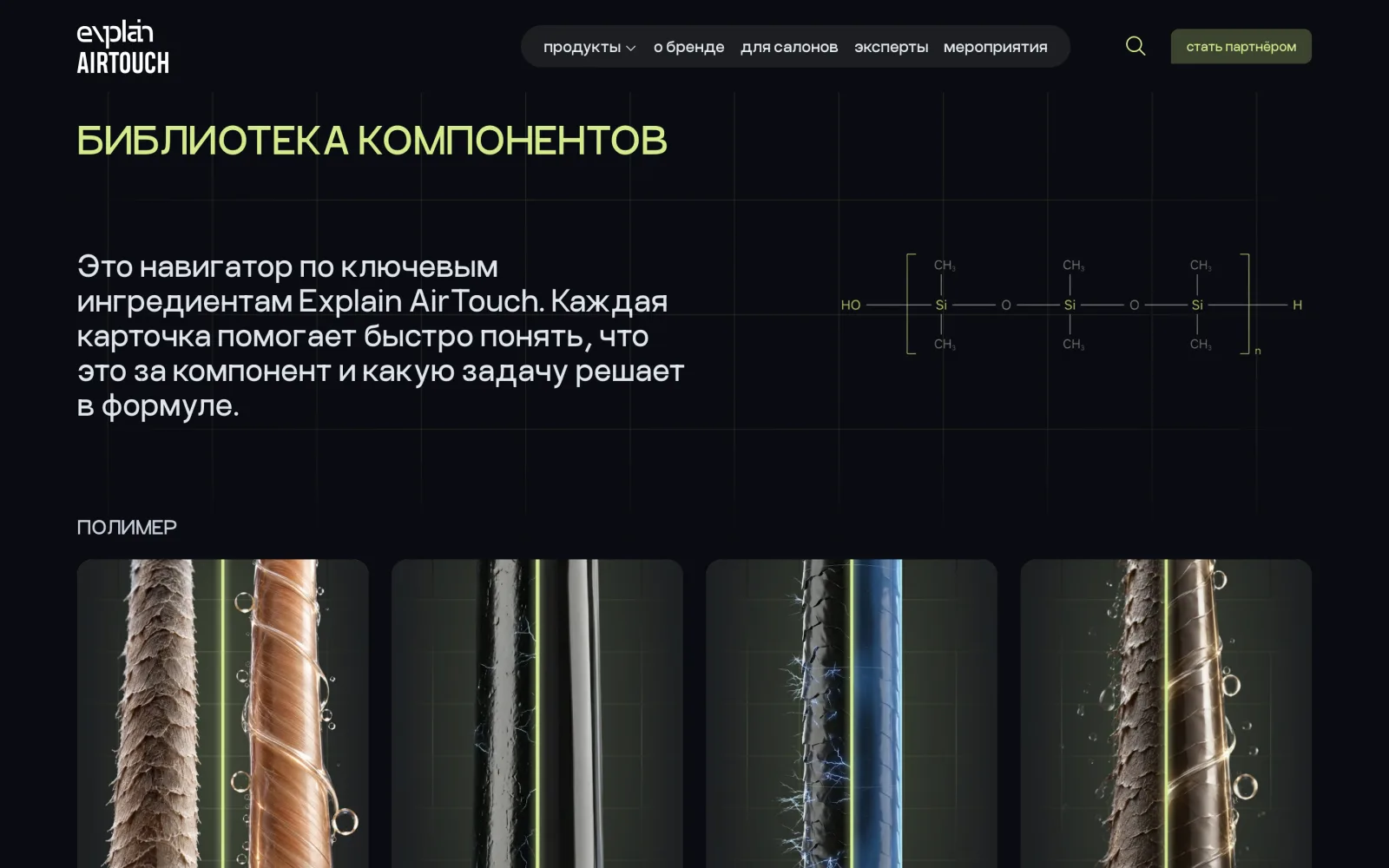
The brand had a large body of information on its formulations. We built a dedicated library of active ingredients: each ingredient got a card with its own illustration and an explanation of the job it does in the formula.
The library supports product selection. A professional can get to grips with an unfamiliar ingredient and explain its effect to a client. To make this possible, scientific names, images and copy follow a single structure, so visitors don’t have to relearn how each page works.

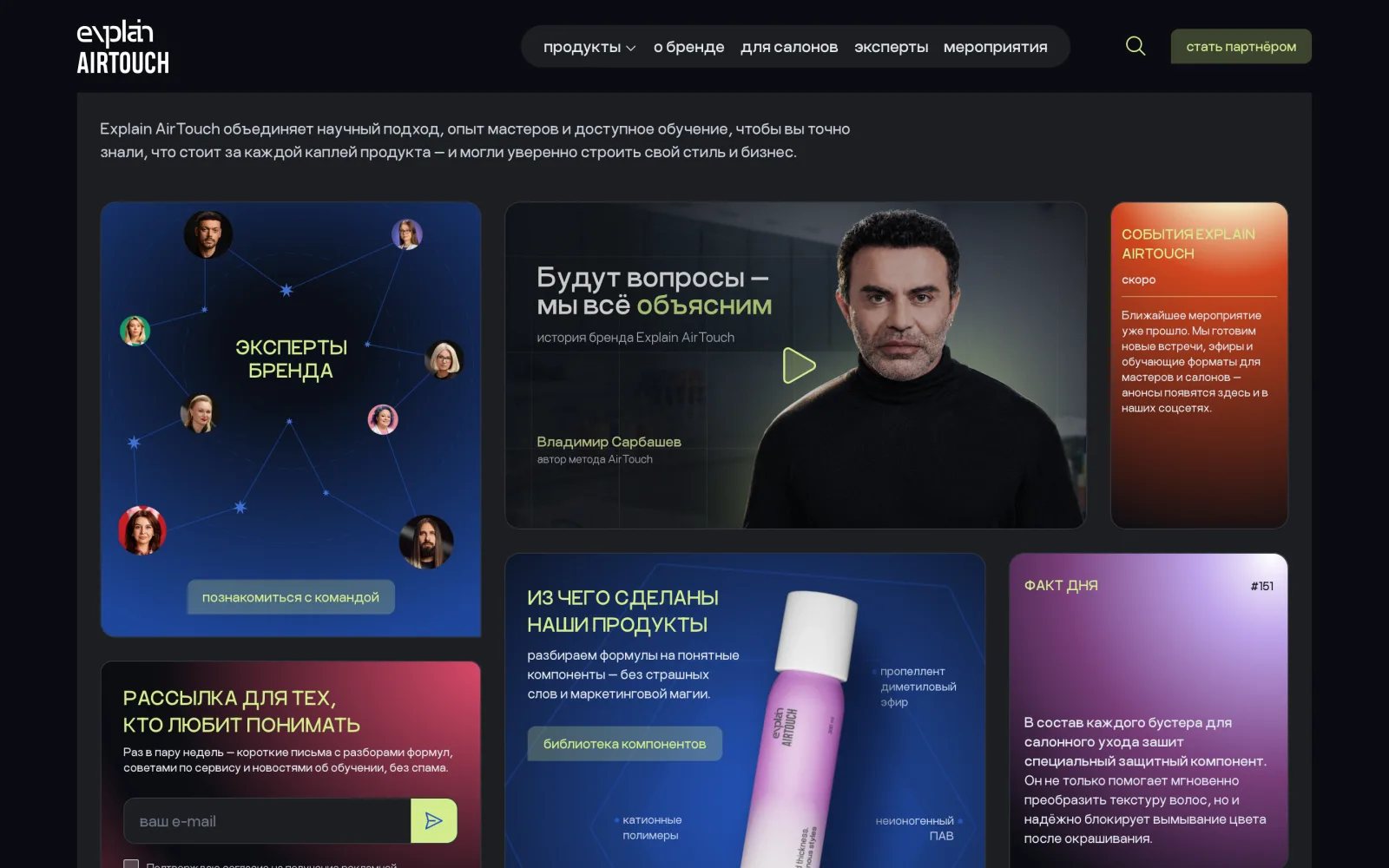
Beyond the catalog, we designed the homepage, sections about the brand and its experts, events, a map of partner salons and a partnership application form. On the homepage, the product line sits alongside the brand story, expert content and video.
We coordinated photo and video shoots of the products and beauty professionals in several cities. For the website, we prepared a design system: shared rules, reusable elements and interface states. The development team got a foundation for building new pages in the same style.

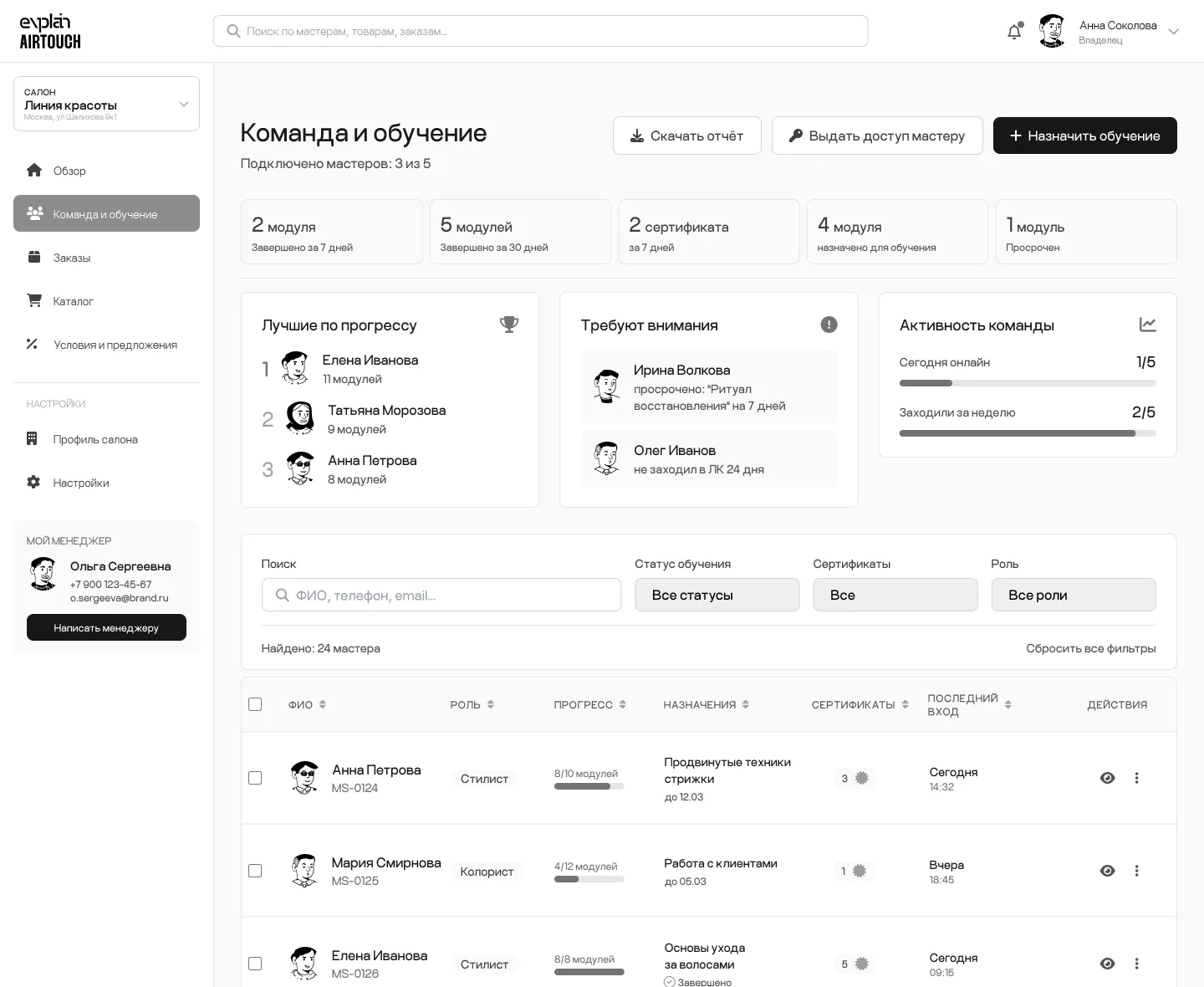
Following the public part of the website, we worked out three user accounts: for the salon owner, the beauty professional and the sales representative. Each has its own set of tasks related to orders, training and working with the brand.
The accounts exist as prototypes. For example, the salon owner sees the team, its training and each professional’s progress. These scenarios are prepared as the next stage of the service; the launched part already includes the catalog, the ingredient library, the partner map and the application form.

Explain Airtouch now has a live brand website with a catalog and its own ingredient library. Visitors can explore the line, find a partner salon and apply for a partnership.
The brand team manages content through its own admin panel. We supported acceptance and launch: checked the build against the design, reviewed basic search and analytics settings, and prepared link-tagging rules for campaigns.
Production · fashion film · PRECISE
A vertical film for social media: a studio shoot of the jewelry and the looks, 57 seconds in 9:16.
Production · commercial · JustStories
A 48-second commercial in 4K: the story of a tattoo studio where the service’s interface lives right in the frame.
Web & Digital · AI · interactive · 2025
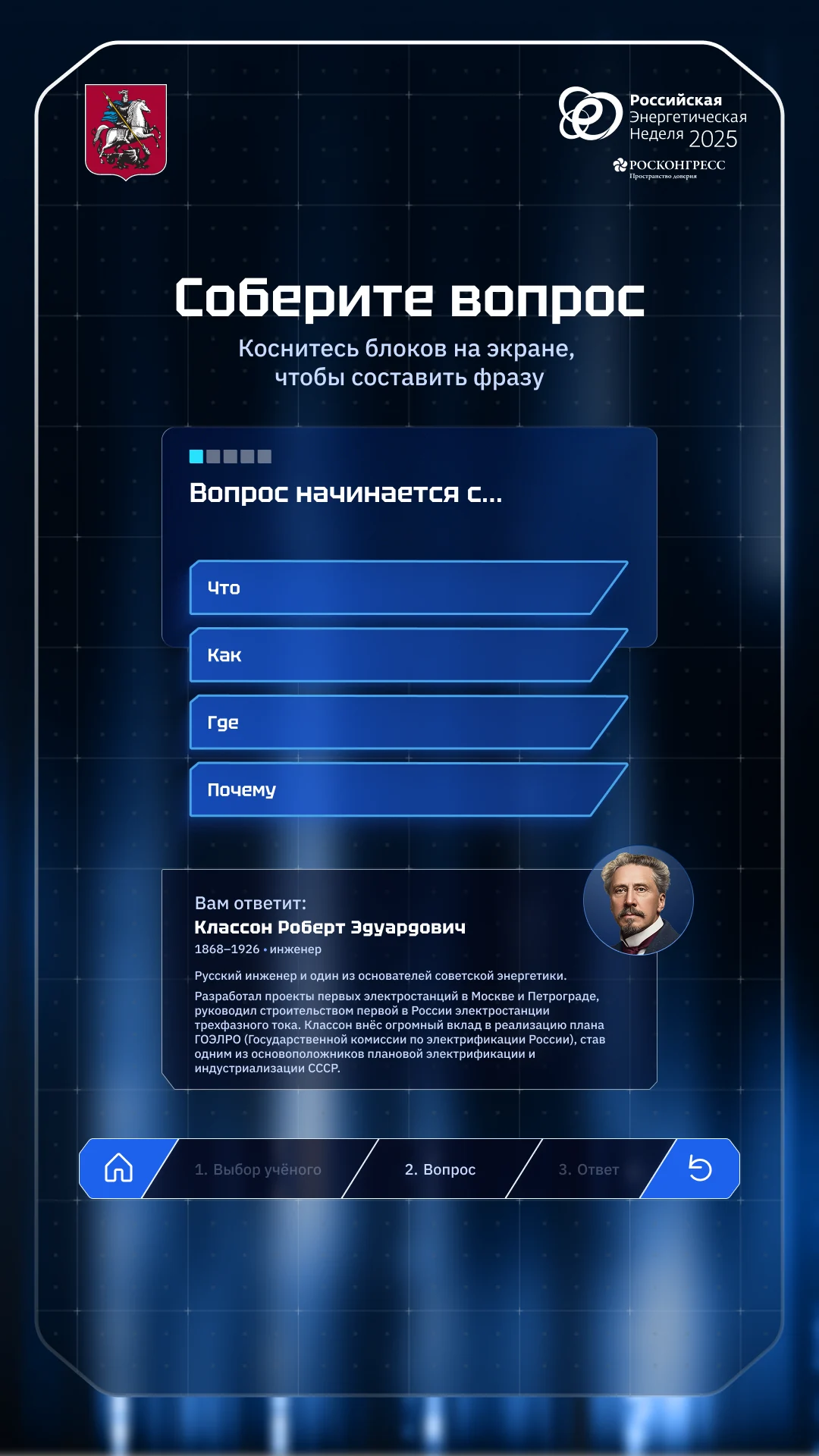
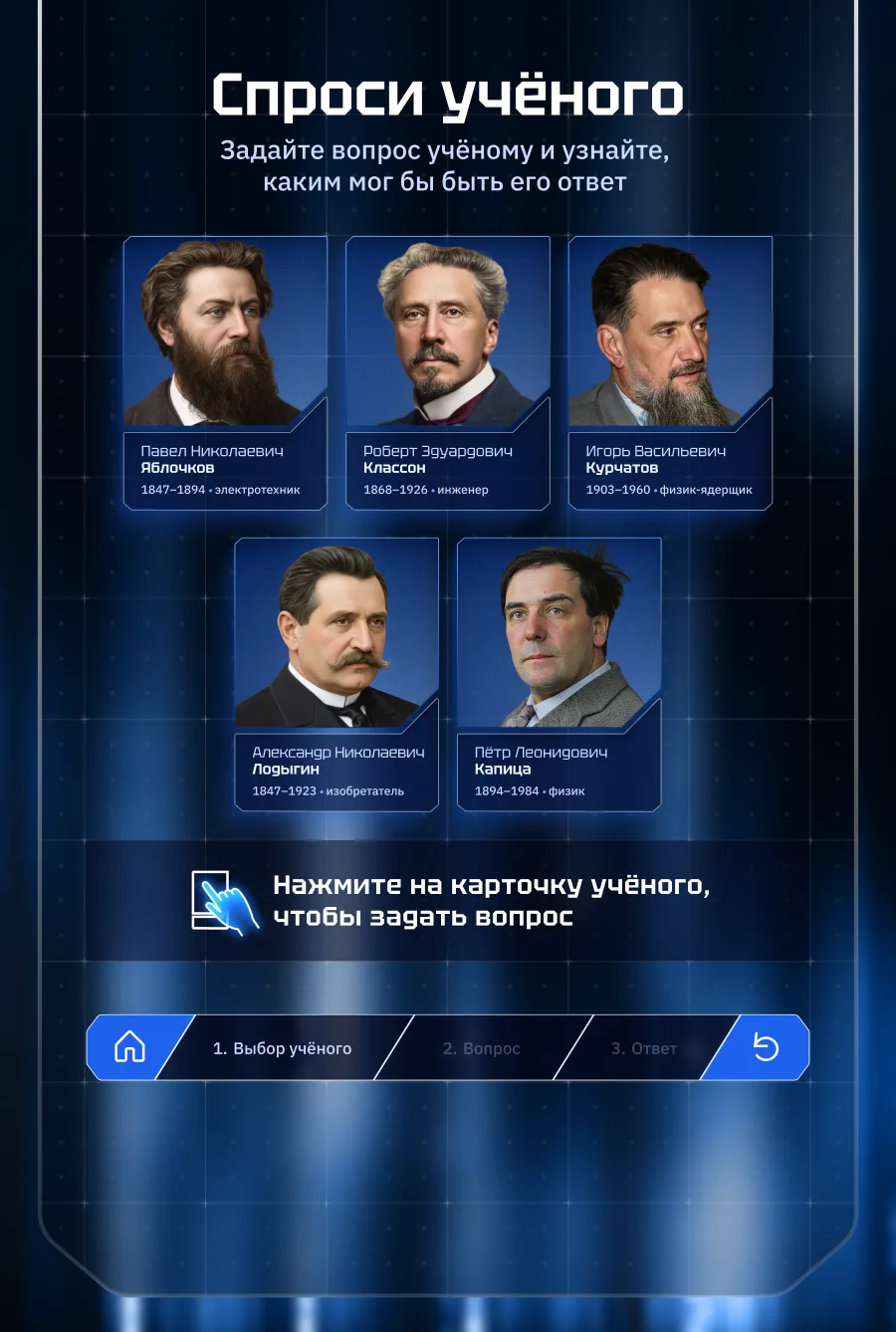
We designed a touchscreen kiosk where visitors choose a scientist and build a question with taps. An AI model answers as that scientist, drawing on his biography and a defined way of speaking.
Our role: concept and script for the interactive, question tree, character personas, answer generation setup, and vertical interface design.

The exhibition booth needed an interactive that would introduce visitors to the subject of energy. We proposed conversations with historical figures: Pavel Yablochkov, Robert Klasson, Igor Kurchatov, Alexander Lodygin, and Pyotr Kapitsa.
The first screen shows their portraits and life dates. The visitor chooses a conversation partner and moves on to the question. This step sets the context right away: the topic is tied to a specific scientist’s work and his contribution to science and technology.
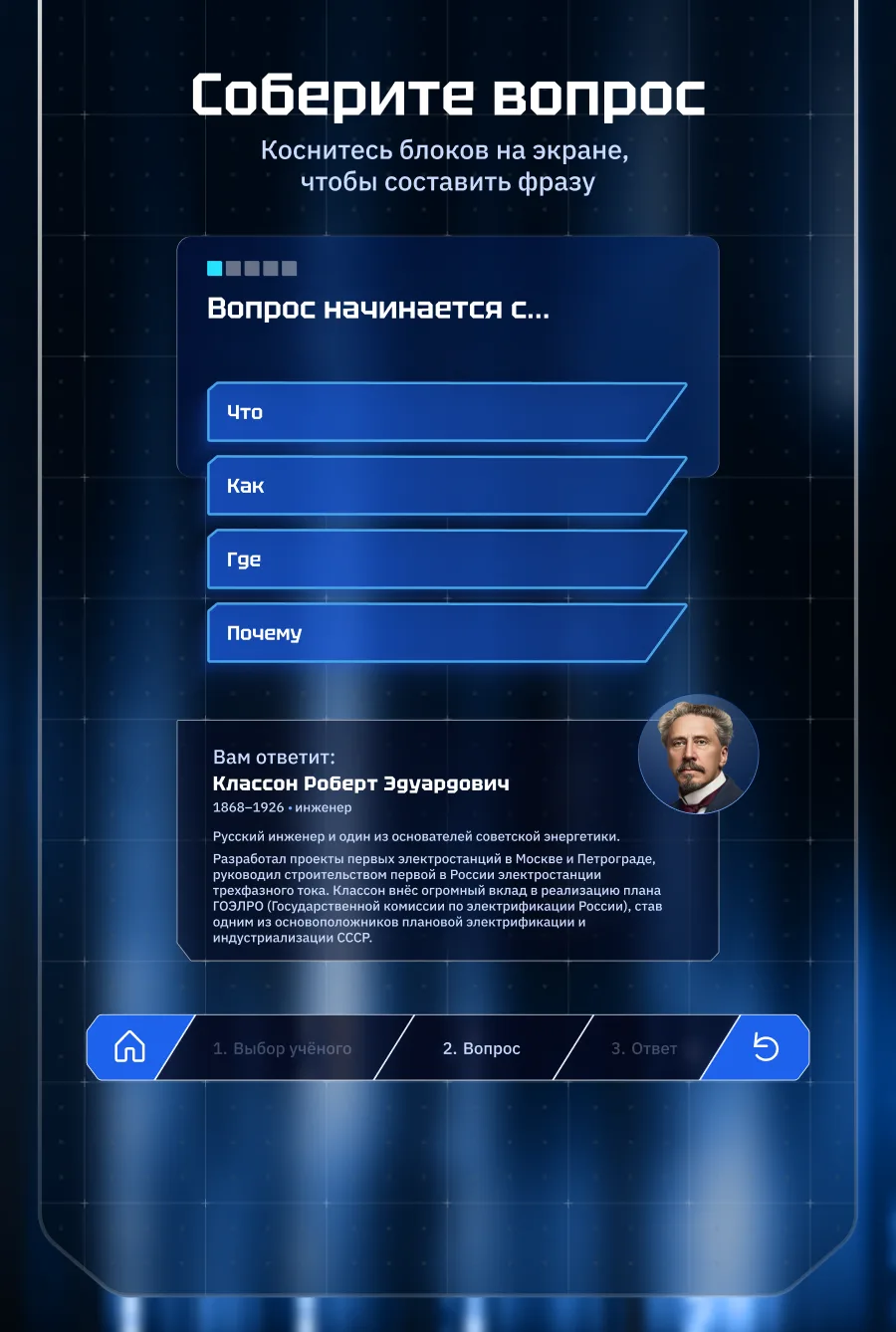
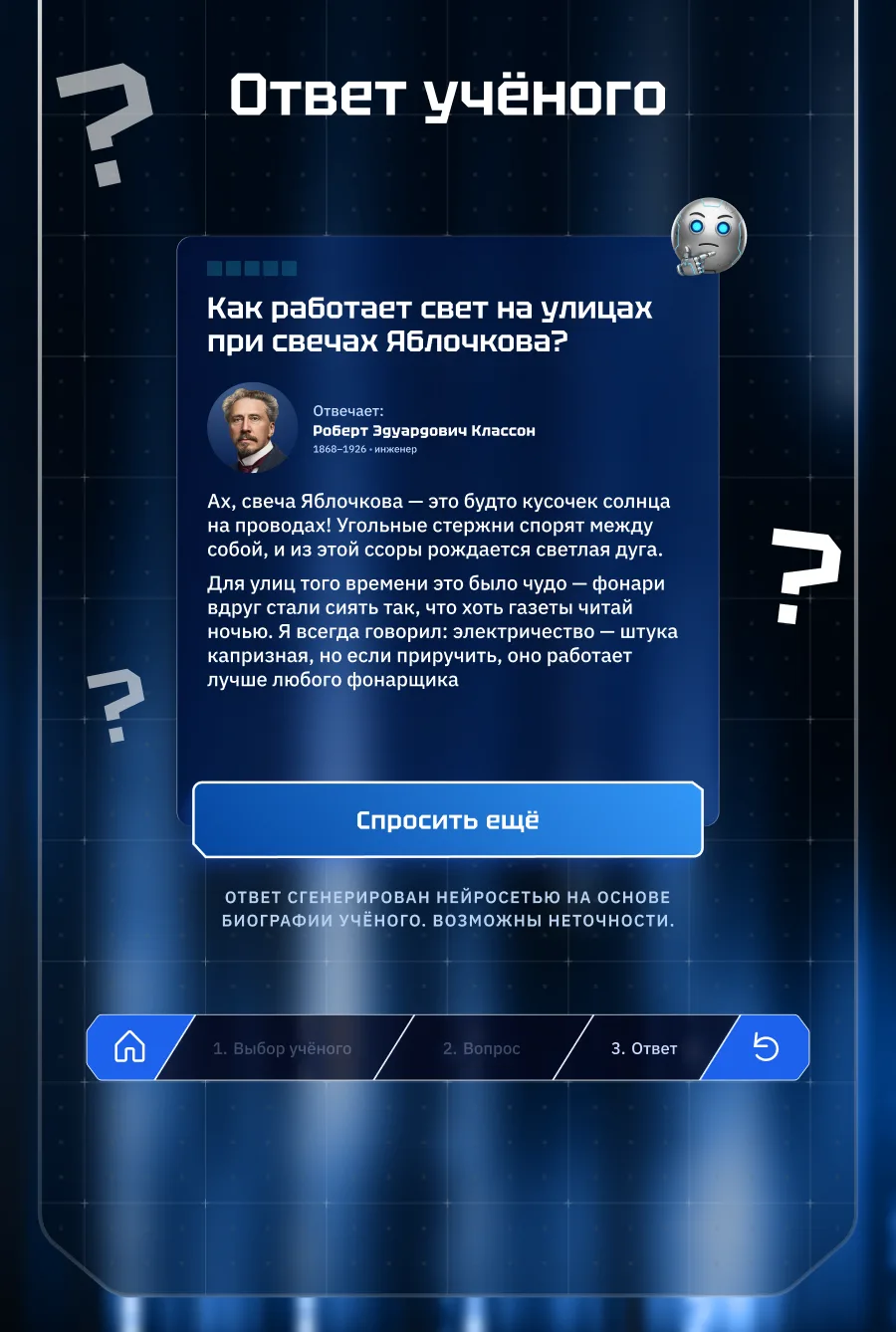
Visitors do not need to type a question on an on-screen keyboard. They choose fragments from ready-made blocks, and the sentence comes together step by step. For example, you can ask how street lighting worked with Yablochkov candles.
The tree has five steps, four types of opening, and 1,620 pre-built combinations that take each character into account. Guided choice keeps the question tied to the booth’s theme and makes the flow easy to use on a vertical touchscreen.

For each character, we prepared a biography and separate instructions for the AI model: which topics he covers and how he speaks. Klasson explains things like an engineer; Kapitsa answers in the physicist’s tone that fits his persona. It was important to keep the characters distinct.
Answers are meant to be read while standing at the screen, so the project sets a short format of up to 300 characters. Next to each answer is a note saying the text is AI-generated and may contain inaccuracies. This is part of the exhibit’s own interface.

The interface is designed for a 1080 × 1920 vertical display. Eight screens cover choosing a scientist, composing a question, and receiving an answer. Visitors go through a sequence of simple actions without typing long text of their own.
The work brought together scripting, historical research, graphics, and generation constraints. The predefined question structure helps keep the conversation within the subject area, and the interface shows what will happen at the next step.
The result is an interactive with five conversation partners and 1,620 question combinations. A visitor chooses a figure, composes a question with taps, and receives a short text answer in that figure’s voice.
The mechanics are built for exhibition foot traffic: interaction comes down to choosing ready-made options, and the content is tied to the booth’s theme.
Production · live broadcasts · 2018–2020
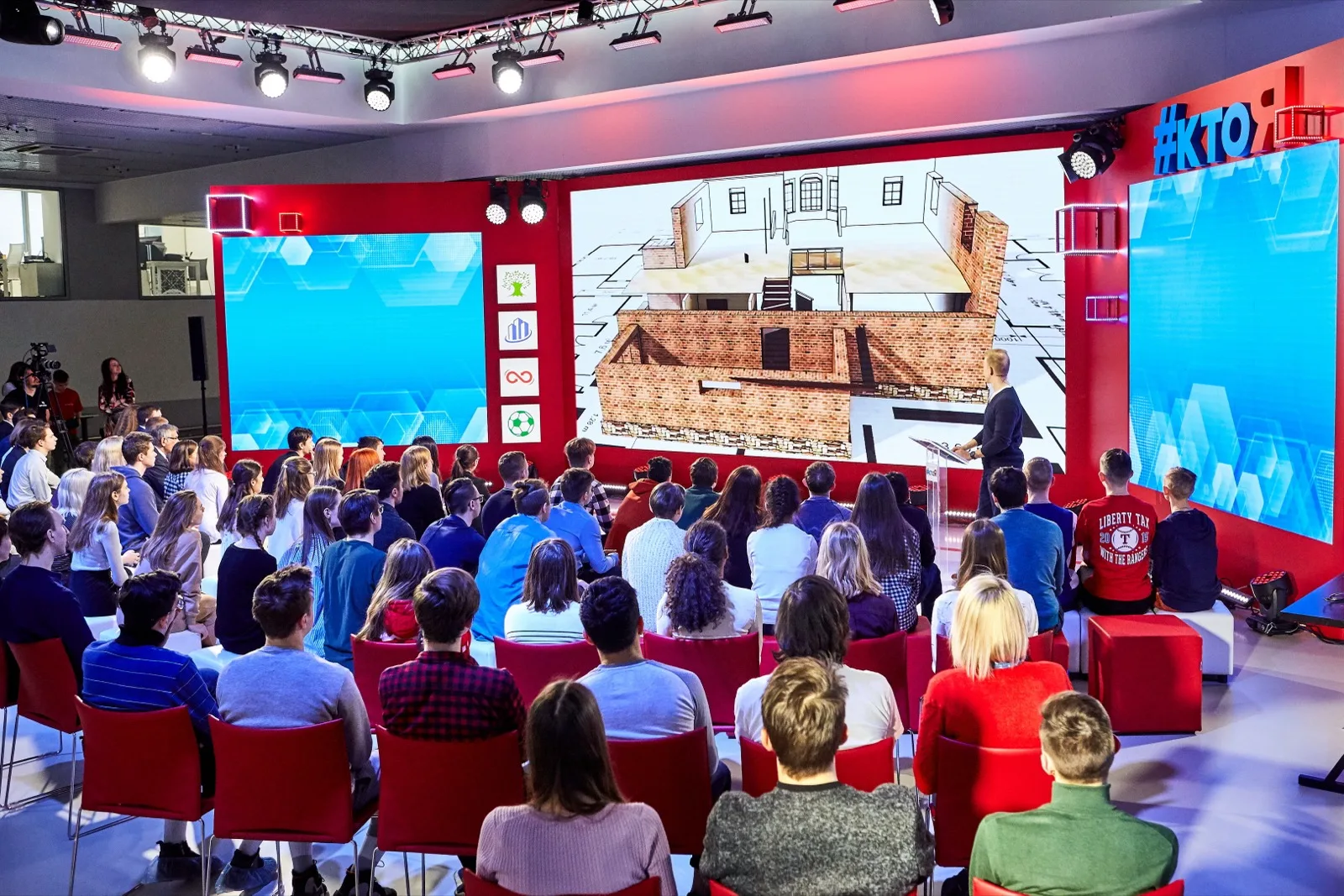
Experts in the studio, filmed segments, experiments on stage, and live feeds from other cities. We ran editorial and production for a regular series, from finding the people to feature to taking the program live.
Our role: episode topics and featured guests, scripts, editorial, multi-camera production, video segments, demonstrations, and live feeds.

The first episode aired in February 2018 and was about food: where it comes from, who produces it, and which professions stand behind everyday products. A total of 18,146 venues tuned in to the broadcast, and four cities connected live with the studio.
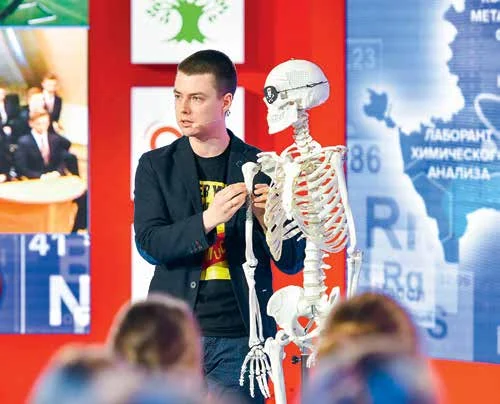
Later episodes covered space, medicine, energy, artificial intelligence, the urban environment, film, and engineering. The editorial team sought out specialists, conducted preliminary interviews, and selected stories that could be shown and discussed in the studio.

Every broadcast needed a minute-by-minute script: when to have a studio conversation, a filmed segment, an experiment on stage, a live feed from another city, or a question from the audience. The sequence of segments helped show an industry from different sides and vary the pace of the program.
The host worked with an editor. If the conversation drifted or stalled, transitions and script cues prepared in advance helped bring it back on topic. Over several seasons, the team built a steady process for preparing episodes.


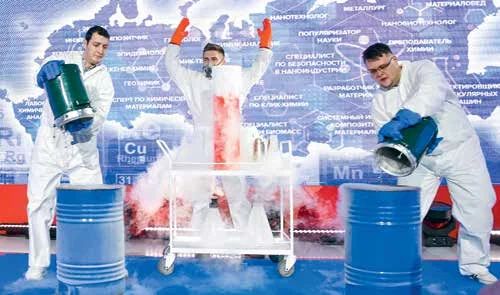
The studio was shot with multiple cameras, and we produced video segments and trailers for the episodes. Experts ran experiments and demonstrations right on stage, so viewers could see a process on screen and discuss it with someone who works in the field.
Live feeds from other cities expanded the program beyond the studio. The studio conversation connected with sites where real work was being done, while the camera and directing teams handled the transitions between these parts of the broadcast.


An online poll ran during the program, and its results were shown on the big screen in the studio. Questions from the studio audience and the chat were passed on to the experts as the broadcast went on.
These mechanics gave the host feedback and extra topics to discuss. Viewers could follow the explanation, take part in the poll, and see their own question become part of the program.

The team ran a regular series of live broadcasts from 2018 to 2020. Production brought together editorial work, a multi-camera studio, location segments, demonstrations, and live feeds from remote sites.
The episode archive kept drawing an audience after production ended, reaching 1.97 million views over seven years.
Web & Digital · product · content · 2023–2026
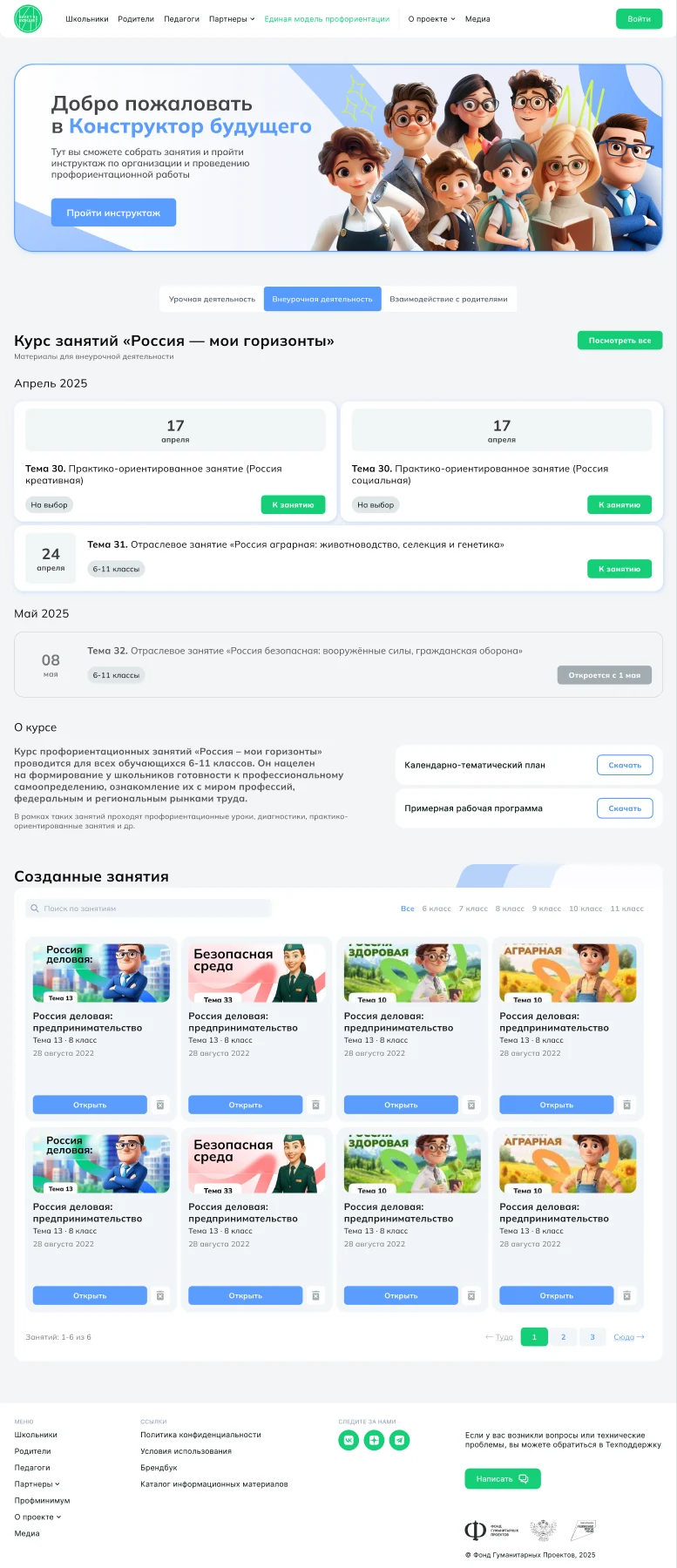
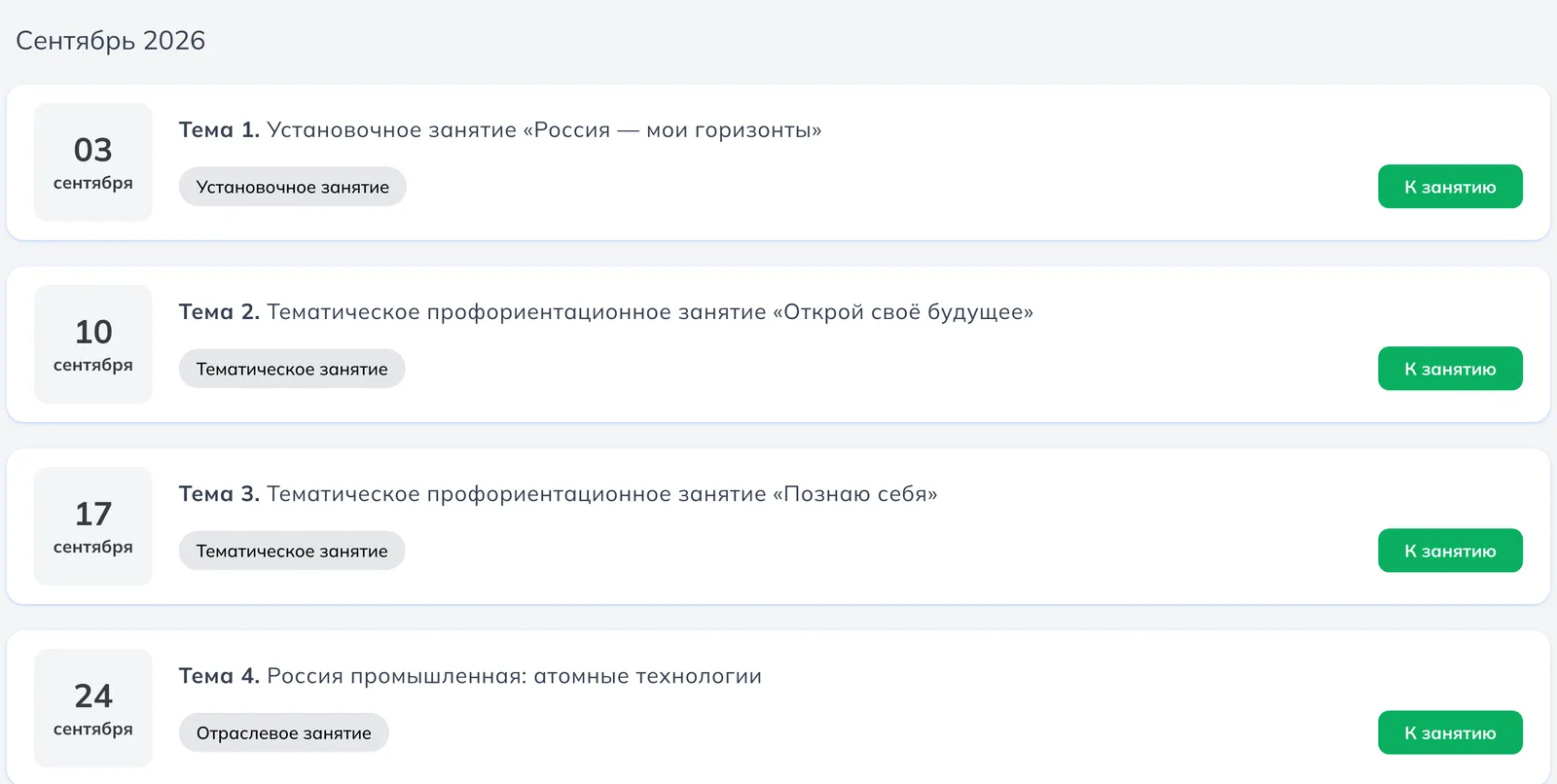
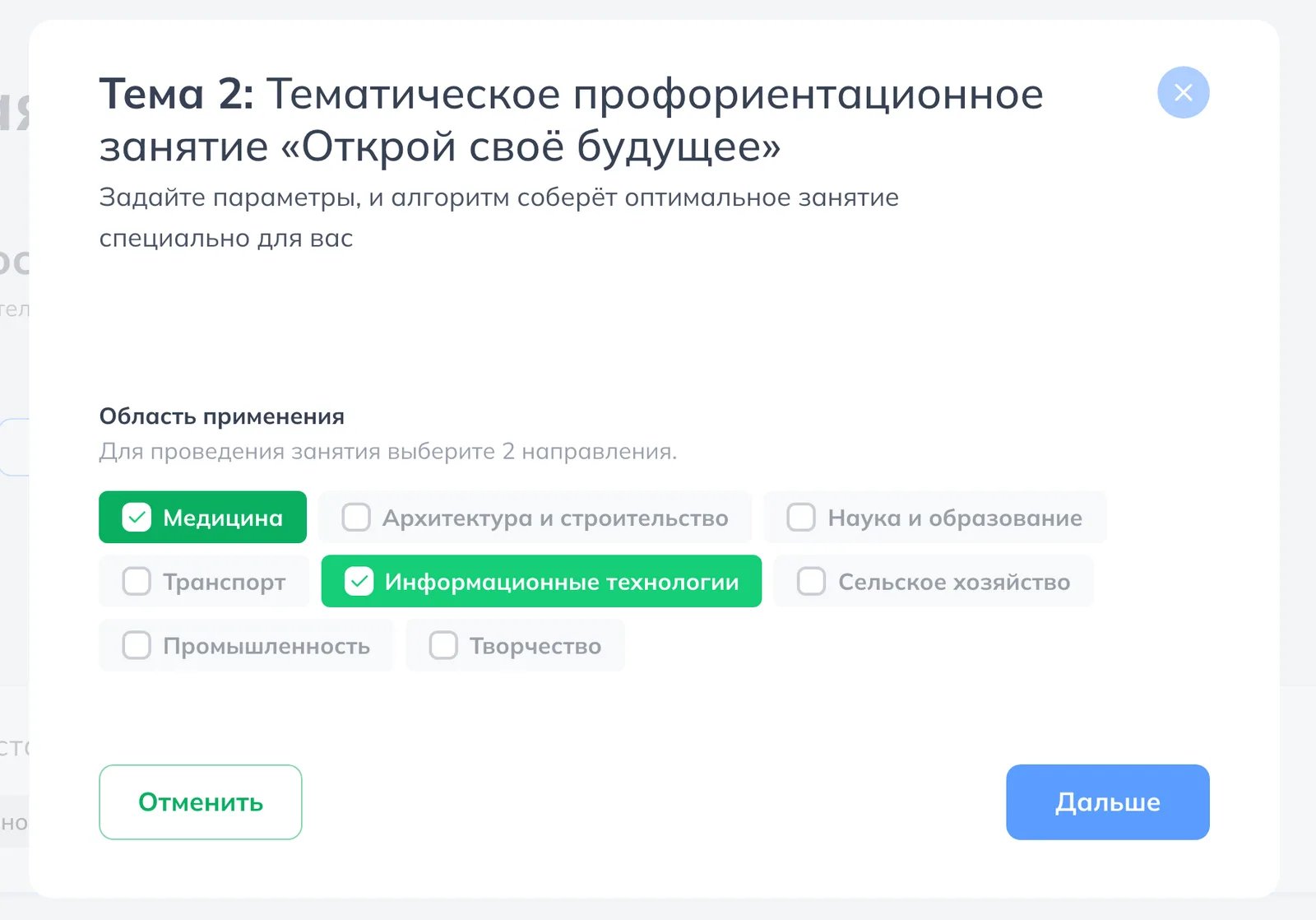
An educator chooses a topic and parameters, and the platform delivers a ready-to-use kit: a script, video, a presentation and activities. We took the product from concept and UX design through development and operation.
Our role: product concept, interface and design system, front-end and back-end development, infrastructure and editorial tools.

Preparing a session often starts with a search: the script is in one file, the presentation in another, the video on a separate service. The client came with the idea of a materials library. We proposed a builder that assembles a kit based on the chosen parameters.
In the catalog, the educator picks a topic, then specifies the group and fields of interest, such as medicine and information technology. These parameters shape the content of the finished session and make it possible to work with one topic in different versions.

The output of a build is a sequence of blocks with timings, the educator’s talking points, video materials, a presentation, a survey and a discussion of its results. All the parts are arranged in the order the session runs.
Materials can be used online or downloaded in advance. The second option matters for locations with a weak internet connection: preparing and running a session shouldn’t depend on connection quality at any given moment.

Behind the builder’s interface is a catalog of thousands of items. We developed a structure, combination rules and editing tools for them. Each version of a session is assembled from separate blocks, so content has to be prepared with different parameters and sequences in mind.
Editorial work moves through preparation, assembly, preview, proofreading and publication. For the team producing the materials, this process matters as much as ease of use does for the educator: they need to see the finished session and check it before it goes live.

We designed the user journey, built the front end and back end, set up the infrastructure and ran it for three years. Over that time, the product went through several generations of design and kept working alongside the client’s editorial team.
By September 2026, the system had accumulated more than 18.8 million built sessions. In a single academic year, from September 2025 to May 2026, users built about 5.7 million kits. A build means receiving a finished session with the selected parameters.
The idea of a library grew into a working builder: the educator chooses parameters and receives a coherent set of materials. The editorial team prepares content in a shared system, and the platform assembles different versions of a session from it.
The catalog holds 6,452 content items. Over three years, the platform as a whole, including its other sections, received more than 35 million page views.
PR · influencer marketing · 1.5 years
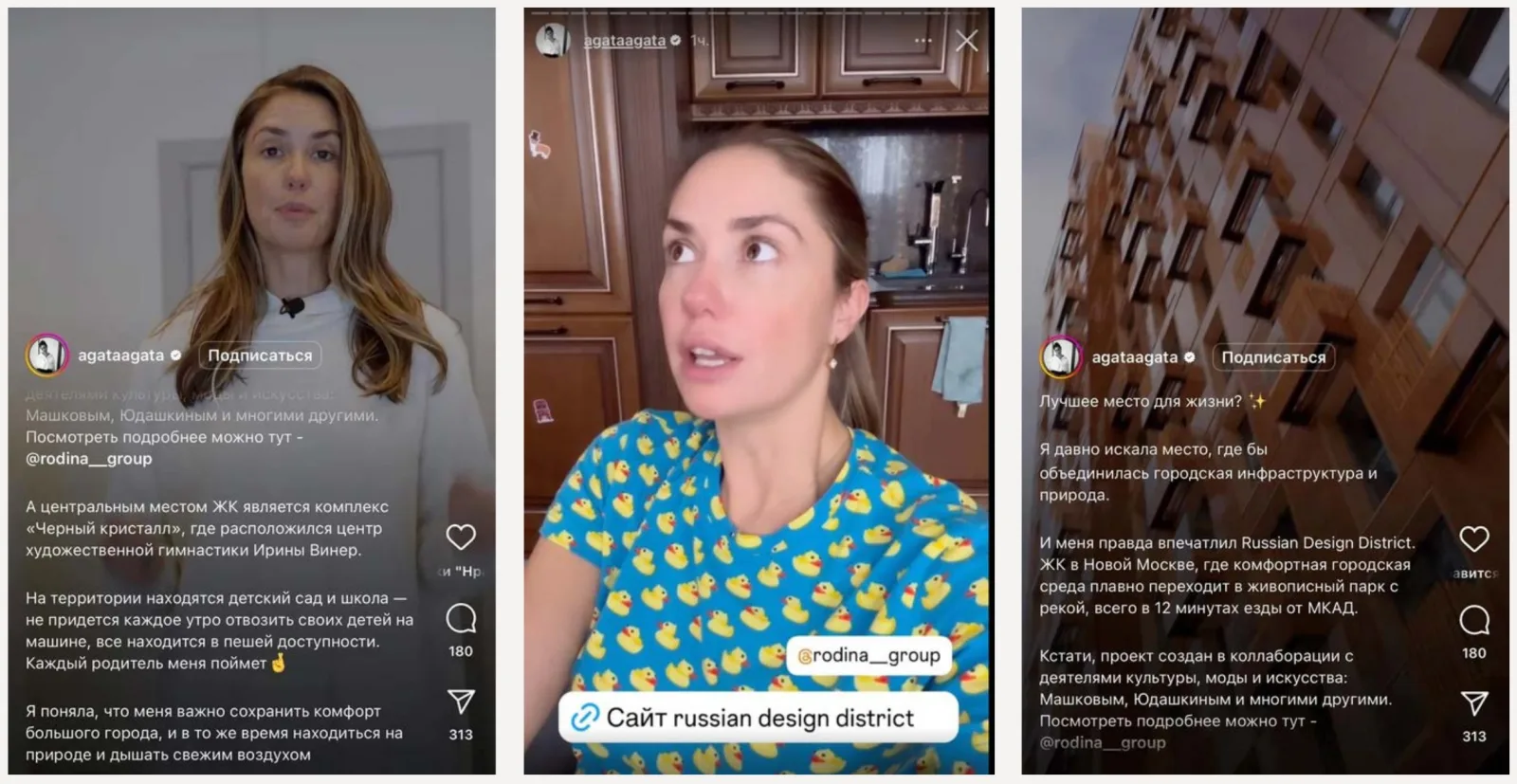
For a year and a half, we tied together the developer’s news hooks, blogger integrations, and media relations. One of the central mechanics was an apartment purchase story that unfolds gradually, from the intention to buy to a first look at the residential complex.
Our role: influencer selection, creative celebrity integrations, work with media and Telegram channels, and managing coverage.

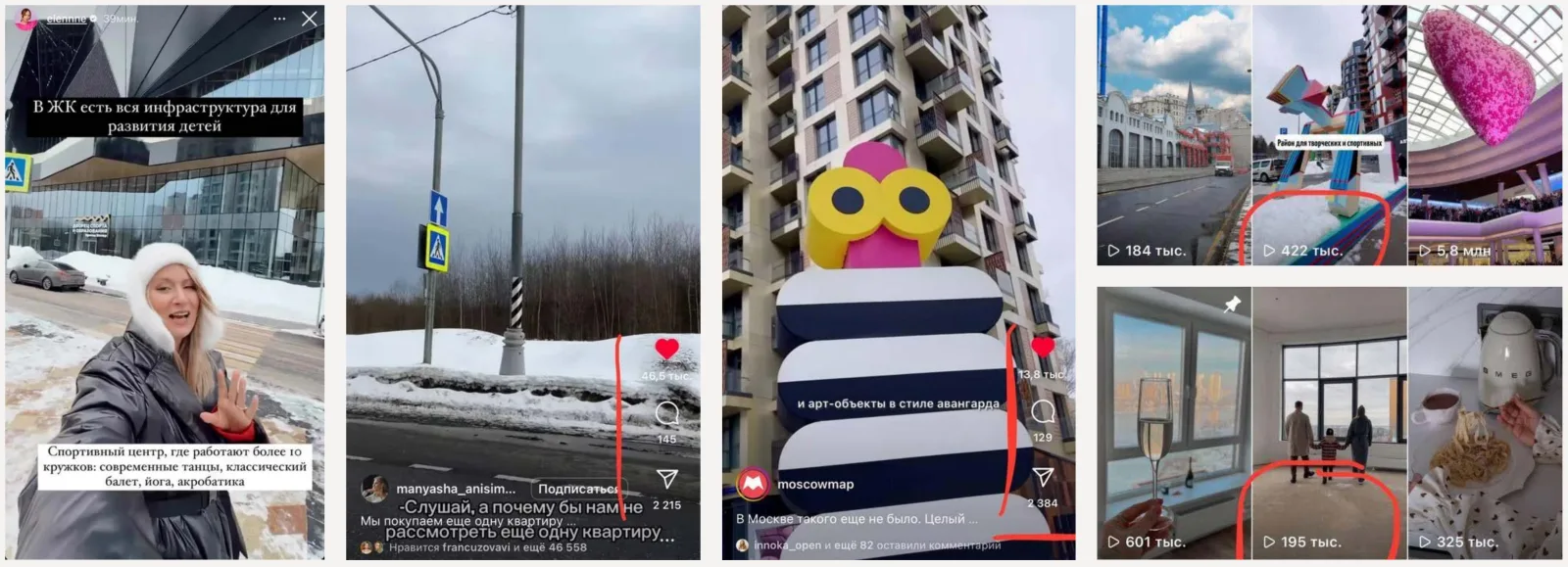
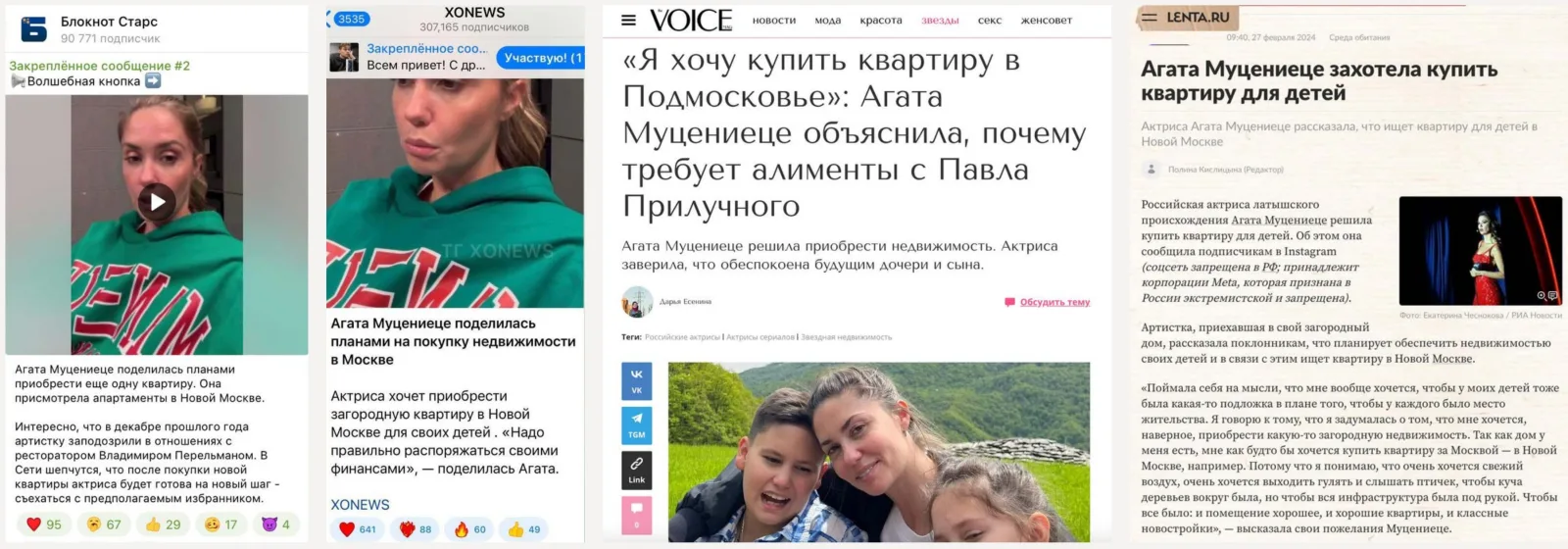
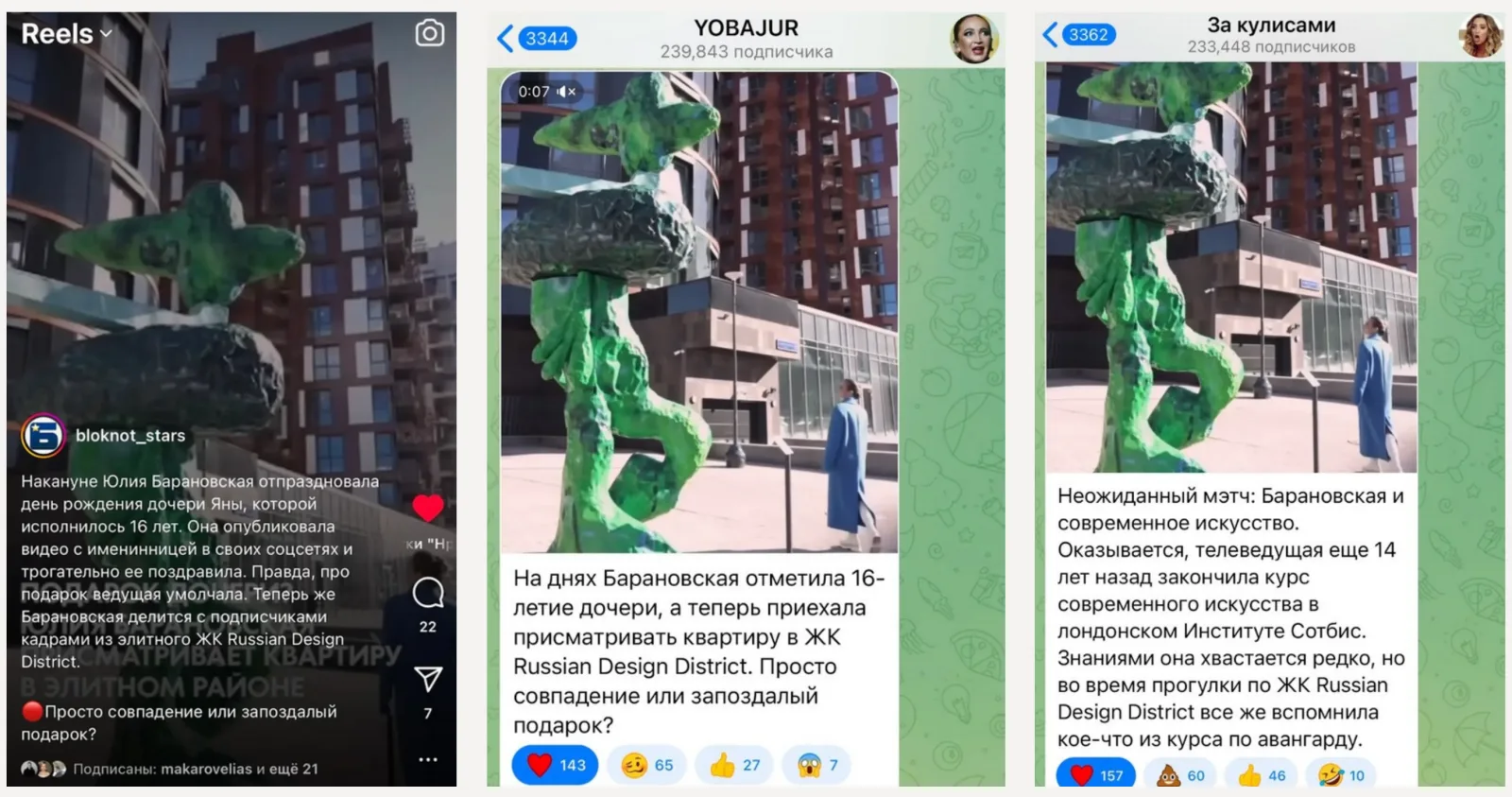
For an integration with a well-known actress, we developed a two-stage scenario. First came a voice Story about her intention to buy an apartment in the Moscow region. At this stage, the story centered on her and her plans.
The news hook was developed in the media and on Telegram. The team built on the celebrity’s public profile and planned a step-by-step reveal: interest in her intention was meant to carry over into a look at a specific project by the developer.

The next stage was the actress’s visit to the site and filming of the complex’s key features according to an agreed brief. Four to five days after the first wave ended, the video from the site went live.
In the second wave, media and Telegram coverage named the specific residential complex where the actress had bought an apartment. The story linked two standalone news hooks, and the coverage of the purchase continued to introduce audiences to the project itself.

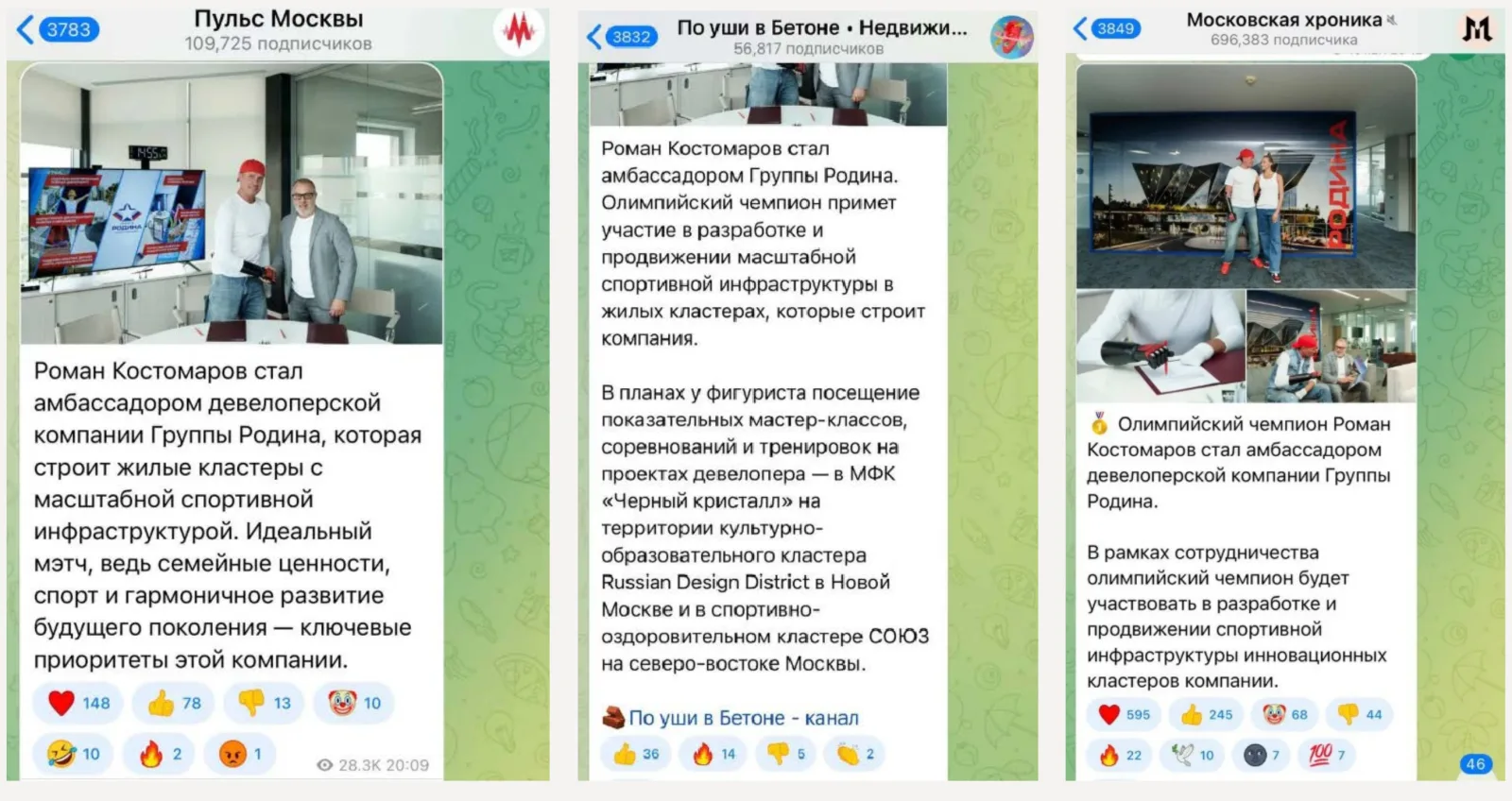
Separate integrations were carried out with an Olympic figure skating champion who became the developer’s ambassador, and with a TV host. To distribute the content, we used real estate channels and Moscow news pages.
Over a year and a half, the program involved 50 influencers selected against set criteria, and four creative celebrity integrations were delivered. The team handled approvals and managed content releases across platforms.


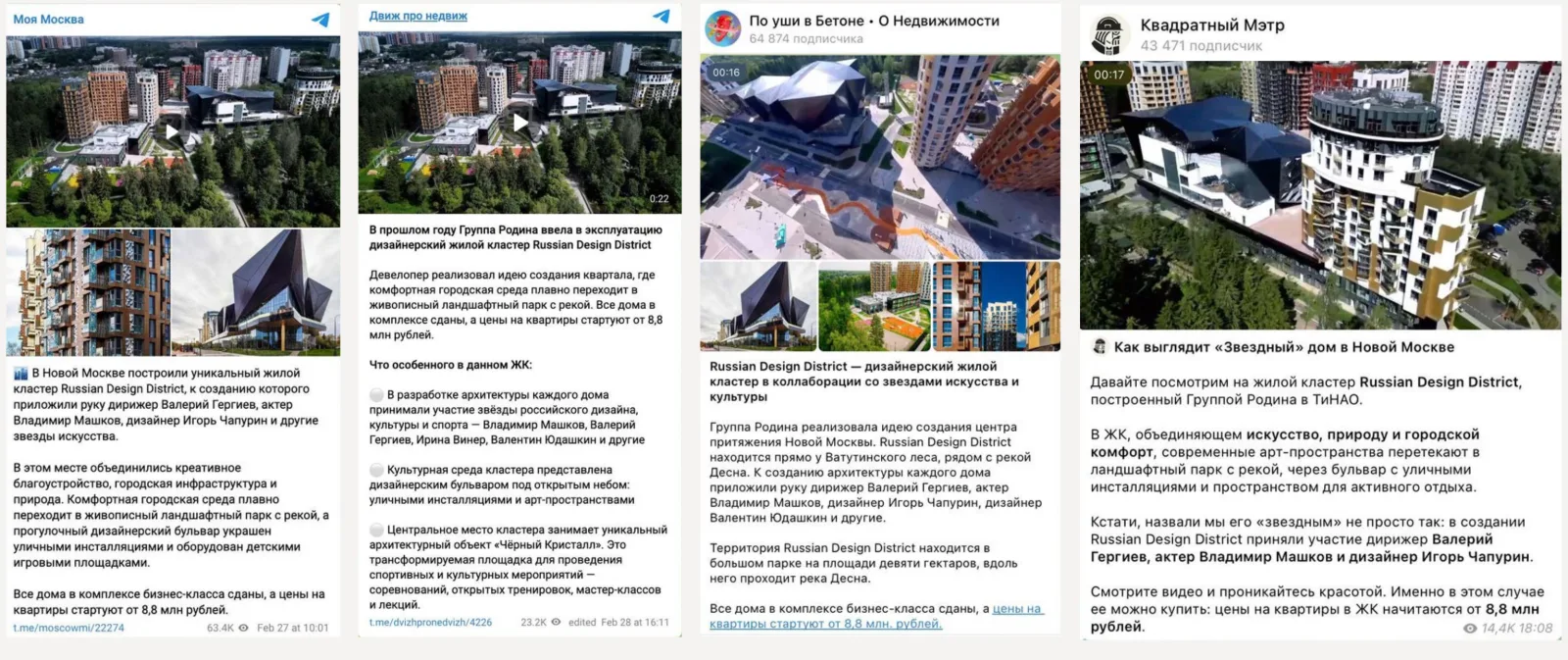
In parallel, we worked with industry Telegram channels on the company’s internal news, covering the residential cluster, its architecture, and its designers. These pieces kept the project regularly present on the industry agenda.
The program also included YouTube shows about real estate, business, and design. This combination gave the developer several formats for introducing the project: a short post, a celebrity story, and an in-depth video conversation.

The program combined ongoing work with industry media and major celebrity integrations. One of the two-wave integrations generated a total reach of more than 18 million.
As a result, the developer gained a connected series of content: from a personal story and a site visit to coverage of the architecture and life in the residential cluster.
Events · PR · 2023
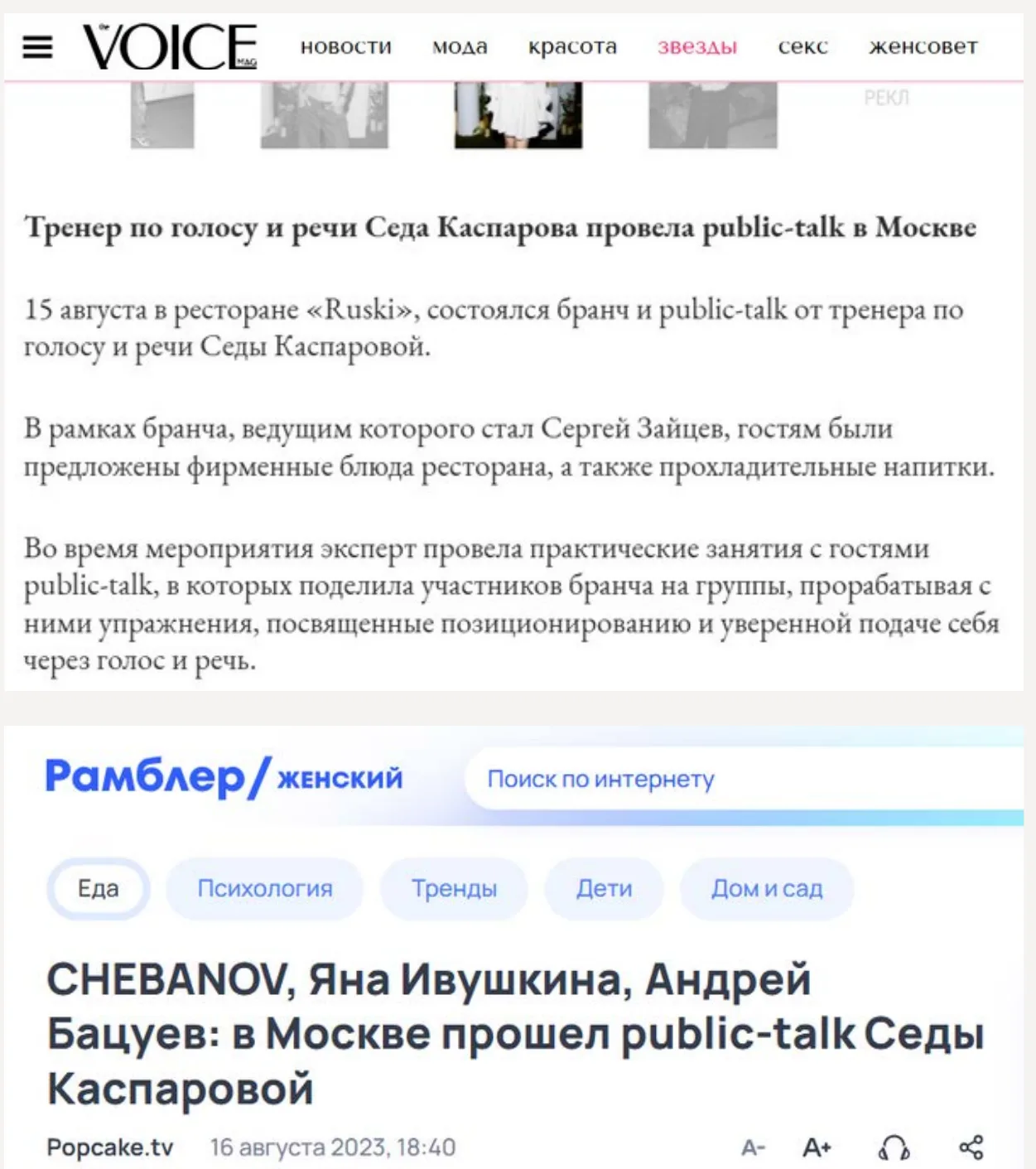
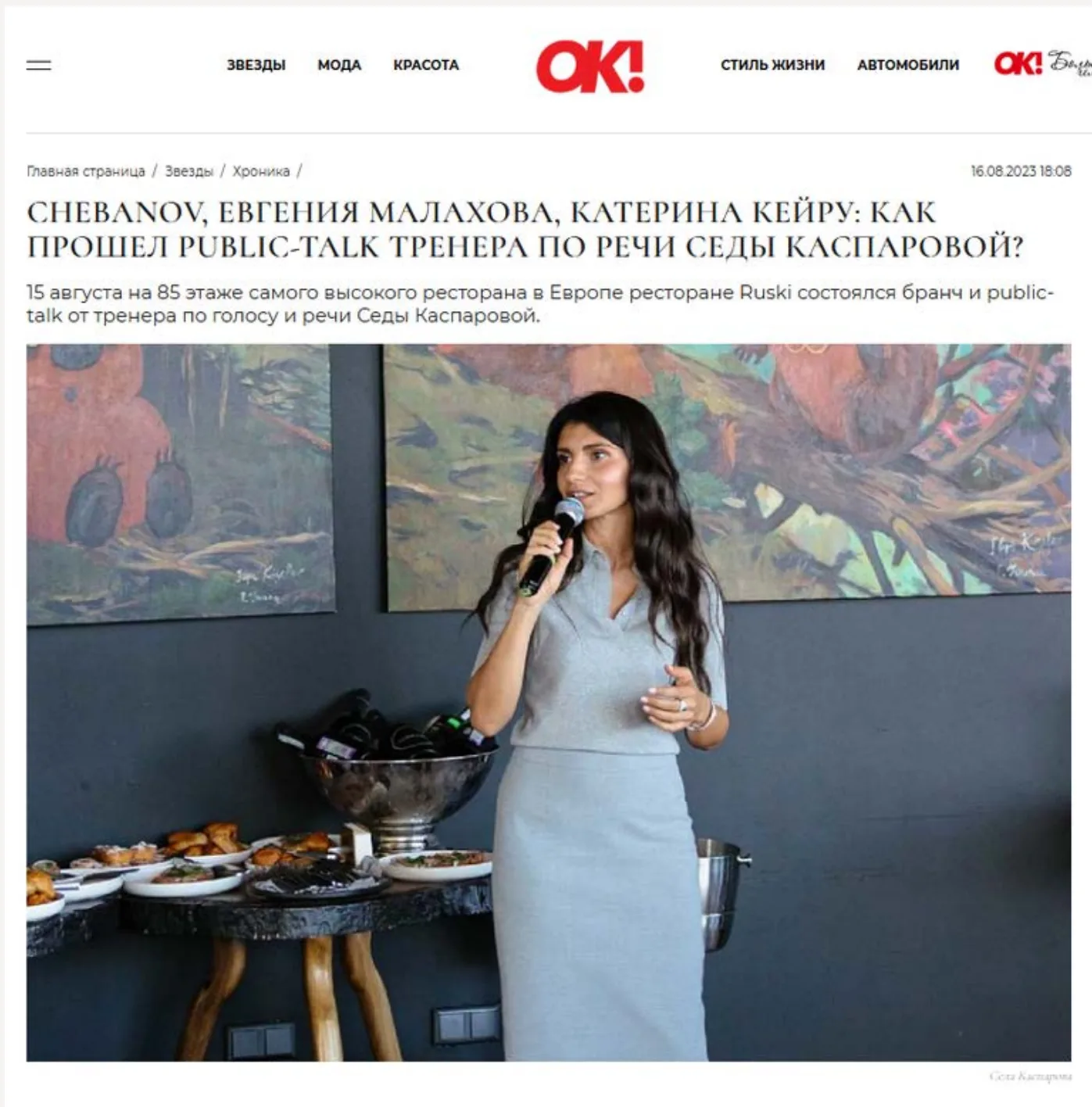
For a voice and speech expert, we organized a brunch and public talk at Ruski restaurant. We put together a program with hands-on exercises, invited guests, and a performance by an artist, then supported the event with media coverage.
Our role: idea and concept of the meetup, venue arrangements, program, guest artist, event coordination, and media coverage.

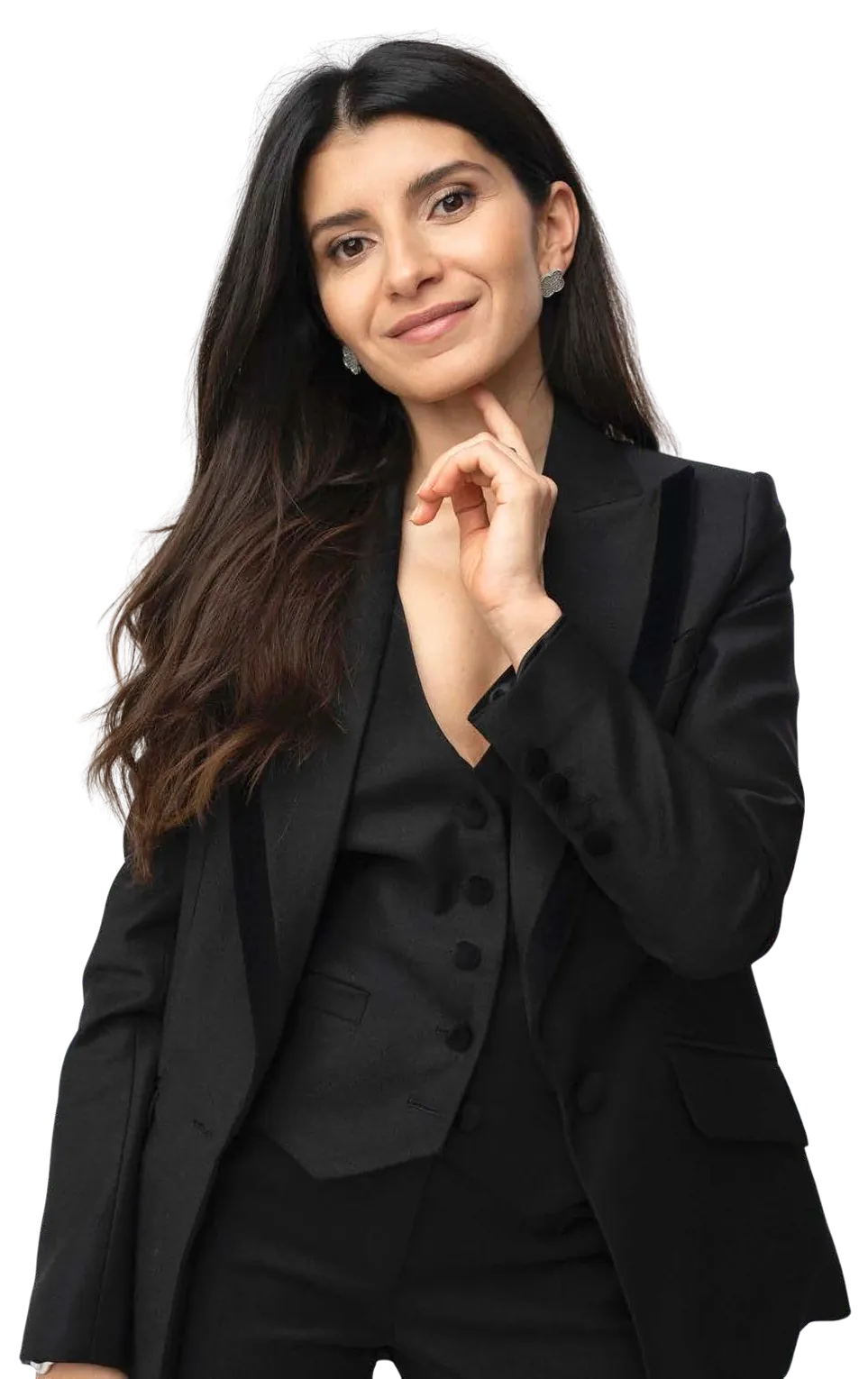
Seda Kasparova is a certified voice and speech coach and the founder of the educational project Golos Mozhet. We developed a concept for a meetup that combined a conversation with the audience and hands-on practice in the room.
The venue was secured on mutually beneficial terms: the brunch and public talk took place at Ruski restaurant. The format let guests get to know the expert’s approach by taking part in the program.

We developed the entire event program. Sergey Zaitsev hosted, and the artist Vanya Chebanov was booked as the celebrity speaker, followed by his performance. The team coordinated everything on site.
During the practical part, Seda split the participants into groups and led exercises on positioning and presenting yourself with confidence through voice and speech. This hands-on work with the guests became the core of the meetup.

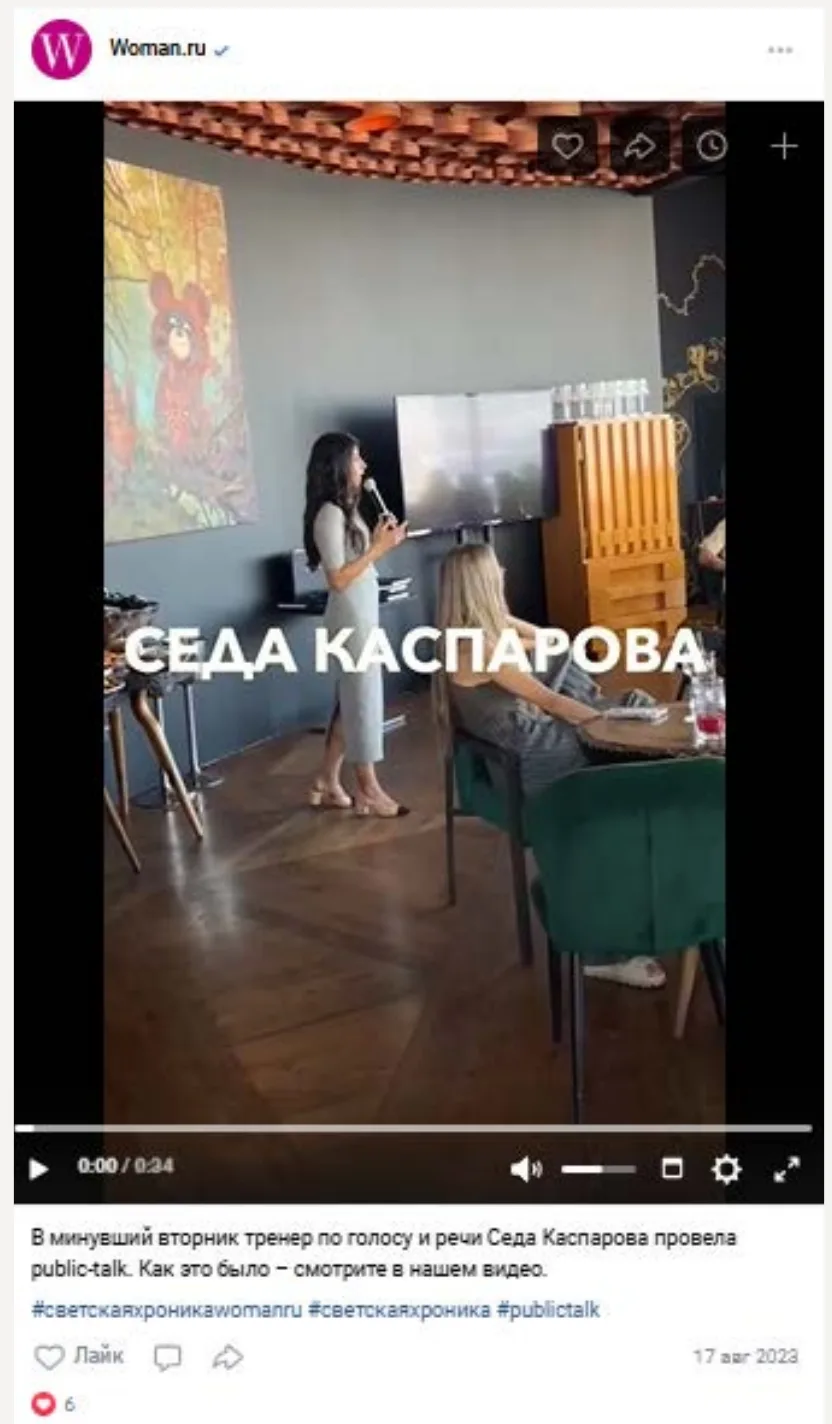
After the meetup, coverage appeared in The Voice, OK!, Woman.ru, and Rambler/Zhenskiy. Woman.ru published a video from the venue, and the other outlets wrote about the program and the guests of the public talk.
Media relations were part of the project from the start. The team was responsible for covering the event and saw it through to publication, so the meetup continued for audiences beyond the restaurant.

The meetup drew 35 celebrity guests, and the project’s total reach exceeded 7 million. The event brought together the expert’s practice, an entertainment segment, and follow-up media coverage.
Our work covered the full cycle: concept, venue, program, booking the artist, coordination, and post-event coverage.
Web & Digital · game design · 2022–2025
We created a series of virtual simulators: participants make choices, run calculations, make mistakes and see the consequences of their decisions. Each profession has its own scenario, input data, interface and graphics.
Our role: simulator format, scenarios developed with industry experts, task mechanics, interfaces, illustrations and offline builds.

A job description rarely conveys what the work actually feels like. We proposed learning through action: participants receive input data, make decisions and see the result. The tasks were developed together with industry experts.
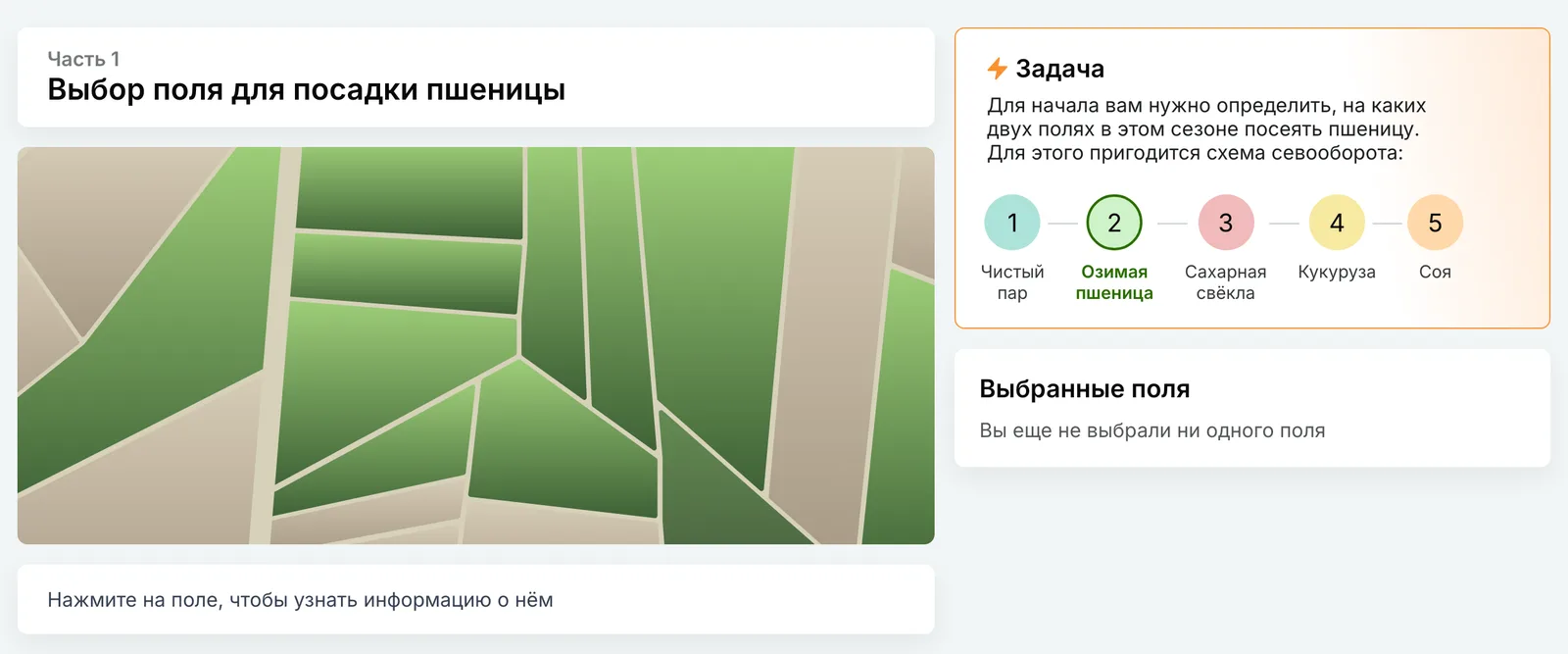
For example, an agronomist chooses fields for winter wheat, selects a variety, calculates the seeding rate and sets the sowing date. Then they face a crop disease and make decisions that determine the harvest. A single scenario covers several connected stages of the work.
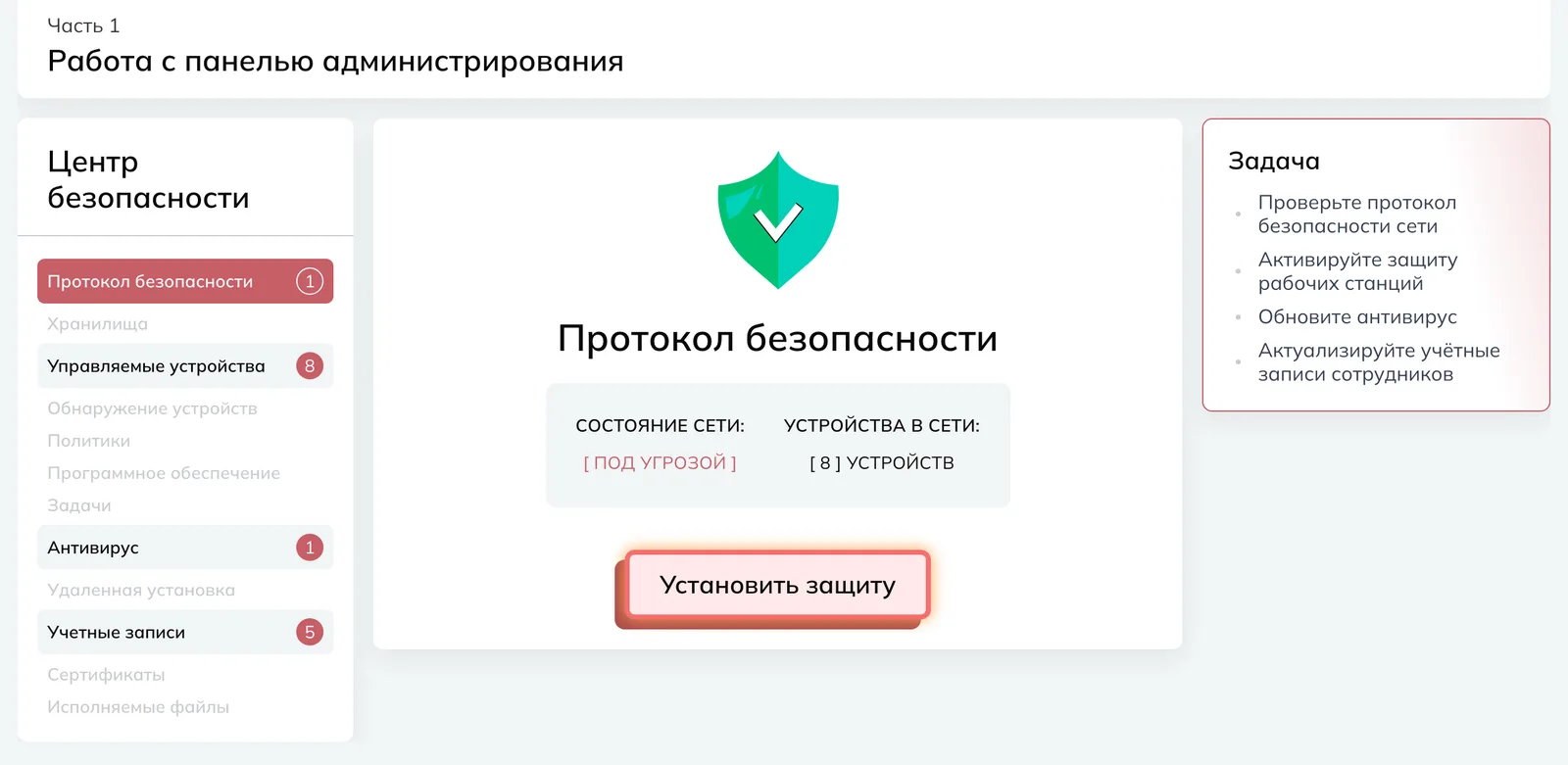
In the cybersecurity simulator, the participant works in an admin panel. There are eight devices on the network, and the status reads “at risk.” The task is to make sense of the security log, update the antivirus and lock down the user accounts.
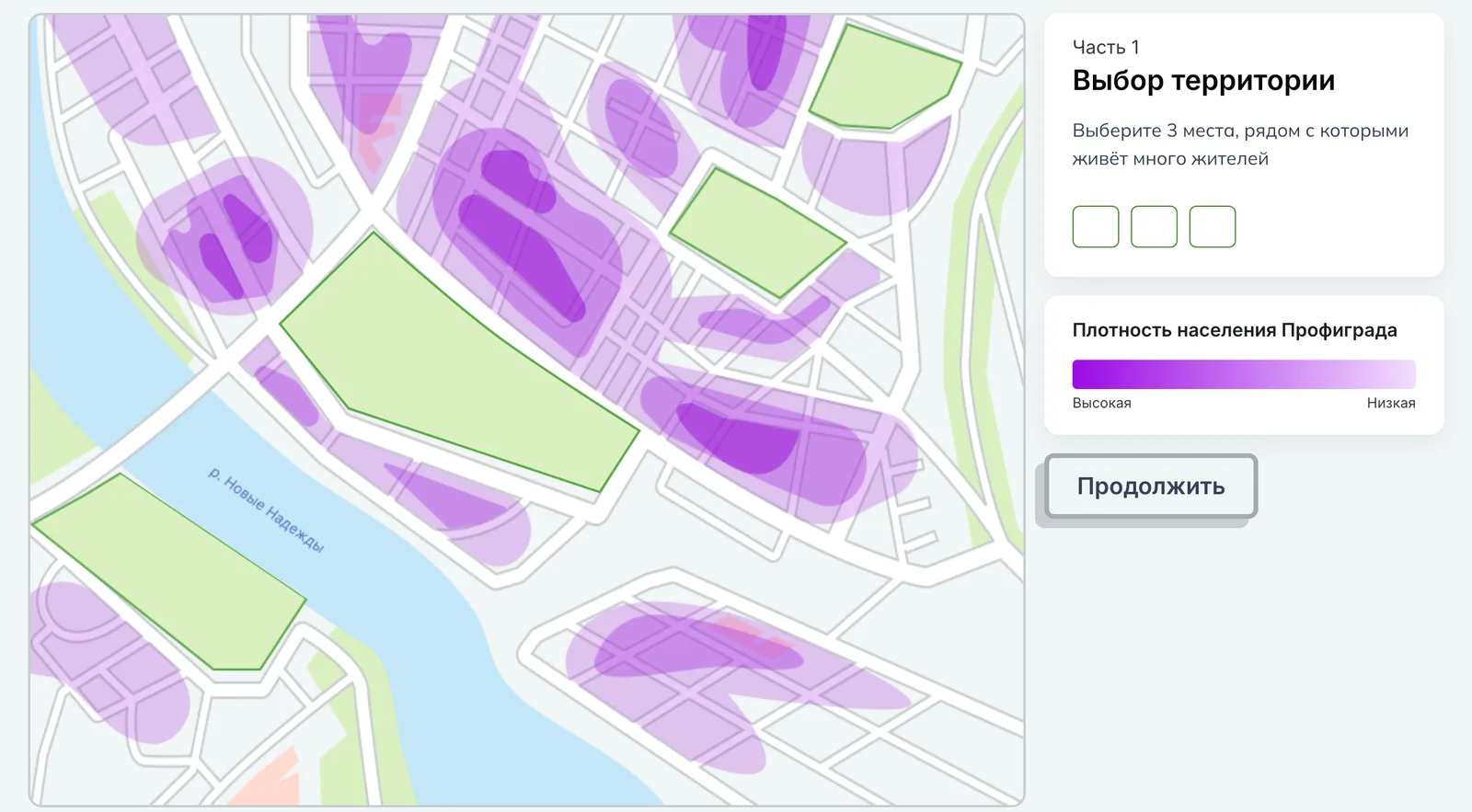
A public space architect solves a different problem: choosing a site for a park based on a population density map. For each profession, we selected its own data, sequence of steps and feedback on mistakes.


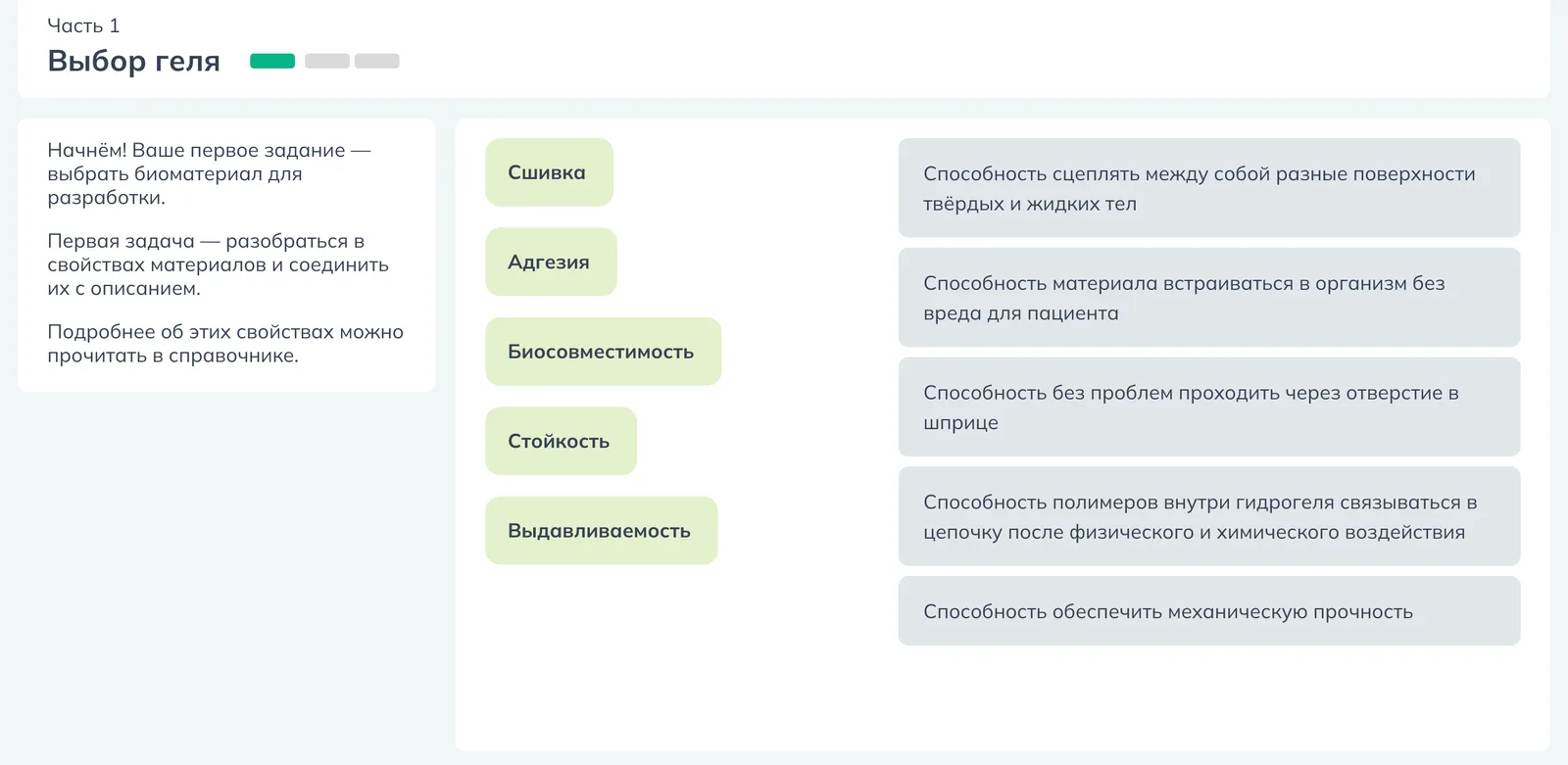
A biomedical engineer selects a hydrogel based on its properties. To complete the task, participants need to understand the difference between adhesion and biocompatibility. The interface helps compare parameters and make a decision based on data.
Graphics, illustrations and interaction patterns were developed around the subject matter of each job. The series includes maps, control panels and comparison tools. The common principle remains: the participant acts and gets an explanation of the outcome of their choice.

A simulator can be used on its own or as part of a session. Each scenario is designed to take the participant through one work task step by step, from getting to know the conditions to the final decision.
For locations without a stable internet connection, we built offline versions. Over several years, the series grew to more than thirty professions while keeping separate scenarios and visual solutions for each specialty.
The result is a series of more than thirty career simulators. Over three years, the section’s pages received 2.7 million views and 850,000 visitors.
The format lets people get to know a profession through a sequence of decisions. Offline builds make it possible to use the simulators even at locations without internet access.
Production · brand film · supercars, UAE
A brand film about supercars in the UAE: a desert highway and the city at dusk, 50 seconds in 4K — the story rests on the image alone.
PR · influencer marketing · 2022
We brought local influencers and media together around a restaurant opening. The program combined a cooking master class, guest content, founder interviews, and post-event coverage.
Our role: influencer selection and coordination, integration ideas, founder interviews in the press and on radio, and managing coverage.

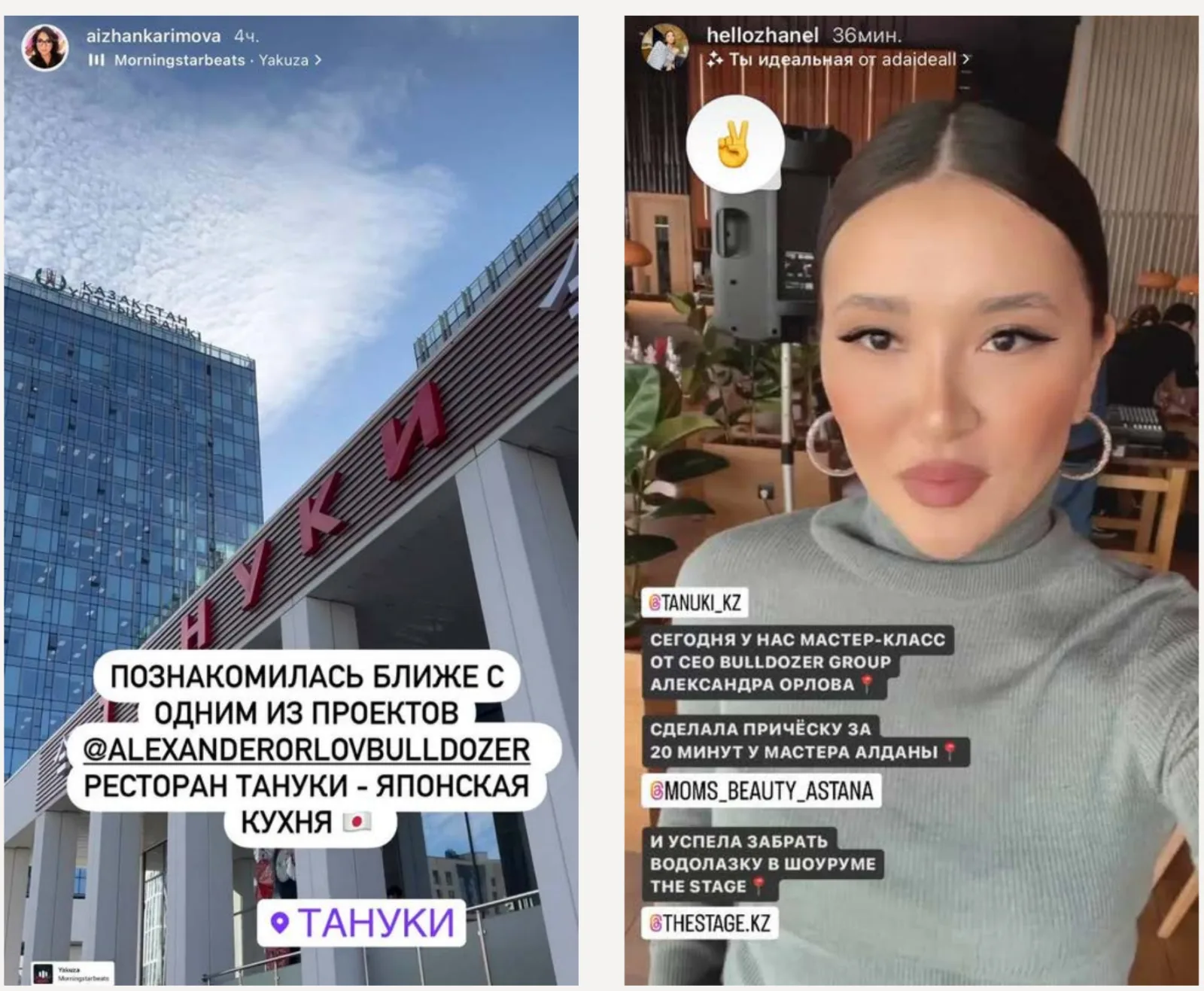
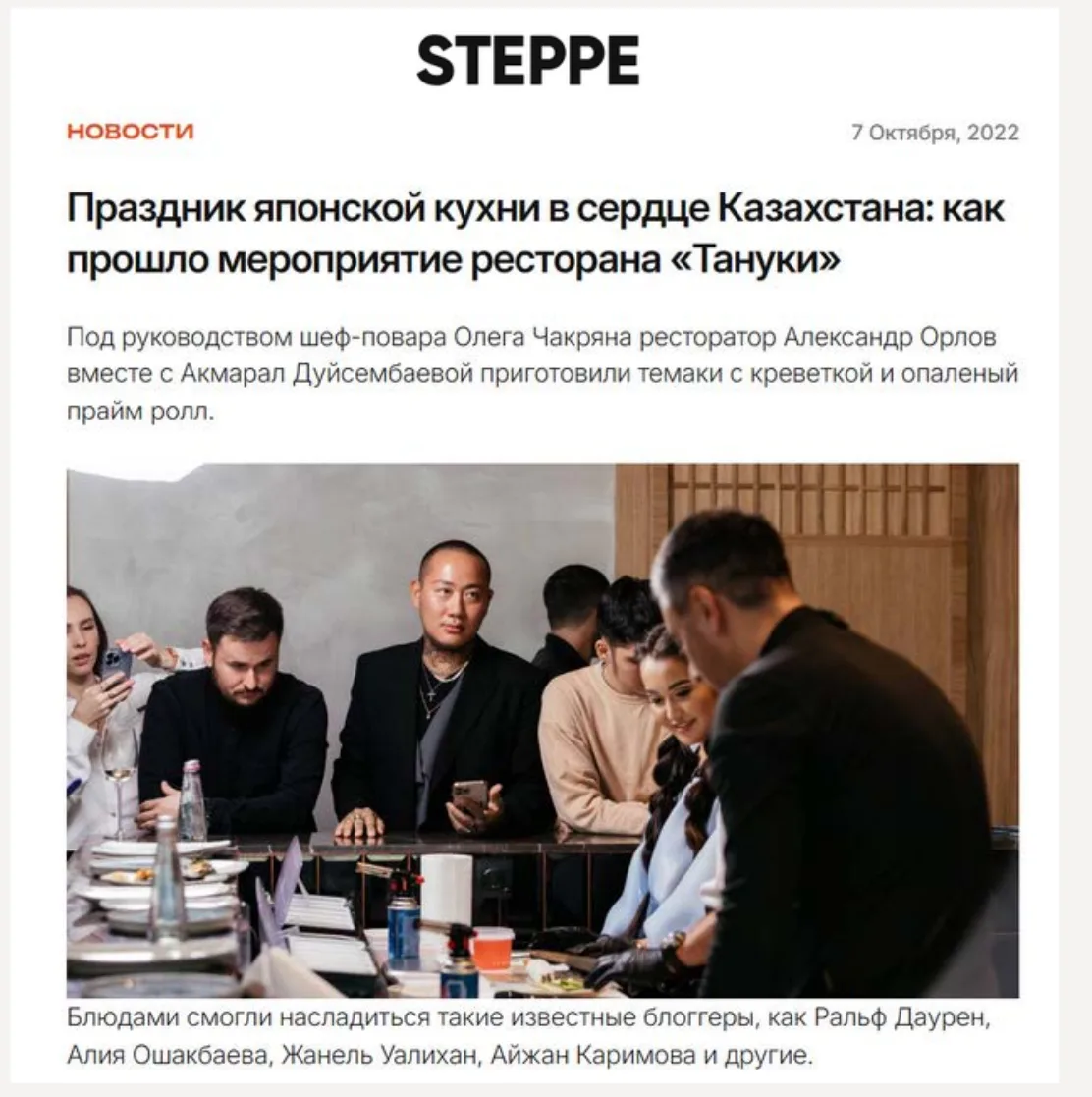
We brought more than 35 influencers to the opening, selected to match the venue’s target audience. We developed creative integration ideas for them and agreed on terms and the format of participation with each one.
The team handled communication with the bloggers, kept track of posting deadlines, and monitored published content. The work began with choosing creators and continued after the event itself, as their Stories and posts went live.

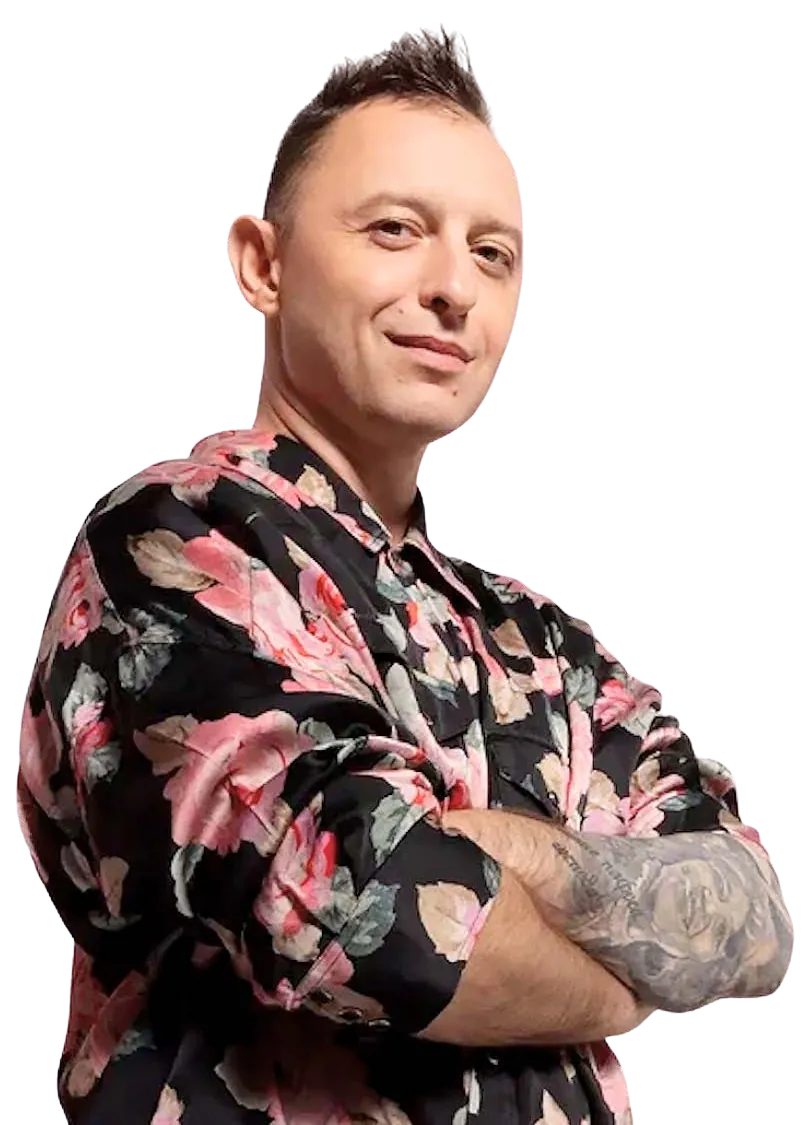
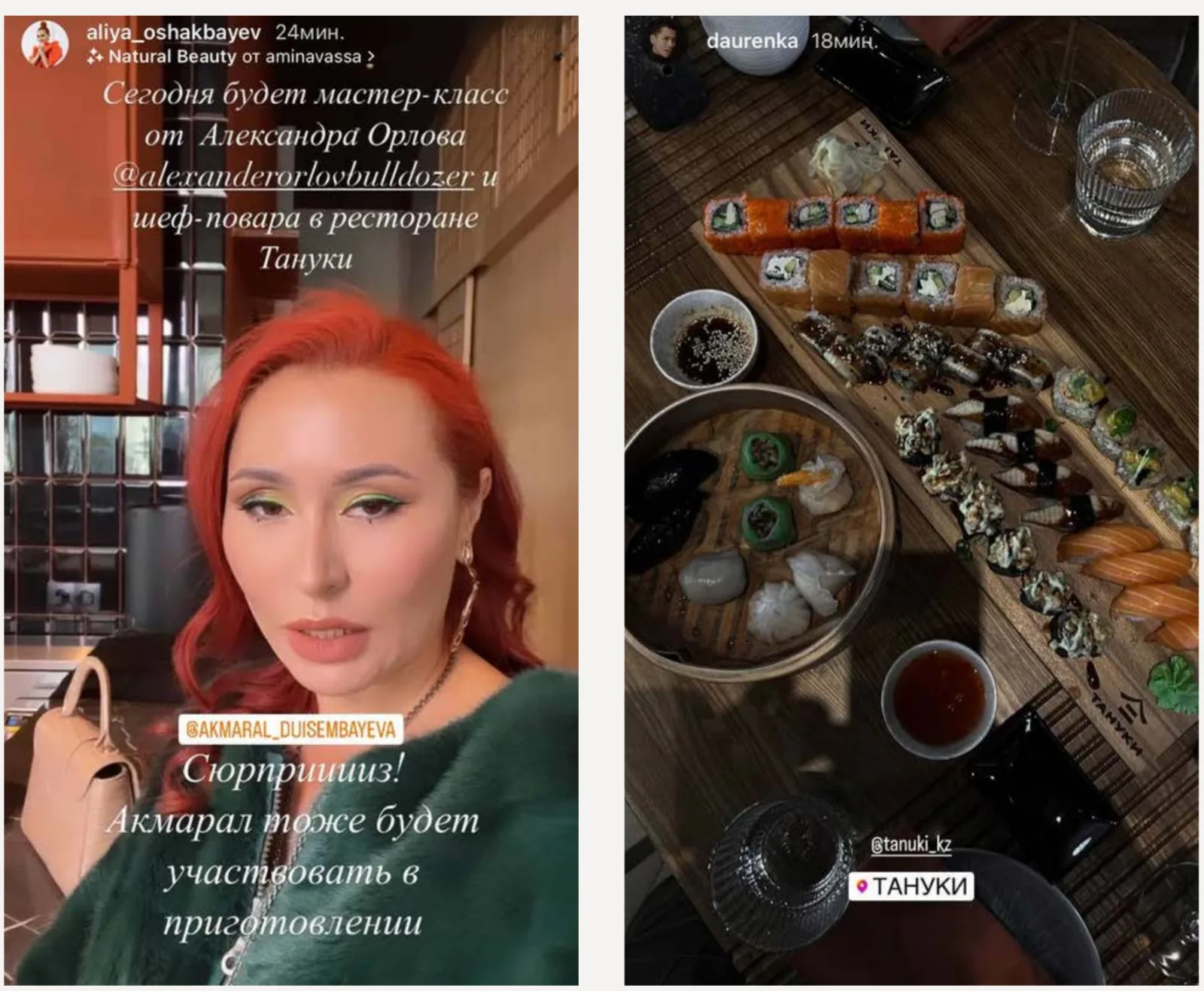
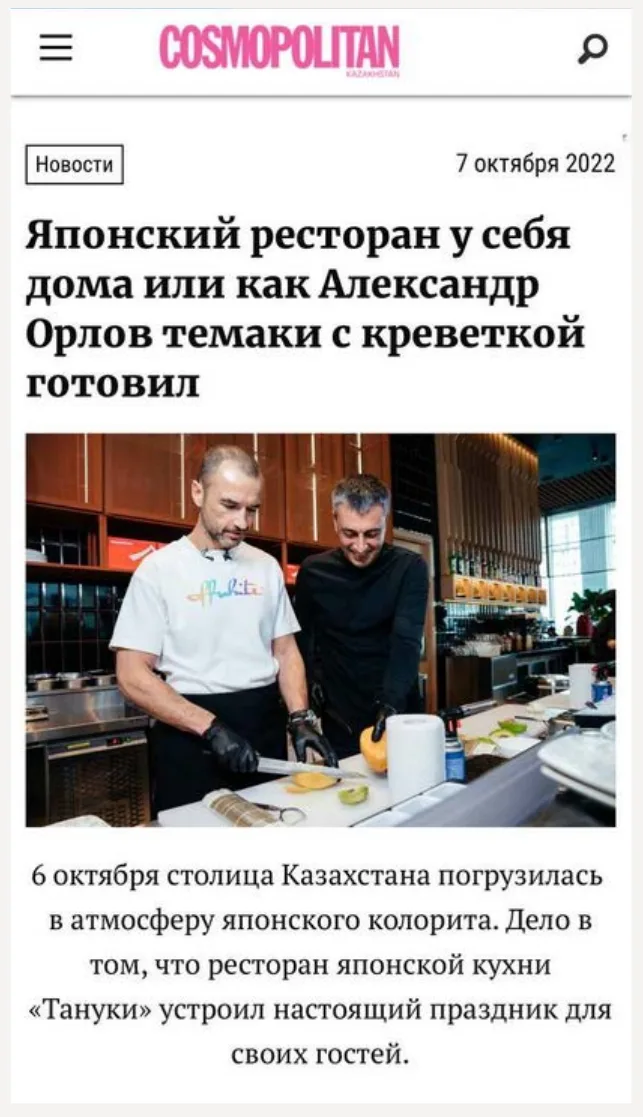
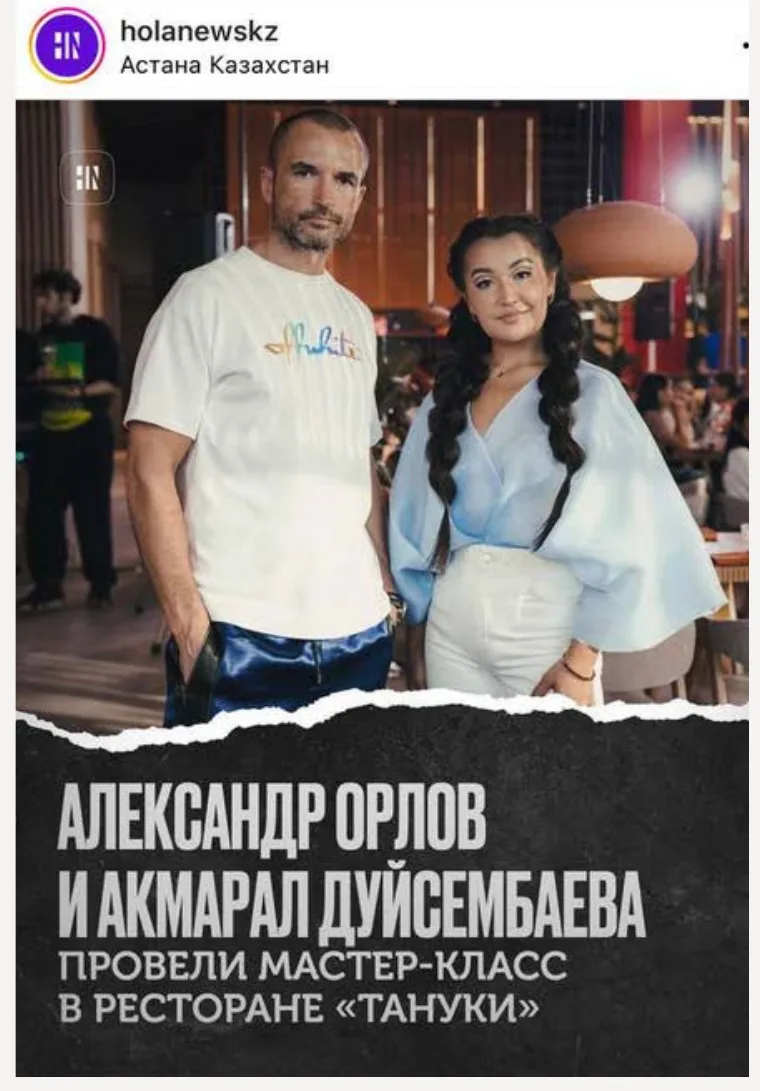
The evening at the restaurant was built as an event bloggers would want to film: restaurateur Alexander Orlov and Akmaral Duisembayeva, guided by chef Oleg Chakryan, made shrimp temaki and a seared prime roll right in front of the guests. Stories from the venue featured the @tanuki_kz tag, the master class, the interior, and the dishes.
The master class gave participants something specific to film. Bloggers showed the cooking process, the dishes, and the restaurant’s atmosphere. In their posts, the event came together from several details that viewers could see through a guest’s eyes.


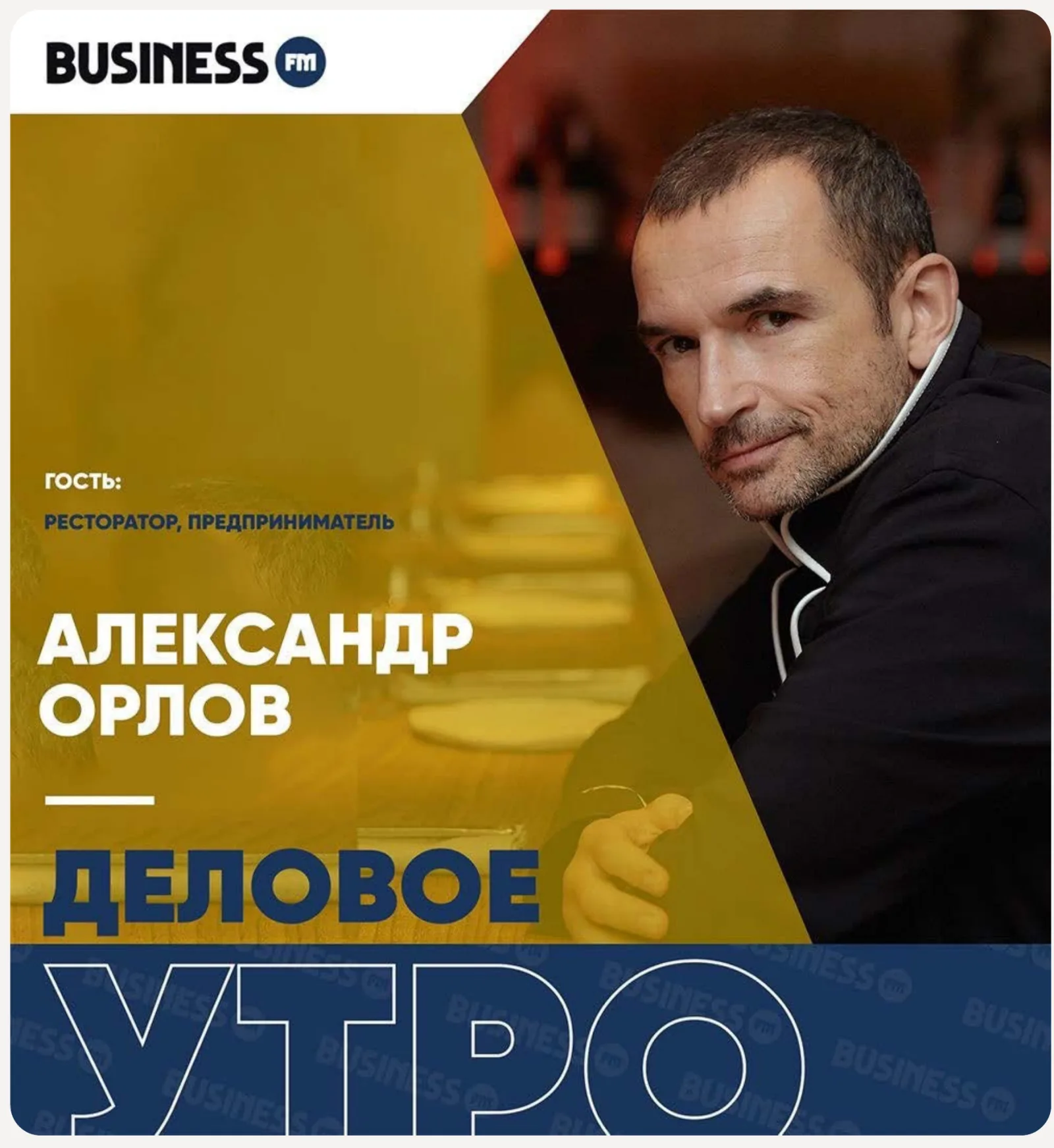
A second track ran in parallel: interviews with founder Alexander Orlov in the press and on radio, including an appearance on Business FM’s “Business Morning” show.
This track complemented the content from the opening. In interviews, the founder could talk in detail about the restaurant business and the project, while business outlets offered access to an audience that gets to know a brand through its entrepreneurial story.

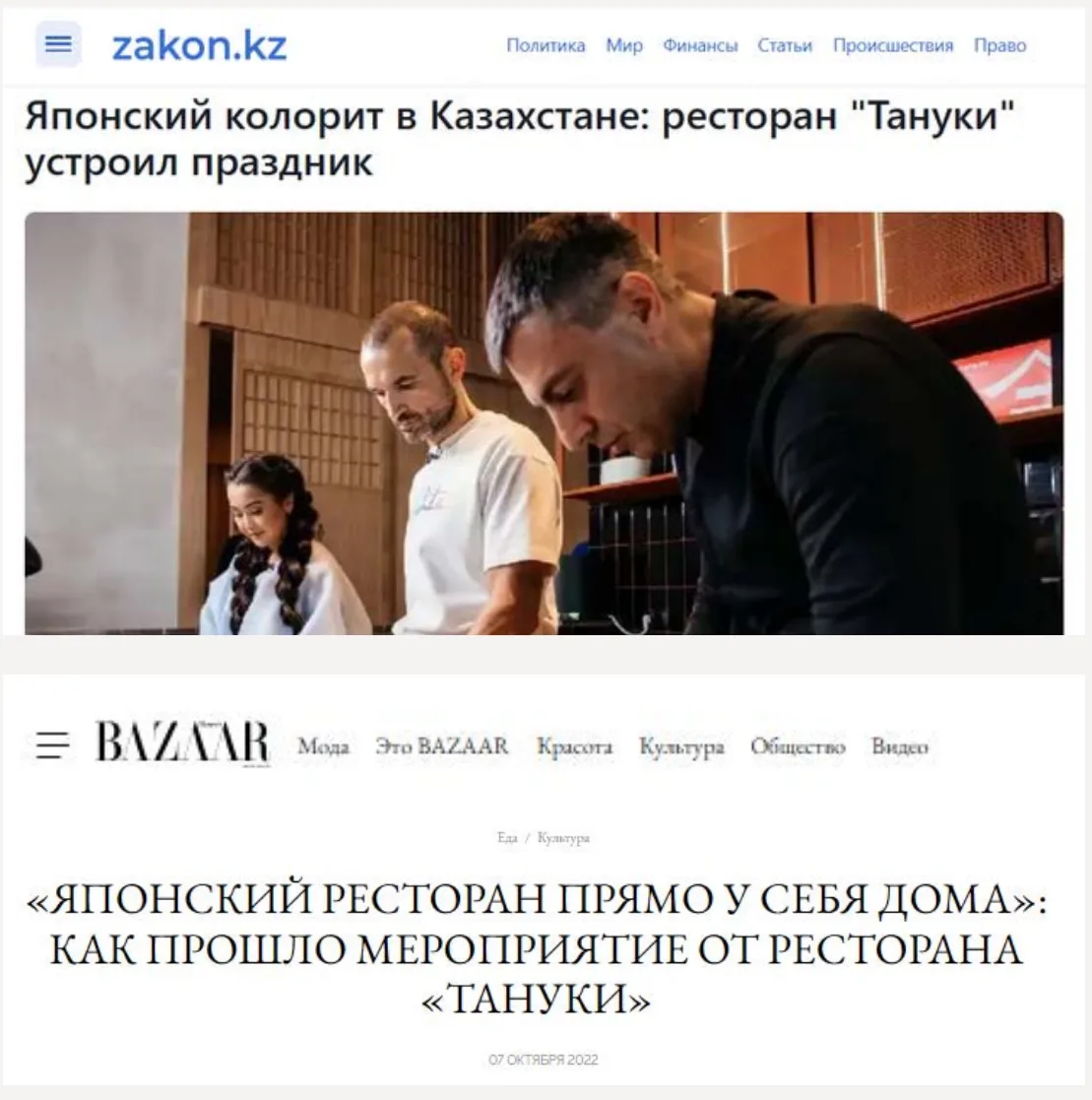
Post-event reports ran in Kazakhstan’s business, news, and glossy publications: Zakon.kz, The Steppe, Harper’s Bazaar Kazakhstan, Cosmopolitan Kazakhstan, and Astana city media.
Outlets covered the evening in different formats: a news item about the venue, a report from the master class, a feature on the restaurant and its guests. The agency worked on post-event coverage and compiled it together with the influencers’ content.


More than 35 influencers took part in the opening. Total campaign reach exceeded 1.4 million; the program included posts by creators, local media coverage, and a founder interview on Business FM.
The restaurant gained several ways to introduce itself to audiences: joining the event through bloggers’ content, editorial reports, and an in-depth conversation about the business.
PR · Uzbekistan · 2021–2022
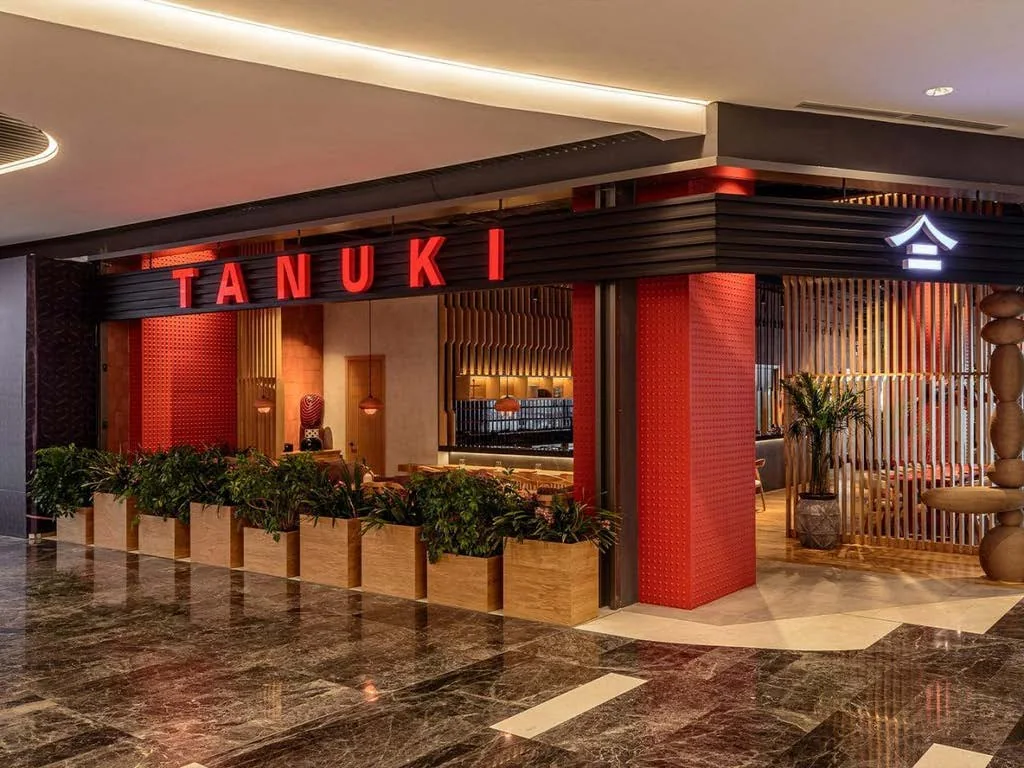
We handled media relations for Tanuki and TOKU, introducing the founder to local audiences and supporting both openings with announcements, interviews, and coverage from the events.
Our role: working with local outlets, founder interviews, YouTube integrations, and managing coverage of the openings.

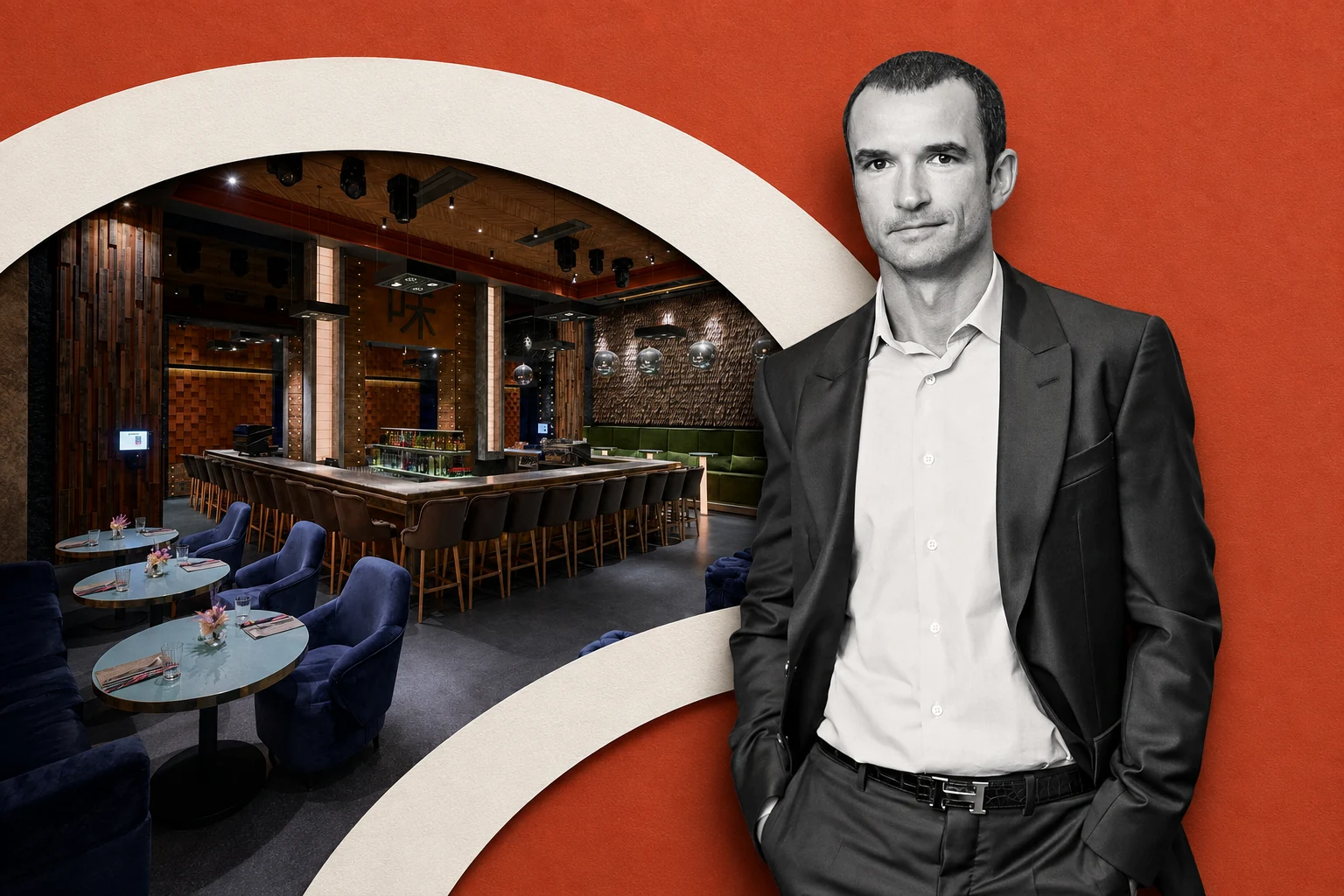
An international restaurant group was entering Tashkent with two venues: TOKU, a pan-Asian restaurant at Tashkent Chimes, and Tanuki, a Japanese one. Each needed media support, from the first announcements to coverage of the opening.
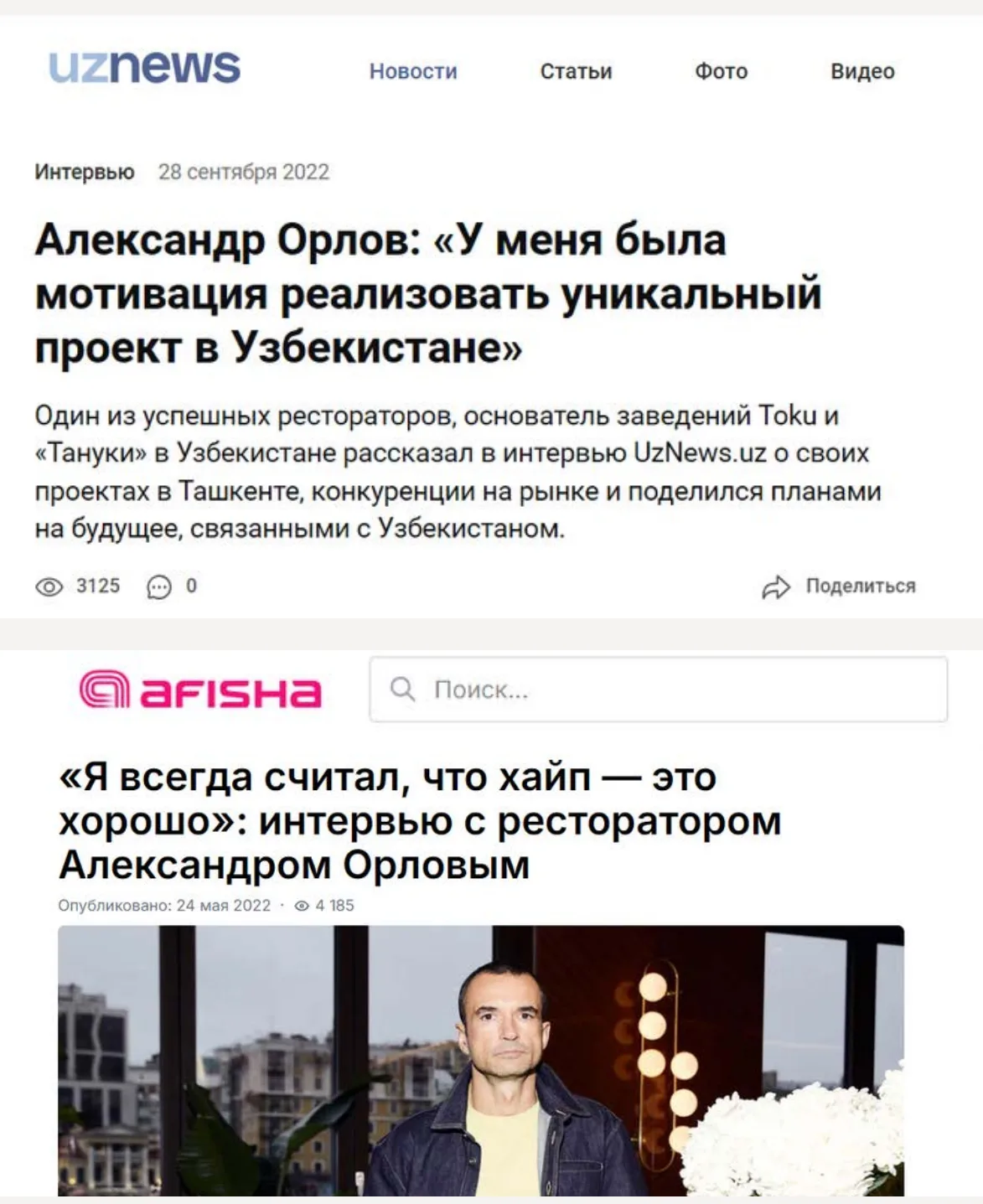
We split the work into two tracks. The first was interviews with restaurateur Alexander Orlov in business and news media, plus integrations into YouTube interviews about business. The second was developing announcements and coverage for the openings of the restaurants themselves. This gave editors both the entrepreneur’s story and concrete events for local readers.

We arranged interviews with Alexander Orlov for UzNews.uz and Afisha.uz. In them, the restaurateur talked about his motivation to build a project in Uzbekistan, his approach to the restaurant business, and his plans for Tashkent.
The YouTube show “Alter Ego. All About Uzbekistan” became a separate track. The long-form interview format made it possible to talk about the business in detail and introduce the person behind the restaurant brands. For this, we worked with outlets and formats aimed at local audiences.

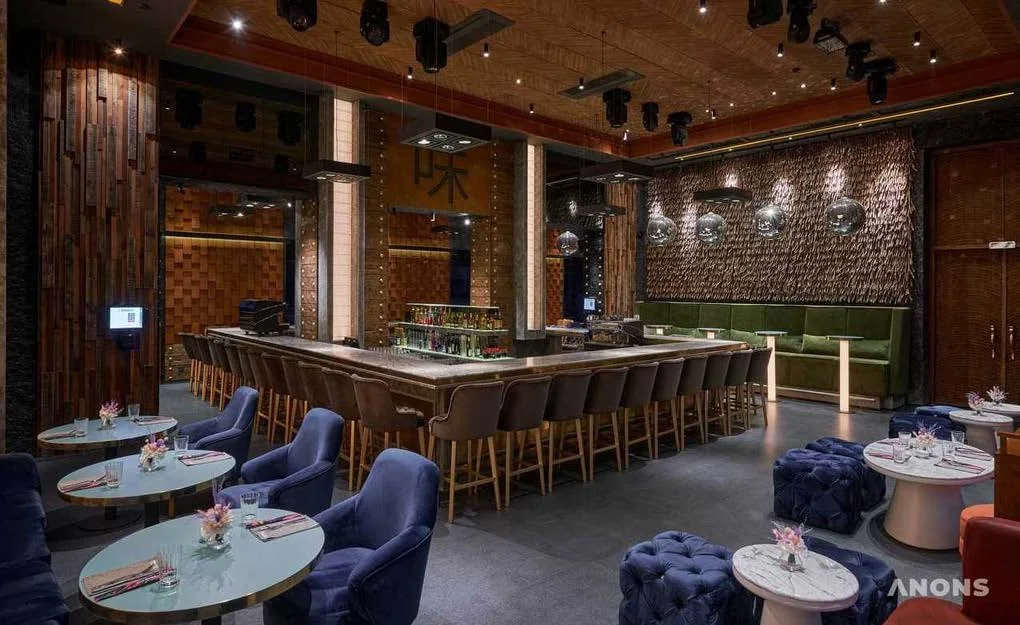
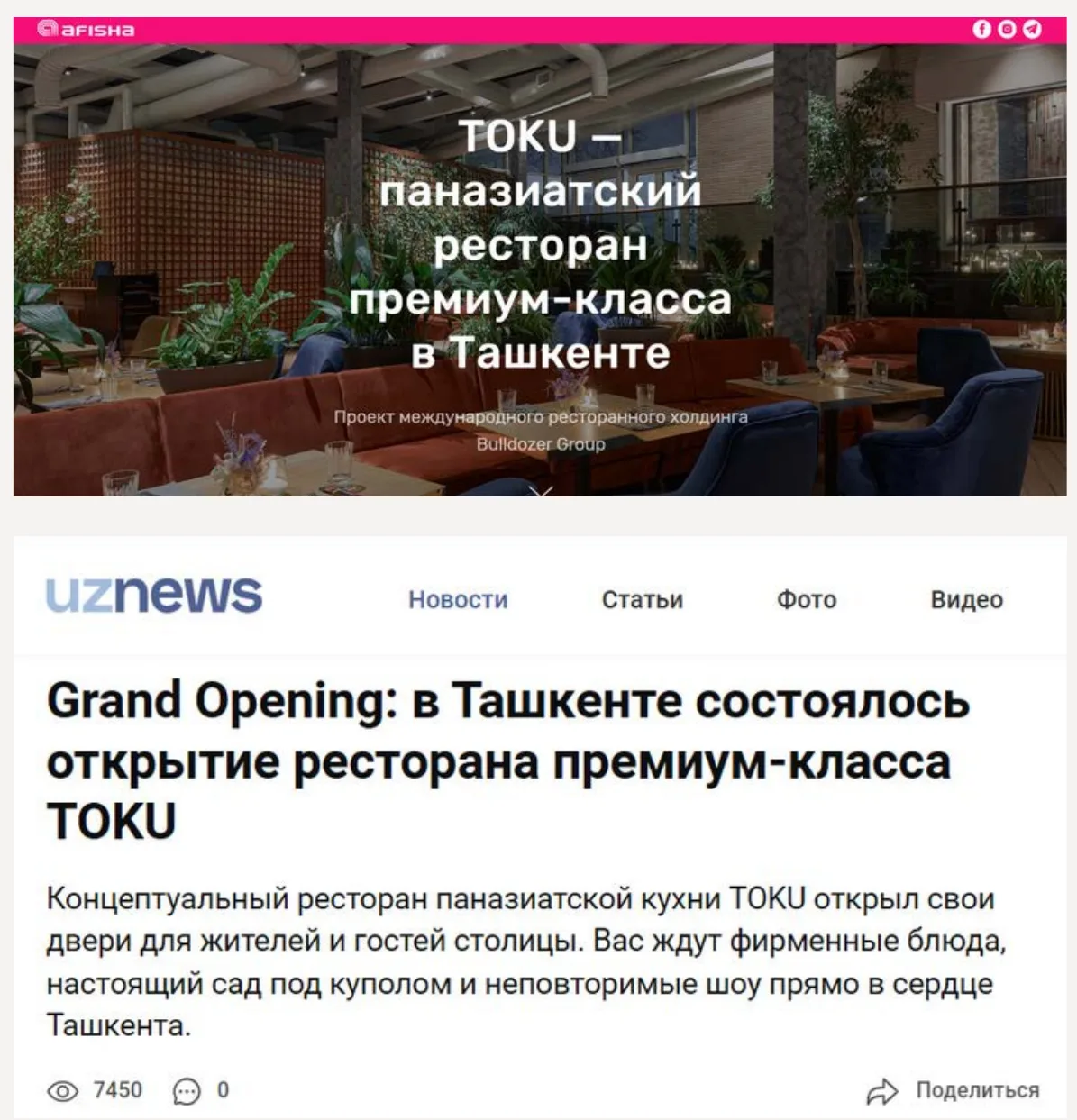
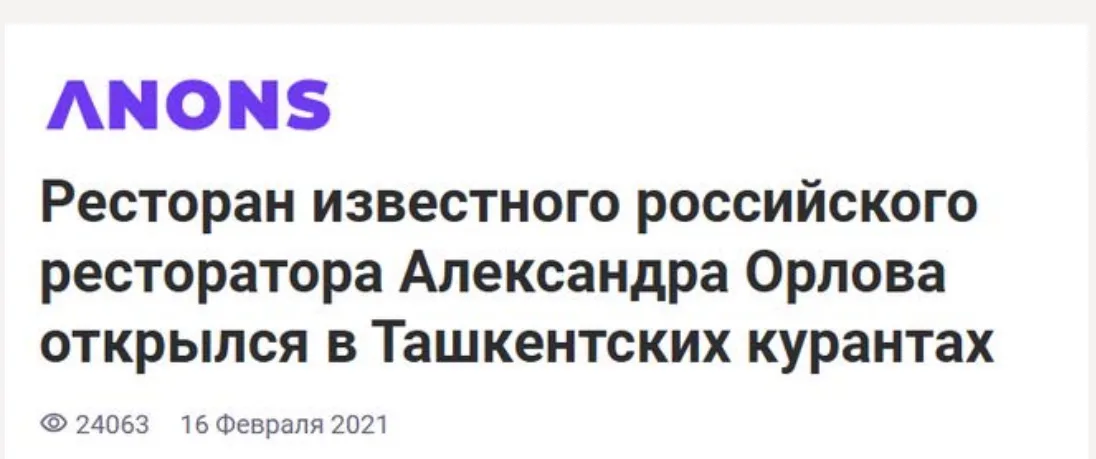
Ahead of the opening, Afisha.uz presented TOKU as a premium pan-Asian restaurant in Tashkent. Anons.uz reported on the venue’s arrival at Tashkent Chimes. These pieces introduced readers to the place and the restaurant’s concept.
After the event, UzNews.uz published a story on the Grand Opening. Gazeta.uz also covered the opening of the venue’s new season. Media support spanned different moments in the restaurant’s life: the first introduction, the opening, and the project’s return to the city’s agenda.


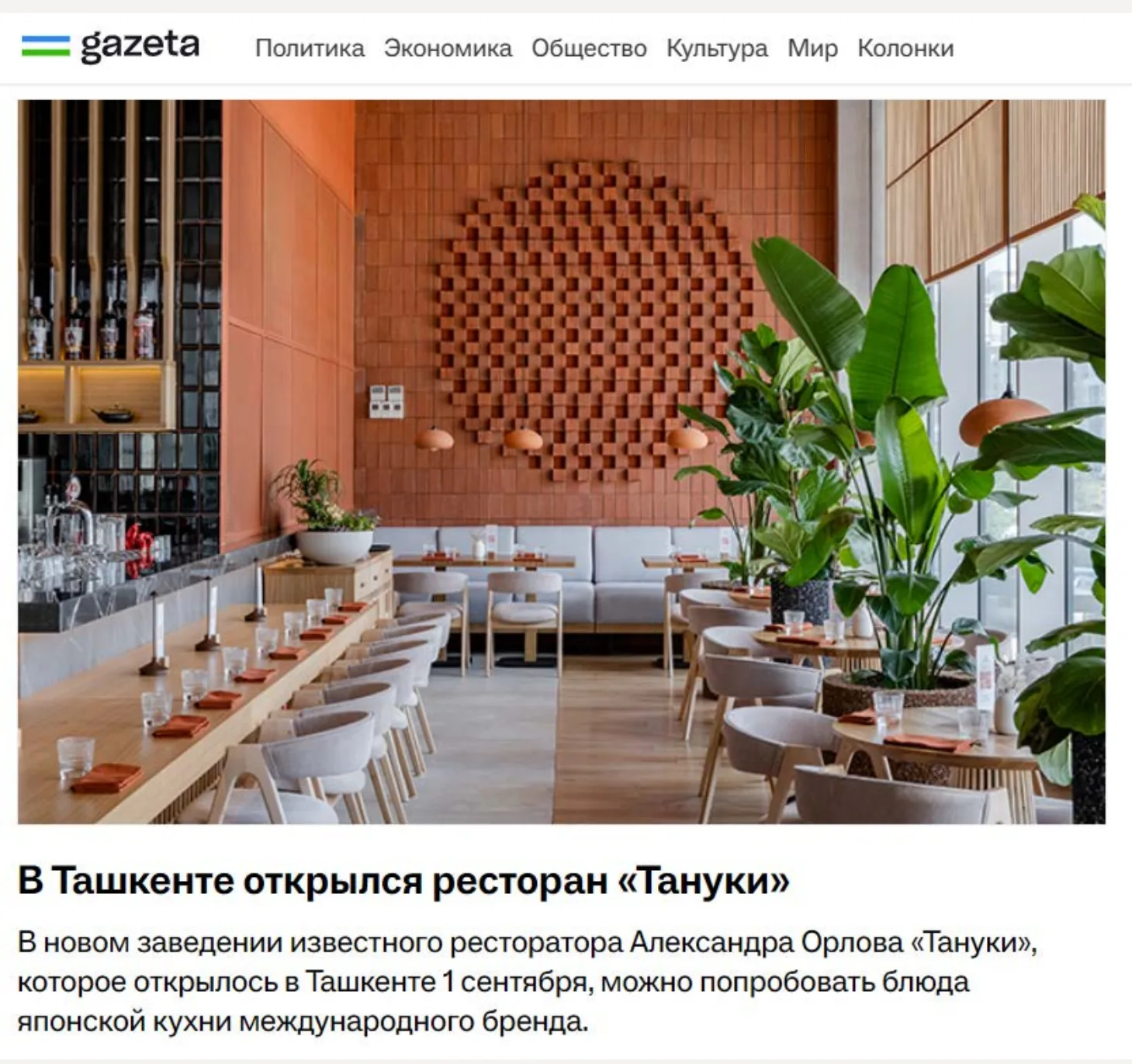
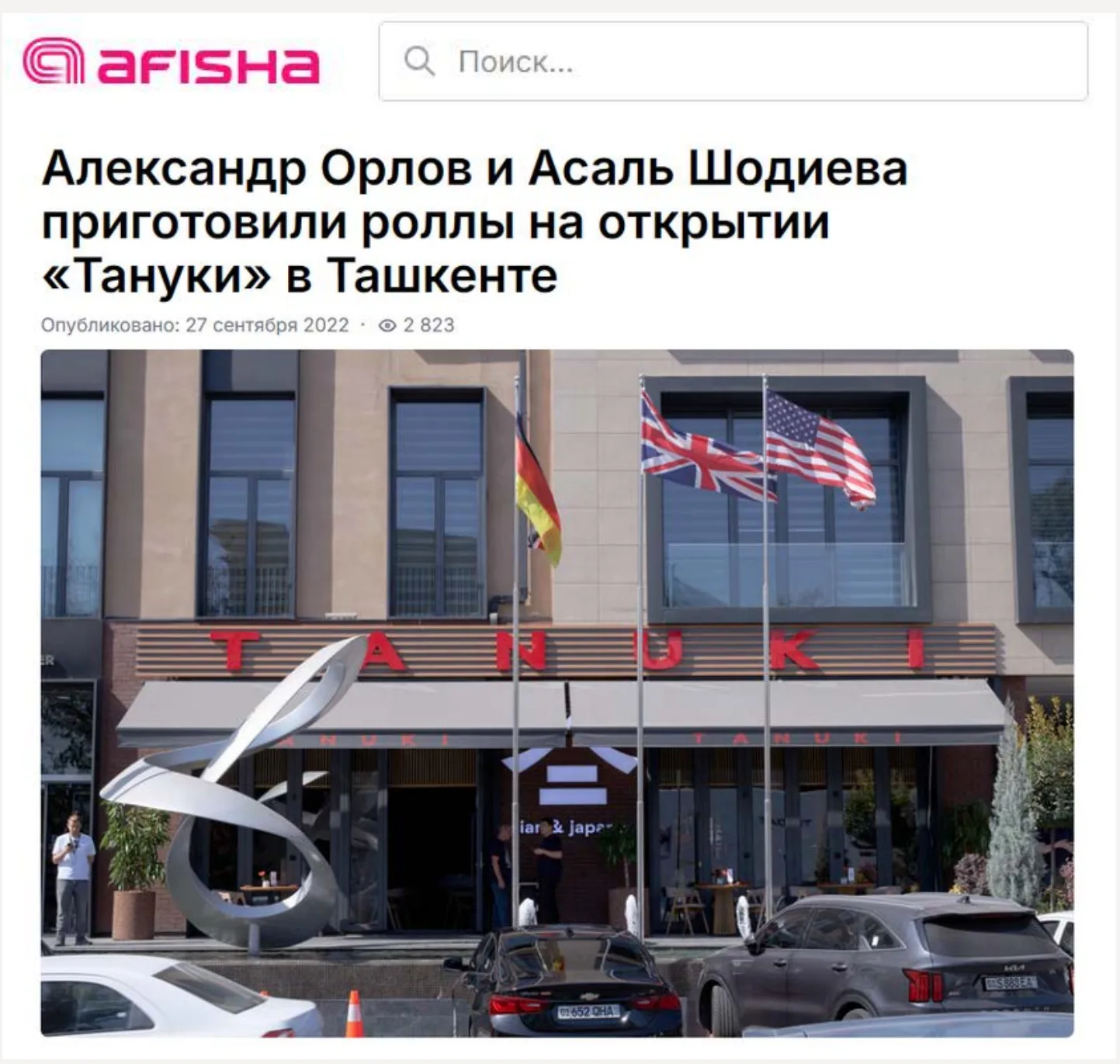
Tanuki opened in Tashkent on September 1. Gazeta.uz ran a news story about the new restaurant, and Afisha.uz produced a piece from the opening itself, featuring the guests and a roll-making master class.
The Afisha.uz report showed the interior, the guests, and the master class. Pieces like this picked up where the announcements left off: readers first learned about the upcoming opening, then got to know the restaurant through photos and a report from the event.


Both restaurant openings received media support. The coverage selection includes pieces from Gazeta.uz, Afisha.uz, UzNews.uz, and Anons.uz, interviews with the founder, and a separate YouTube integration.
The work combined the restaurateur’s business story with announcements and reports about the venues. Below, you can open the local outlets’ articles and see how the projects were presented.
Production · TV commercial · Timotei
Two screens — TV and digital out-of-home — covered by a single shoot: a 15-second spot and a 6-second version, both in 4K.
Production · fashion film · WHITENOISE
A 70-second fashion film in a 2.35:1 cinematic frame: a Japanese city at night and a story about the right to be imperfect.